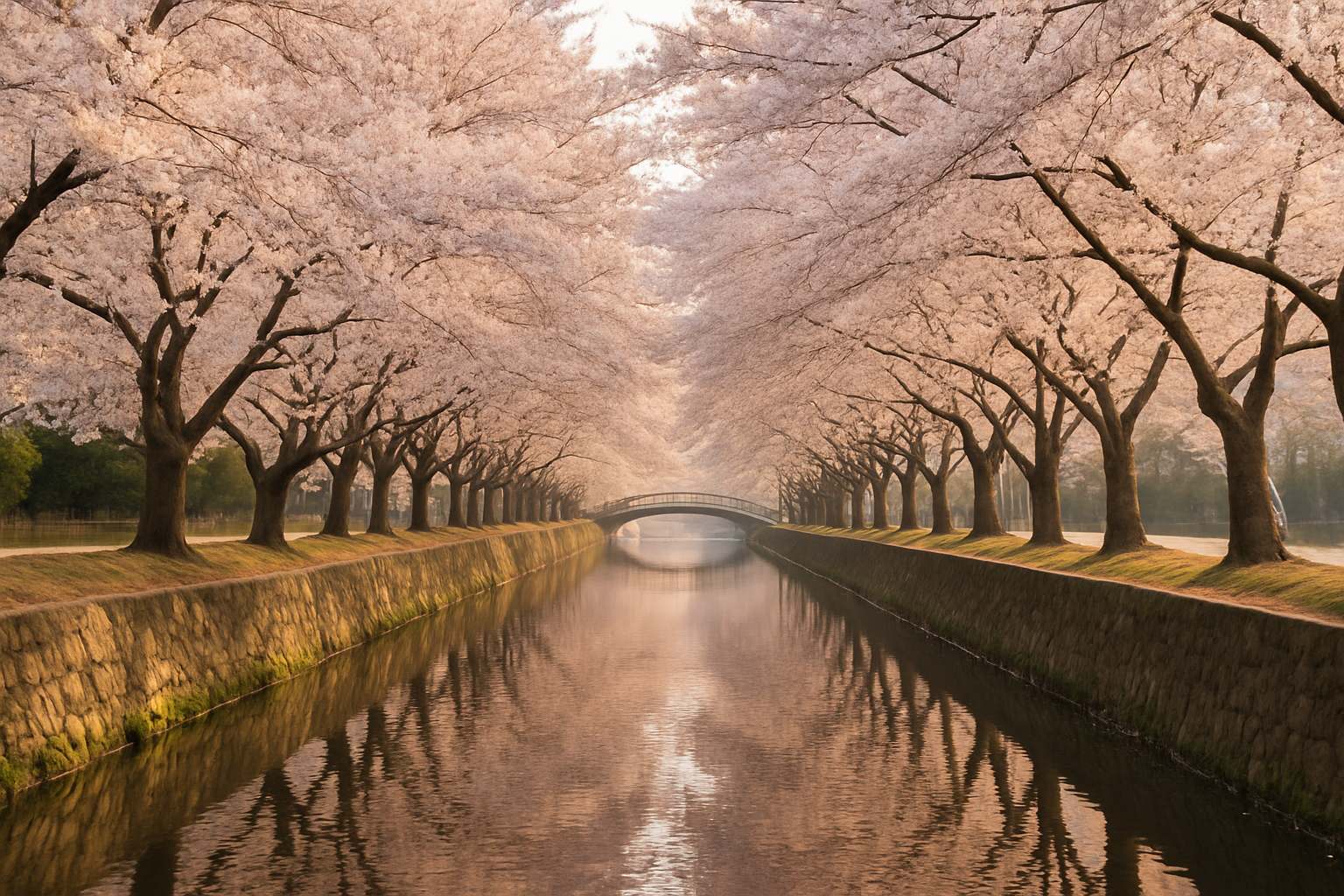
If you’ve been scrolling through photos of Korea in spring and wondering why every cherry blossom picture looks the same — Yeouido, Yeouido, Yeouido — let me tell you about Jinhae. This port city in South Gyeongsang Province turns into what many Korea travelers call the most beautiful place they’ve ever seen during cherry blossom season. And most tourists completely miss it.
Every April, roughly 350,000 cherry trees erupt simultaneously across Jinhae’s streets, riverbanks, and railway tracks. The result is a tunnel of white and pink so dense that at peak bloom you genuinely can’t see the sky through the canopy. The Jinhae Gunhangje Festival — Korea’s largest cherry blossom festival — draws nearly a million visitors over ten days, yet somehow remains dramatically underserved in English-language travel content compared to Seoul’s Yeouido park.
This guide covers everything you need to plan a day trip from Seoul: 2026 festival dates, exactly how to get there, the best spots to visit, what to eat, and how to book the experience without the headaches. Let’s get into it.
—
Why Jinhae is Korea’s Best-Kept Cherry Blossom Secret
🎟️ Book Your Jinhae Cherry Blossom Festival Day Trip From Seoul Experience
Skip the queues and language barriers. Compare verified tours, tickets, and rentals for Jinhae Cherry Blossom Festival Day Trip From Seoul on Klook — instant mobile vouchers, English support, free cancellation on most activities.
Jinhae (진해) isn’t on most first-time Korea itineraries. It’s a two-plus hour journey from Seoul, it’s not on the tourist trail the way Gyeongju or Busan is, and English resources are thin on the ground. That’s exactly why it’s special.
Here’s what sets Jinhae apart from every other cherry blossom spot in Korea:
- Scale: With around 350,000 trees, Jinhae has more cherry blossoms per square kilometer than anywhere else in Korea. The sheer volume means you’re surrounded, not just near.
- The railway track: Gyeonghwa Station has an iconic spot where cherry trees line both sides of a disused railway line. Petals fall onto the old tracks in a scene that looks photoshopped but absolutely isn’t.
- The stream: Yeojwacheon Stream runs through the center of town with cherry trees overhanging the water on both banks. At peak bloom, the reflection in the water doubles the visual impact.
- Less Instagrammed than Yeouido: Paradoxically, despite being bigger and more spectacular, Jinhae sees a fraction of the international Instagram coverage. Your photos will look genuinely original.
- A naval tradition: Jinhae is home to the Republic of Korea Navy’s main base. The festival began in 1952 as a memorial to Admiral Yi Sun-sin, Korea’s most celebrated military hero. Walking through the festival grounds, you’ll see naval officers in dress uniform, which adds a dimension no other cherry blossom event offers.
Practical note: Jinhae is now officially part of Changwon city (창원), so you may see “Changwon Jinhae” in transport apps. This is the same place.
—
Jinhae Cherry Blossom Festival 2026: Dates and What to Expect
The Jinhae Gunhangje Festival (진해군항제) typically runs for 10 days in late March to early April, timed to coincide with peak bloom. In 2026, the festival runs March 27 to April 5 (the 64th edition), with peak bloom expected around March 31–April 1 depending on weather patterns.
> Important: Exact 2026 dates are confirmed by Changwon city in late February. Check the official Jinhae tourism pages or the Visit Korea tourism portal closer to spring for final dates.
If you’re reading this in mid-April 2026: You may still catch late bloom or “fallen petal” season (낙화), when petals drift across the streets and streams. This is actually considered beautiful in its own right by many Koreans and produces stunning photographs.
What happens during the festival?
- Street performances, military parades, and traditional music events throughout the day
- Night illumination of key cherry blossom streets (Yeojwacheon is especially beautiful after dark)
- Food stalls and vendor markets along the main festival corridors
- Gunhang Festival Queen pageant (a quirky local institution since 1952)
- Photography competitions with surprisingly generous prize money
Crowds: The festival draws 700,000–1,000,000 visitors over ten days. Weekends are significantly more crowded than weekdays. If you can go Tuesday–Thursday, you’ll have dramatically more breathing room at the key spots.
—
How to Get from Seoul to Jinhae
Jinhae doesn’t have its own train station on the KTX network, so getting there requires a connection. Here are your three main options:
Option 1: KTX + Local Bus (Recommended)
This is the most flexible option and generally the fastest.
Total journey time: approximately 3h 15m door-to-door from central Seoul.
KTX ticket tips:
- Book via Korail’s website or on their app at least 1 month in advance for festival season
- Window seats on the right side (facing forward) give mountain views
- Travelling beyond Jinhae on the same trip? Check whether a rail pass beats separate tickets in our KORAIL Pass breakdown
- A standard KTX Seoul–Changwon ticket costs approximately ₩42,000–₩55,000 one way
> Book your KTX tickets on Klook — Klook KTX Korea Rail Pass → — for flexible pass options that cover multiple train journeys across your Korea trip, often at a discount versus booking individual tickets.
Option 2: Guided Day Tour from Seoul (Easiest)
If navigating Korean transport connections during the most crowded week of spring doesn’t appeal to you, a guided day tour is the stress-free alternative. Tours typically include:
- Round-trip coach transport from Seoul (no train connections to manage)
- Guided visits to Yeojwacheon Stream, Gyeonghwa Station, and the naval museum
- Lunch included (varies by tour operator)
- English-speaking guide
> Book a Jinhae Cherry Blossom Day Tour on Klook — Klook Jinhae Cherry Blossom Festival Tour → — these sell out weeks in advance during peak bloom. Book as early as possible.
> Alternative: Klook Jinhae Day Tours — Klook Korea Cherry Blossom Tours → — Klook lists several operators with slightly different itineraries. Good for comparing what’s included.
Guided tour cost: Typically ₩80,000–₩120,000 per person, including transport and guide. Lunch sometimes extra.
Option 3: Intercity Bus (Budget Option)
The cheapest but slowest option.
- Seoul Express Bus Terminal (서울고속버스터미널) → Masan Bus Terminal
- Travel time: approximately 4–5 hours
- Fare: approximately ₩25,000–₩30,000
- From Masan Bus Terminal, take bus to Jinhae (30 minutes)
This option makes a day trip very long. Only recommended if you’re on a very tight budget or all KTX seats are sold out.
—
The Best Cherry Blossom Spots in Jinhae
Jinhae has several distinct zones. Hit all of these and you’ll have covered the essential Jinhae experience.
Yeojwacheon Stream (경화역)
The most photographed spot in Jinhae. Yeojwacheon Stream runs for about 1 kilometer through the center of town, with cherry trees densely lining both banks. When the wind picks up, petals rain down onto the water surface. Go early morning (before 8am) for crowds that are manageable, or after 7pm for the festival illuminations.
How to get there from Jinhae: 10-minute taxi from the main bus terminal. Clearly marked on Naver Map and Google Maps as “여좌천 로망스 다리”.
Gyeonghwa Station Cherry Blossom Road
Gyeonghwa Station (경화역) is a disused train station where cherry trees were planted along both sides of the old railway tracks. The effect — a petal-covered track stretching into the distance, framed by trees on both sides — is one of the most distinctive images in Korea spring photography. This spot gets very crowded midday; arrive before 9am or after 4pm.
Note: A heritage train sometimes runs on this track during festival season. Check the festival schedule for timing — photographing the train passing through the blossom corridor is worth timing your visit around.
Jinhae Tower Viewpoint
For a panoramic perspective, take the cable car or hike up to Jinhae Tower (진해타워) on Jangbok Mountain. From the observation deck, you can see the entire city turned white and pink below you, with the harbor beyond. Best visited around midday when visibility is highest.
Tip: The cable car line gets long during festival days. If you arrive early and go straight to the tower, you’ll beat the rush.
Romanpo Port
A quieter cherry blossom spot that most day-trippers skip. The naval port area near Romanpo has cherry trees lining the waterfront, with fishing boats and naval vessels in the background. The combination of blossoms, harbor, and sea is different from anything else at the festival. It’s a 15-minute taxi from the central festival area.
Jinhae Naval Museum
Next to the naval base, this free museum tells the story of Admiral Yi Sun-sin and the Korean navy. Worth an hour if you want context for why the festival exists. The museum grounds also have cherry trees.
—
What to Eat and Do in Jinhae
Local Food You Must Try
The festival food stalls are packed with Korean spring street food. Must-tries:
- Haemul pajeon (해물파전): savory seafood scallion pancake. Jinhae is a port city — the seafood here is excellent.
- Odeng (어묵): fish cake skewers in warm broth. Perfect for chilly April mornings.
- Hotteok (호떡): sweet syrup-filled pancakes. Universally available and universally good.
- Twigim (튀김): mixed deep-fried vegetables and seafood. Freshly made at market stalls.
- Cherry blossom-flavored treats: During the festival, local vendors sell cherry blossom-infused rice cakes (떡), soft-serve ice cream, and latte. Touristy but genuinely tasty.
Sit-down restaurant: If you want a proper meal, look for restaurants serving sundubu jjigae (soft tofu stew) near the Yeojwacheon area. The area has numerous small family-run establishments that are well-priced and excellent.
Booking Guided Tours Online
If you want a structured experience of the festival beyond the DIY approach, several operators offer half-day and full-day guided walking tours within Jinhae itself — separate from the Seoul day-trip tours. These local guides know the crowd patterns and can take you through the quieter spots.
> Book a Jinhae local experience on Klook — Klook Jinhae Guided Experiences → — look for local Jinhae walking tours with English-speaking guides.
—
Where to Stay Near Jinhae (If You Want More Time)
For most visitors, Jinhae is a day trip. But if you want to experience dawn at Gyeonghwa Station (when petals first catch the early light, crowds are minimal, and it’s genuinely magical) or attend the evening illuminations, staying overnight makes sense.
Accommodation options:
- In Jinhae itself: Limited hotel options, mostly Korean-style motels (모텔) and guesthouses. Book very early — Jinhae accommodation sells out weeks in advance during festival season.
- In Changwon: Larger city adjacent to Jinhae with more hotels. 40 minutes by bus to Jinhae.
- In Busan: If you want a full-service hotel and are willing to commute, Busan is about 1 hour from Jinhae and has extensive accommodation.
> Find hotels near Jinhae — Jinhae/Changwon Hotels — filter by your preferred budget. Book at least 2–3 weeks in advance for festival season.
> Find hotels in Busan near Jinhae — Busan Hotels — Busan is an excellent base for Jinhae, especially if you’re combining both destinations.
—
Practical Tips Before You Go
Getting there: key logistics
Photography tips
- Best light: Golden hour (6–8am) and blue hour (6–7pm). Midday light is harsh and crowds are at their peak.
- Gyeonghwa Station: Arrive before 8am for the empty track shot. By 10am there are hundreds of people in every frame.
- Yeojwacheon Stream: The “Romance Bridge” (로망스 다리) is the iconic framing spot. Long exposure shots of the petals on water require a tripod — most visitors don’t bother, so it’s a differentiator.
- Drone: Drones require a permit near the naval base. Don’t attempt unauthorized drone flight here — fines are serious and confiscation is likely.
Returning to Seoul
- Last KTX trains from Changwon to Seoul depart around 9–10pm. Check the Korail schedule for your specific date.
- The journey back during festival season often has full trains — book your return seat at the same time you book your outbound.
- If you miss the last KTX, overnight buses to Seoul run from Masan Bus Terminal.
—
Frequently Asked Questions
When is the Jinhae cherry blossom festival 2026?
The 64th Jinhae Gunhangje Festival runs March 27 to April 5, 2026, with peak bloom expected around March 31–April 1. Official dates are announced in late February by Changwon city. Follow Visit Korea for confirmed dates.
Is Jinhae worth the trip from Seoul?
Absolutely. Most travelers rank Jinhae as their favorite cherry blossom experience in Korea, ahead of Yeouido, Gyeongju, and Jeju. The scale, the railway track, and the naval backdrop make it genuinely unlike anything else in Korea.
How long does the Jinhae day trip take from Seoul?
Plan for 12–14 hours total: approximately 3 hours each way (KTX + bus), 6–8 hours in Jinhae. It’s a long day but very manageable.
Can I visit Jinhae without a guided tour?
Yes. The train and bus connections are clear, the main spots are walkable from each other, and Naver Map provides reliable navigation. Guided tours are convenient but not necessary for independent travelers.
How crowded is Jinhae during the festival?
Very crowded on weekends. Weekday visits are significantly more manageable. If you must go on a weekend, arrive before 8am to experience the key spots before the crowds peak.
Is the festival free to enter?
Yes. There is no entry fee for the Jinhae Cherry Blossom Festival itself. Individual attractions like Jinhae Tower’s cable car have separate fees (approximately ₩7,000–₩10,000 return).
What’s the difference between Jinhae and Yeouido for cherry blossoms?
Yeouido (in Seoul) is more convenient — no travel required from central Seoul. Jinhae is much larger in scale, more immersive, and less international-tourist-heavy. If you’re specifically seeking the cherry blossom experience as a highlight of your Korea trip, Jinhae is worth the journey. If you have limited time, Yeouido is a strong fallback.
Can I combine Jinhae with a visit to Busan?
Yes, this is an excellent pairing. Jinhae to Busan takes about 1 hour by bus. You could visit Jinhae for the morning/afternoon and spend the evening in Busan before returning to Seoul the next day.
—
*Last updated: April 2026. Festival dates and transport schedules are subject to change — always verify with official sources before booking.*
*This post contains affiliate links. If you book through our links, we earn a small commission at no extra cost to you. This helps us keep creating free travel content.*
Disclosure: SeoulScope is a participant in the Klook Affiliate Program. We may earn a small commission when you book through links in this post, at no extra cost to you. We only recommend experiences we believe will genuinely help your trip.