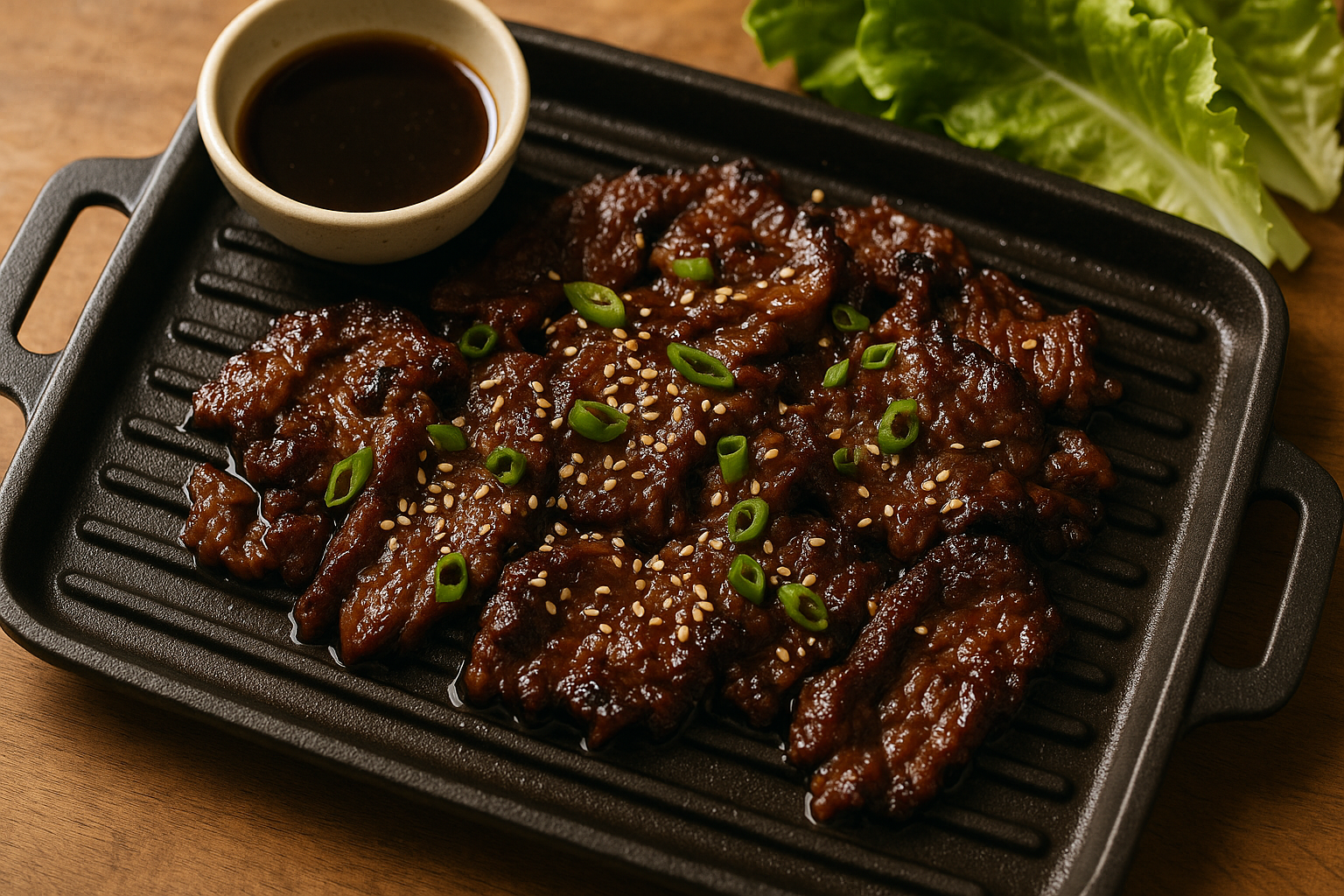
If you have ever eaten bulgogi at a Korean restaurant and wished you could get that exact sweet-savory, sesame-rich flavor at home, the secret is the marinade in the bottle. The right sauce turns an ordinary cut of beef, pork, or chicken into something that tastes like it came off a tabletop grill in Seoul — without you having to mix a dozen pantry ingredients from scratch.
This guide breaks down what Korean BBQ sauce actually is, how bulgogi and galbi differ, what goes into the bottle, the main types you will see on the shelf, and which trusted brands are worth buying. If you are building a Korean pantry, a good bottled marinade is one of the highest-payoff things you can keep on hand.
What is Korean BBQ sauce?
Korean BBQ sauce is a soy-based marinade and glaze used to flavor and tenderize meat for grilling. At its heart it is a balance of salty (soy sauce), sweet (sugar, honey, or fruit), savory (garlic and sesame), and aromatic (ginger, green onion, a splash of rice wine). Unlike the thick, tomato-and-molasses American barbecue sauce you brush on ribs, a Korean barbecue sauce is thinner, saltier, and built to soak into the meat rather than sit on top of it.
That distinction matters. American barbecue sauce is mostly a finishing condiment. Korean BBQ sauce is primarily a marinade — you submerge thin-sliced meat in it for anywhere from 30 minutes to overnight, then grill or pan-sear it so the sugars caramelize. The result is the glossy, slightly charred, deeply seasoned meat that defines a Korean barbecue spread.
Bulgogi vs. galbi: same idea, different cut
The two names you will see most often are bulgogi and galbi (also spelled kalbi), and the difference is not really the sauce — it is the cut of meat.
- Bulgogi means “fire meat.” It is thin-sliced beef (usually sirloin or ribeye) marinated in a sweet soy base, then grilled or stir-fried fast over high heat.
- Galbi / kalbi refers to short ribs. The marinade is built on the same soy-sugar-garlic-sesame foundation, but galbi versions are often a touch sweeter and stickier, since the sauce has to cling to a meatier, bonier cut and lacquer it as it grills.
So when you see a bottle labeled “bulgogi marinade” versus “galbi marinade,” you are mostly choosing which cut and which sweetness level you are after — not two completely different sauces. Many cooks keep one all-purpose marinade and use it for both.
What’s actually in the bottle
A traditional Korean marinade is surprisingly produce-forward. The classic backbone is:
- Soy sauce — Korean jin ganjang (a brewed soy sauce) gives the salty, fermented depth. It tastes distinct from Japanese or Chinese soy.
- Asian pear — grated Korean or Asian pear is the not-so-secret ingredient. Its natural enzymes tenderize the meat while adding a clean, floral sweetness. No Asian pear on hand? A Bosc pear or even a grated apple is the standard substitute.
- Garlic and ginger — generous fresh garlic plus a little ginger for warmth.
- Sugar or honey — for sweetness and for that caramelized char.
- Sesame oil and toasted sesame seeds — the nutty, aromatic finish that screams Korean.
- Mirin or rice wine — a splash to round everything out.
- Green onion and black pepper — the final seasoning layer.
A good bottled sauce compresses all of that into one pour, which is exactly why it is such a useful shortcut.
The main types you’ll see on the shelf
Walk the sauce aisle of a Korean grocery and you will mostly run into four styles:
Knowing those four covers nearly everything you will encounter when you shop.
How to use Korean BBQ sauce at home
Using a Korean BBQ marinade is forgiving, which is part of the appeal:
- As a marinade: Slice beef, pork, or chicken thin. Submerge it in the sauce for 30 minutes (a quick weeknight version) up to overnight (for deeper flavor). Don’t go past 24 hours, or the soy can start to cure the meat and turn it mushy.
- Grill or sear hot: Cook on a hot pan, grill, or tabletop griddle. The sugars want to caramelize, so high heat and a little char are the goal.
- As a stir-fry sauce: Toss the marinated meat with onion, mushrooms, and green onion for a fast bulgogi-style skillet dinner.
- As a glaze: Brush a little extra sauce on in the last minute of cooking for shine and a sweeter finish.
Serve it the Korean way — with rice, a few banchan side dishes, and lettuce leaves for wrapping — and a single bottle stretches across a whole week of dinners.
The best Korean BBQ sauce brands to buy
If you want a reliable bottle without overthinking it, these are the names that show up again and again in Korean kitchens and Korean-American groceries:
- Bibigo (CJ Foods) Original Korean BBQ Marinade & Sauce — the easiest first buy. A well-balanced sweet-savory profile with ginger and roasted sesame that works on beef, pork, and chicken alike. Widely stocked and beginner-friendly.
- CJ Bulgogi Marinade — a classic, dedicated thin-beef bulgogi marinade from one of Korea’s largest food makers. Clean, soy-forward, dependable.
- CJ Kalbi (Galbi) Marinade — the short-rib counterpart: a little sweeter and stickier, built to lacquer ribs as they grill.
- Wang Korea Bulgogi Sauce — a beef-first marinade made in Korea, leaning on soy, pear, garlic, sesame, and black pepper, with no added MSG. A good step up once you know you like the style.
- Sempio — a heritage Korean soy-sauce house whose soy-based marinades have a slightly more savory, less candy-sweet profile for cooks who want to dial back the sugar.
Start with Bibigo or a CJ bulgogi marinade, see whether you prefer sweeter or more savory, and branch out from there.
Where to buy Korean BBQ sauce
You no longer need a Koreatown nearby. Well-stocked Asian and Korean grocery chains like H Mart carry all of the brands above, and online it is even easier: Amazon, Weee!, and Korean-grocery delivery services ship bottled bulgogi and galbi marinades nationwide. Buying online is also the simplest way to compare brands, read real reviews, and stock up before a cookout.
If you ever make it to Seoul, the smoky tabletop grills of a Korean BBQ restaurant are the real-deal experience these bottles recreate at home — and our Korean BBQ dining guide covers how to order like a local.
How to store it and how long it lasts
Treat a bottle of Korean BBQ sauce like any other condiment. Unopened, it keeps in the pantry until the printed best-by date. Once opened, refrigerate it and use it within the window on the label — usually a few months. Always pour what you need into a separate bowl for marinating rather than dunking raw meat into the bottle, so you never contaminate the rest. Any sauce that has touched raw meat should be discarded, not reused as a finishing glaze. For meal prep, you can portion sliced meat with a little marinade into freezer bags and freeze it raw — it keeps for a couple of months and continues to marinate gently as it thaws in the fridge.
A quick homemade substitute
Out of bottled sauce? A passable bulgogi marinade is easy to improvise: combine roughly 1/4 cup soy sauce, 2 tablespoons sugar (or honey), 1 tablespoon sesame oil, a grated quarter of an Asian pear or apple, 3 cloves of minced garlic, a little grated ginger, and a sprinkle of toasted sesame seeds and black pepper. It won’t be identical to a tuned commercial bottle, but it captures the same sweet-savory soul.
Korean BBQ sauce FAQ
Is Korean BBQ sauce spicy?
Most classic bulgogi and galbi marinades are sweet-savory, not spicy. Heat comes from the gochujang-based versions, which are clearly labeled.
Can I use it on chicken or pork?
Yes. While bulgogi is traditionally beef, the same marinade works beautifully on pork, chicken, and even tofu or mushrooms.
What’s the difference between bulgogi and galbi sauce?
Mostly the cut they are made for: bulgogi marinade is for thin-sliced beef, while galbi marinade is for short ribs and tends to be sweeter and stickier.
Is Korean barbecue sauce gluten-free?
Usually not, because soy sauce contains wheat. If you need a gluten-free option, look for a tamari-based marinade and check the label.
🛒 Buy Korean Bbq Sauce Online
Can’t get to a Korean convenience store? Get Korean Bbq Sauce shipped to your door on Amazon — compare top-rated imports, check real reviews, and stock up on the real thing without leaving home.
Disclosure: SeoulScope is a participant in the Klook and Agoda affiliate programs and the Amazon Associates Program. As an Amazon Associate we earn from qualifying purchases. We may earn a small commission when you book or buy through links in this post, at no extra cost to you. We only recommend experiences and products we believe will genuinely help your trip.
1 thought on “Korean BBQ Sauce: Bulgogi, Galbi & the Best Brands to Buy”