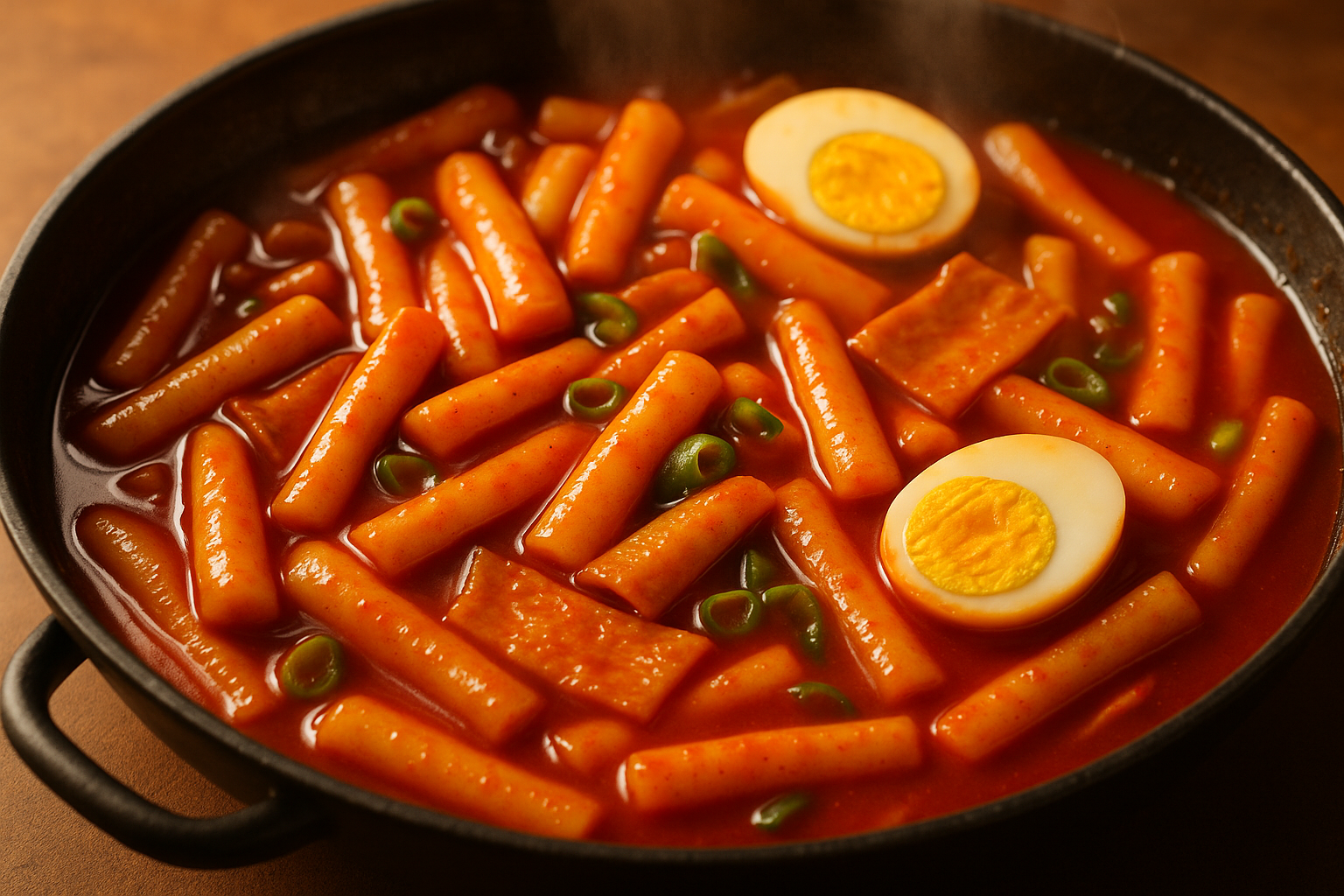
If you’ve fallen down a Korean food or K-drama rabbit hole, you’ve seen it: glossy red-orange rice cakes simmering in a wide pan at a street stall, or piled into a paper cup and eaten with a toothpick. That’s tteokbokki — chewy cylinders of rice cake bathed in a sweet, spicy, deeply savory sauce, and one of Korea’s most beloved everyday foods. It’s the after-school snack, the late-night comfort food, the dish that turns up in nearly every Korean street-food montage.
The good news for everyone outside Korea: you no longer need a flight to Seoul to eat it. Instant cups and meal kits have put this rice-cake dish on grocery shelves worldwide, and the from-scratch version takes about fifteen minutes. This guide covers what tteokbokki is, what it tastes like, the flavors worth knowing, how to make it at home, and the best kits to buy.
In this guide (9 sections)
- What is tteokbokki?
- What does it taste like — and how spicy is tteokbokki?
- From royal court to Sindang-dong: a short history
- The main types of tteokbokki
- How to make tteokbokki at home
- The best instant tteokbokki and kits to buy
- Where to buy tteokbokki
- How to store the rice cakes
- Frequently asked questions
What is tteokbokki?
Tteokbokki (떡볶이) is a Korean dish of chewy rice cakes stir-fried or simmered in a seasoned sauce. The rice cakes themselves are garaetteok — smooth, white, finger-length cylinders made from steamed and pounded rice flour, with a satisfyingly springy, gummy bite that is the whole point of the dish. The name simply joins tteok (rice cake) and bokki, from bokkeum (stir-fried).
The classic modern version coats those rice cakes in a glossy red sauce built on gochujang, Korea’s sweet-spicy fermented chili paste, loosened with stock and sweetened a touch. Alongside the rice cakes you will usually find eomuk (flat fish cakes), boiled eggs, and scallions, and it is sold everywhere from street carts and bunsik (snack) shops to convenience stores and sit-down restaurants. At a stall it is often eaten with twigim (Korean fritters) and blood sausage (sundae) dipped straight into the leftover sauce — the spicy-sweet pool at the bottom of the pan is half the appeal.
What does it taste like — and how spicy is tteokbokki?
The flavor is a tug-of-war between sweet and spicy, anchored by the chew. The sauce is savory and a little funky from the fermented chili paste, sweet from sugar or syrup, and warming rather than blistering — the heat builds as you eat rather than hitting all at once. Against that bold sauce, the rice cakes are mild and almost neutral, which is exactly why the combination works: soft, chewy starch soaking up an intense, glossy coating. It is also a famously communal food, scooped from a bubbling tray set in the middle of the table and shared.
How hot is it? The street-cart default is moderately spicy, but heat is the most adjustable thing about the dish. Milder, kid-friendly versions are common, and creamy variations tame the burn almost entirely, so there is a version for nearly everyone.
From royal court to Sindang-dong: a short history
The dish is older than its fiery red look suggests. The original was gungjung-tteokbokki — “royal court” tteokbokki — a soy-sauce-seasoned plate of rice cakes stir-fried with beef and vegetables, eaten by Korean royalty. Because chili peppers only reached Korea well into the Joseon era, this early version was not spicy at all; the earliest written record appears in a 19th-century cookbook.
The spicy red version the world knows now is a modern, post-war invention. The widely told origin story credits a vendor named Ma Bok-rim, who in 1953 began selling rice cakes in a gochujang-based sauce in Seoul’s Sindang-dong neighborhood. It caught on, the area filled with shops, and Sindang-dong Tteokbokki Town is still a pilgrimage spot today. From there it grew into the nation’s defining street snack.
The main types of tteokbokki
Once you start looking, the name really covers a whole family of dishes:
- Classic spicy (gochujang) tteokbokki — the red-sauce default of street stalls.
- Rabokki — the dish with instant ramen noodles tossed in. The name fuses ramyeon and tteokbokki, and the springy noodles add volume and slurp. Many of the same sweet-heat sauces behind spicy Korean instant noodles live here too.
- Rose (rosé) — the viral one: cream and milk soften the chili sauce into a pink, mellow, almost pasta-like dish. It is the gateway version for spice-shy eaters.
- Cheese — blanketed in melted mozzarella, which cools and enriches the sauce.
- Gungjung — the soy-based royal version, savory and non-spicy.
- Gireum — an older Seoul style stir-fried in oil with chili powder rather than simmered in liquid, drier and snackier.
How to make tteokbokki at home
From scratch, this is a genuinely fast weeknight dish. The basic method:
A teaspoon of sugar or a little corn syrup gives that signature street-stall gloss, and because the sauce reduces as it cooks, start a touch saucier than you want to end up.
The best instant tteokbokki and kits to buy
If you would rather skip the stock-making, this is one of the easiest Korean dishes to buy ready-made, and the quality is genuinely good:
- Instant cups — the grab-and-go format: rice cakes and a sauce packet in a cup you fill with water and microwave. Yopokki, made by Young Poong, is the brand you will see most often abroad, sold in Sweet & Spicy, Cheese, Jjajang, and Rose flavors, plus rabokki cups that include a ramen block.
- Pouch and tray kits — a step up, with chewier rice cakes and a wetter sauce closer to the restaurant version. These usually serve one to two people and only need a few minutes on the stove.
- DIY from components — for the most authentic result, buy a bag of fresh or frozen garaetteok and a bottle of sauce (or just make the sauce yourself), then add your own fish cakes and eggs.
When you are comparing options, check three things: the spice level, whether ramen is included (that makes it a rabokki), and whether it is a quick microwave cup or a cook-on-the-stove kit.
Where to buy tteokbokki
You no longer need to be in Seoul to find it:
- Korean and Asian grocers — H Mart, Hannam Chain, and local Korean markets stock instant cups, kits, and bags of fresh or frozen rice cakes.
- Online — Amazon, Weee!, and Korean-grocery delivery services ship every major instant brand, which makes it easy to compare flavors and spice levels from home.
- Convenience stores (in Korea) — Korea’s convenience stores sell hot, ready-to-eat cups you heat at the in-store microwave, a staple of the late-night snack run.
A bag of frozen rice cakes keeps for months, so it is worth stashing some for a fast spicy fix.
How to store the rice cakes
Fresh garaetteok is best used within a day or two and hardens quickly in the fridge; if it firms up, a soak in warm water or a quick boil revives the chew. For anything longer, freeze the rice cakes and thaw or soak them before cooking. Instant cups and sealed kits are shelf-stable — just check the date. The cooked dish is best eaten fresh, since the rice cakes keep absorbing sauce and firm up as leftovers; loosen reheated portions with a splash of water.
Frequently asked questions
Is tteokbokki very spicy?
The classic street version is moderately spicy, with a building, sweet-edged heat rather than a sharp burn. Mild versions are common, and rose (creamy) tteokbokki is barely spicy at all.
Is it gluten-free and vegan?
The rice cakes are made from rice, but the sauce often contains gluten (from the chili paste or soy sauce), and fish cakes and anchovy stock make most versions non-vegan. Plant-based, fish-cake-free recipes are easy to make at home — always check kit labels.
What’s the difference between tteokbokki and rabokki?
Rabokki is simply the same dish with instant ramen noodles added to the spicy sauce. Same base, plus noodles.
What are the rice cakes called?
Garaetteok — smooth, cylindrical rice cakes made from rice flour. Sliced thin, the same rice cake is used in tteokguk, Korea’s New Year soup.
I’m new to it — which version should I try first?
If you like spice, a classic instant cup is the easiest start. If you are spice-shy, go for the rose version. For the bigger picture of where this dish sits, see our complete guide to Korean food.
🛒 Buy Tteokbokki Online
Can’t get to a Korean convenience store? Get Tteokbokki shipped to your door on Amazon — compare top-rated imports, check real reviews, and stock up on the real thing without leaving home.
Disclosure: SeoulScope is a participant in the Klook and Agoda affiliate programs and the Amazon Associates Program. As an Amazon Associate we earn from qualifying purchases. We may earn a small commission when you book or buy through links in this post, at no extra cost to you. We only recommend experiences and products we believe will genuinely help your trip.
12 thoughts on “Tteokbokki: What It Is, How to Make It & the Best Kits to Buy”