If you’ve eaten bibimbap, tteokbokki, or a fiery bowl of Korean ramyeon, you’ve already tasted gochujang — the deep-red, sweet-and-spicy fermented chili paste that sits at the heart of Korean cooking. As Korean food has gone global, this thick crimson paste has moved out of specialty Asian groceries and onto mainstream supermarket shelves worldwide.
But a tub of it can be intimidating the first time. How spicy is it? What do you actually do with it? And with a dozen red tubs on the shelf, which brand should you buy? This guide breaks down what gochujang is, what it tastes like, how to cook with it, the best brands to look for, and exactly where to buy it.
What is gochujang?
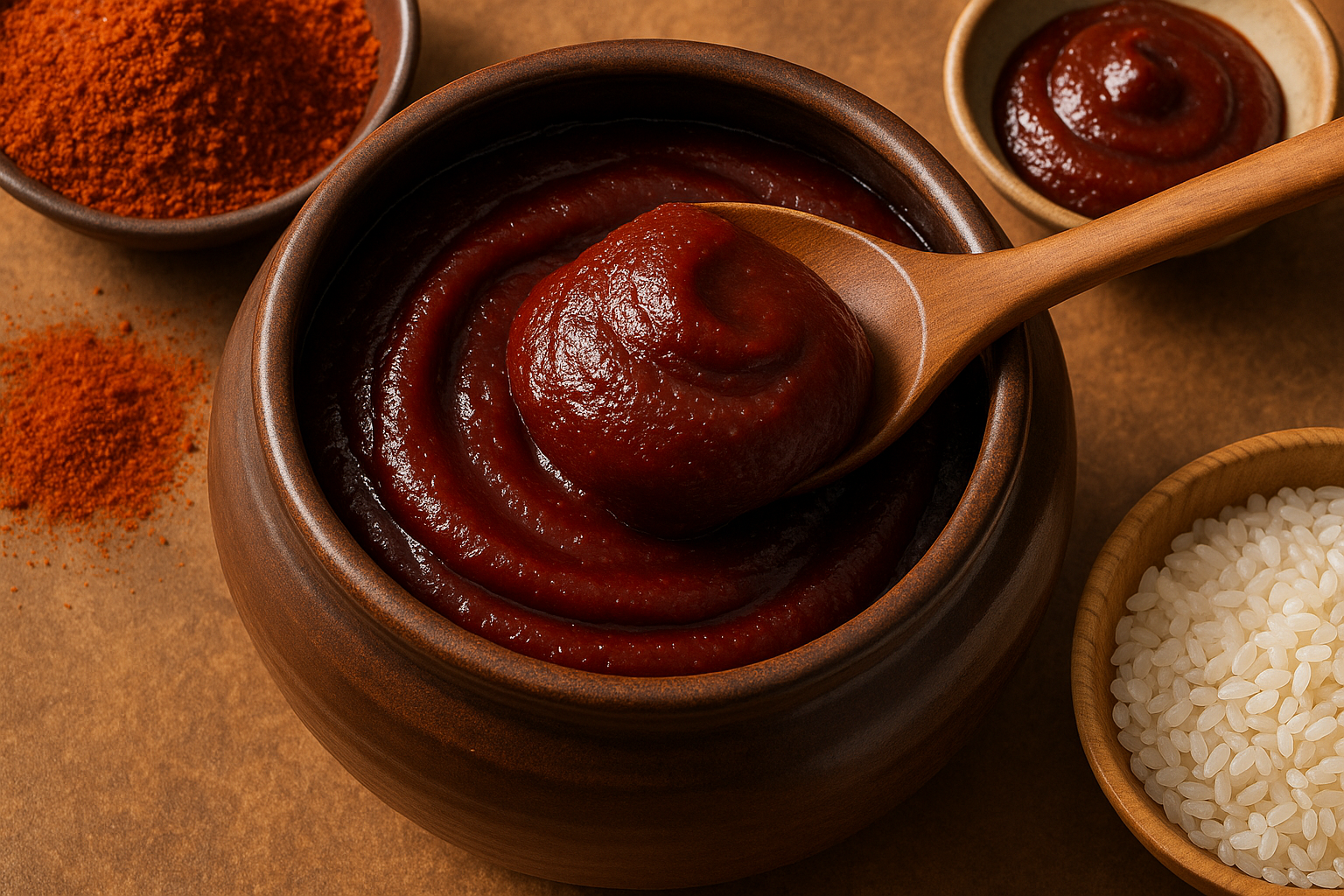
Gochujang (고추장) is a fermented Korean chili paste — thick, glossy, and brick-red, with a texture somewhere between tomato paste and miso. It’s built from just a handful of pantry staples: gochugaru (Korean red chili powder), glutinous rice, fermented soybean (meju) powder, barley malt powder, and salt.
What turns those simple ingredients into something remarkable is time. Traditionally the mixture is packed into earthenware pots called onggi, left to ferment for at least three months and sometimes up to three years. During that slow ferment the rice starches break down into natural sugars while the soybeans develop deep umami. The result is a condiment that tastes spicy, sweet, savory, and earthy all at the same time — four things at once, rather than one note. Because the base is rice and soybean, the traditional paste is naturally wheat-free, though some modern brands add wheat, so coeliacs should still check the label.
What does it taste like — and how spicy is gochujang?
The defining feature is balance. The heat from the chili is real, but fermentation rounds off the sharp edges, so it reads as a warming, savory-sweet spice rather than the bright burn of a fresh chili or a vinegary hot sauce. The fermented soybean gives it a funky, almost meaty depth, and the rice lends a gentle sweetness that keeps the heat in check.
Helpfully, Korean makers print a heat rating right on the tub. The Gochujang Hot-taste Unit (GHU) works a bit like the Scoville scale: below 30 GHU is mild, 30 to 45 is slightly hot, 45 to 75 is medium hot, and 75 to 100 is very hot. If you’re new to the paste, a mild or medium tub is the place to start — you can always add more heat later.
Gochujang vs. gochugaru, doenjang & ssamjang
The Korean pantry has several red and brown pastes that are easy to mix up:
- Gochugaru is dry Korean chili flakes or powder — the raw, unfermented spice that goes into kimchi and, yes, into gochujang itself. It’s an ingredient, not a paste, and the two aren’t interchangeable.
- Doenjang is fermented soybean paste — salty, savory, and funky, with no chili at all. Think of it as Korea’s cousin to Japanese miso.
- Ssamjang is a ready-made dipping blend of gochujang and doenjang loosened with garlic, sesame oil, and aromatics. It’s the sauce you smear on lettuce wraps at a Korean BBQ table.
So when a recipe calls specifically for the sweet-spicy paste, gochugaru and doenjang won’t stand in for it — each does a different job.
How to use gochujang
This is a true kitchen workhorse, and a single spoonful goes a long way. The most common ways to put it to work:
- Stews and braises — it’s the backbone of tteokbokki sauce, the engine of spicy stews like budae-jjigae, and a quick way to deepen any braise.
- Marinades — whisk it with soy sauce, garlic, sesame oil, and a little sugar for dak-galbi (spicy stir-fried chicken), spicy pork bulgogi, or grilled-meat glazes.
- Bibimbap — the classic finishing sauce, often loosened with sesame oil and a touch of sugar and vinegar into a yangnyeom sauce you swirl through the rice.
- Dips and glazes — stir it into ssamjang for grilled meats, melt it into gochujang butter for noodles or corn, or brush it onto chicken wings and salmon as a sticky glaze.
- Western mashups — gochujang mayo, a spoonful in pasta sauce, or a smear in a burger all work beautifully.
One useful tip: when you add it changes the heat. Stirred in early, the chili’s capsaicin intensifies; simmered a long time with liquid, the heat mellows; added at the very end, it keeps its full punch. Start with a teaspoon — the paste is potent and quite salty, and you can always build from there. Many of the sweet-heat sauces behind spicy Korean instant noodles and convenience-store tteokbokki live on this same flavor profile.
The best gochujang brands to buy
Four brands you’ll see most often abroad, and what sets each apart:
- CJ Haechandle — Korea’s most widely recognized everyday gochujang, sold in mild, medium, and hot strengths. A reliable, balanced all-rounder and a safe first buy.
- Chung Jung One — part of the Daesang group and known for its Sunchang line. It leans a little sweeter and milder, which makes it beginner-friendly, and the brand offers vegan-certified and gluten-free versions that are popular in Western markets.
- Sempio — one of Korea’s most established sauce houses, prized for a deep, naturally fermented flavor, with a plant-based version for vegans.
- Mother-in-Law’s — a Korean-American brand whose product is looser and more sauce than paste, leaning garlic- and sesame-forward. It’s a gentle on-ramp if you’re not ready for the full fermented funk.
When you’re comparing tubs, check three things on the label: the spice level (the GHU number, if printed), whether it’s certified vegan or gluten-free if that matters to you, and the format — a squeeze bottle is convenient, while a classic tub is usually better value.
Where to buy gochujang
You no longer need a trip to Seoul to find it:
- Korean and Asian grocers — H Mart, Hannam Chain, and local Korean markets carry the full range of brands in their signature red tubs.
- Mainstream supermarkets — as Korean food has gone mainstream, many Western chains now stock at least one gochujang in the international aisle, often a Chung Jung One or a store-brand version.
- Online — Amazon, Weee!, and Korean-grocery delivery services ship every major brand, which makes it easy to compare spice levels and sizes from home.
- At the source — in Korea, the Sunchang region in Jeollabuk-do is the country’s long-celebrated gochujang heartland, with a folk village dedicated to the paste.
A standard tub keeps for months once you’ve found a brand you like, so it’s worth buying one you’ll happily re-order.
How to store it
Unopened, the paste is happy in the pantry. Once you open it, move it to the refrigerator, where it keeps good quality for about a year. Store it cool, dark, and at a steady temperature, and always scoop with a clean, dry spoon — moisture and cross-contamination are what eventually lead to mold. A little darkening at the surface over time is normal, but discard the tub if it smells off or grows any fuzz.
A simple gochujang substitute
Run out mid-recipe? Nothing copies the fermented funk exactly, but you can get close. The best quick fix is to stir together a mild, sweet miso with some gochugaru (or other Korean chili flakes), a little sugar, and a pinch of salt, loosened with a splash of water and, if you have it, a few drops of rice vinegar. In a real pinch, sriracha with a touch of added sugar, or a Thai chili paste, will approximate the heat and sweetness — they just won’t bring the same aged depth. None are a perfect swap, but any of them will carry a dish until your next tub arrives.
Frequently asked questions
Is gochujang very spicy?
It’s moderately spicy rather than fiery. Fermentation softens the chili into a warm, sweet-savory heat. Check the GHU number on the tub — mild versions are family-friendly, while the hottest run up to 100 GHU.
Is gochujang gluten-free and vegan?
Often, but not always. The traditional paste is rice- and soybean-based, yet some brands add wheat, and fermentation methods vary — so it isn’t automatically gluten-free. Several makers, including Chung Jung One and Sempio, sell certified vegan and gluten-free versions. Always read the label.
Does gochujang need to be refrigerated?
After opening, yes. Keep it in the fridge with a clean spoon and it will stay good for roughly a year. Unopened, it’s fine in a cool pantry.
What’s the difference between gochujang and gochugaru?
Gochujang is a fermented paste; gochugaru is dry chili powder or flakes. Gochugaru is actually one of the ingredients used to make the paste, but the two are not interchangeable in recipes.
I’m new to it — what should I make first?
Start simple: a spoonful stirred into fried rice, a quick glaze for chicken wings, or a basic bibimbap. For the bigger picture of where this paste sits in the cuisine, see our complete guide to Korean food.
🛒 Buy Gochujang Online
Can’t get to a Korean convenience store? Get Gochujang shipped to your door on Amazon — compare top-rated imports, check real reviews, and stock up on the real thing without leaving home.
Disclosure: SeoulScope is a participant in the Klook and Agoda affiliate programs and the Amazon Associates Program. As an Amazon Associate we earn from qualifying purchases. We may earn a small commission when you book or buy through links in this post, at no extra cost to you. We only recommend experiences and products we believe will genuinely help your trip.
10 thoughts on “Gochujang: What It Is, How to Use It & the Best Brands to Buy”