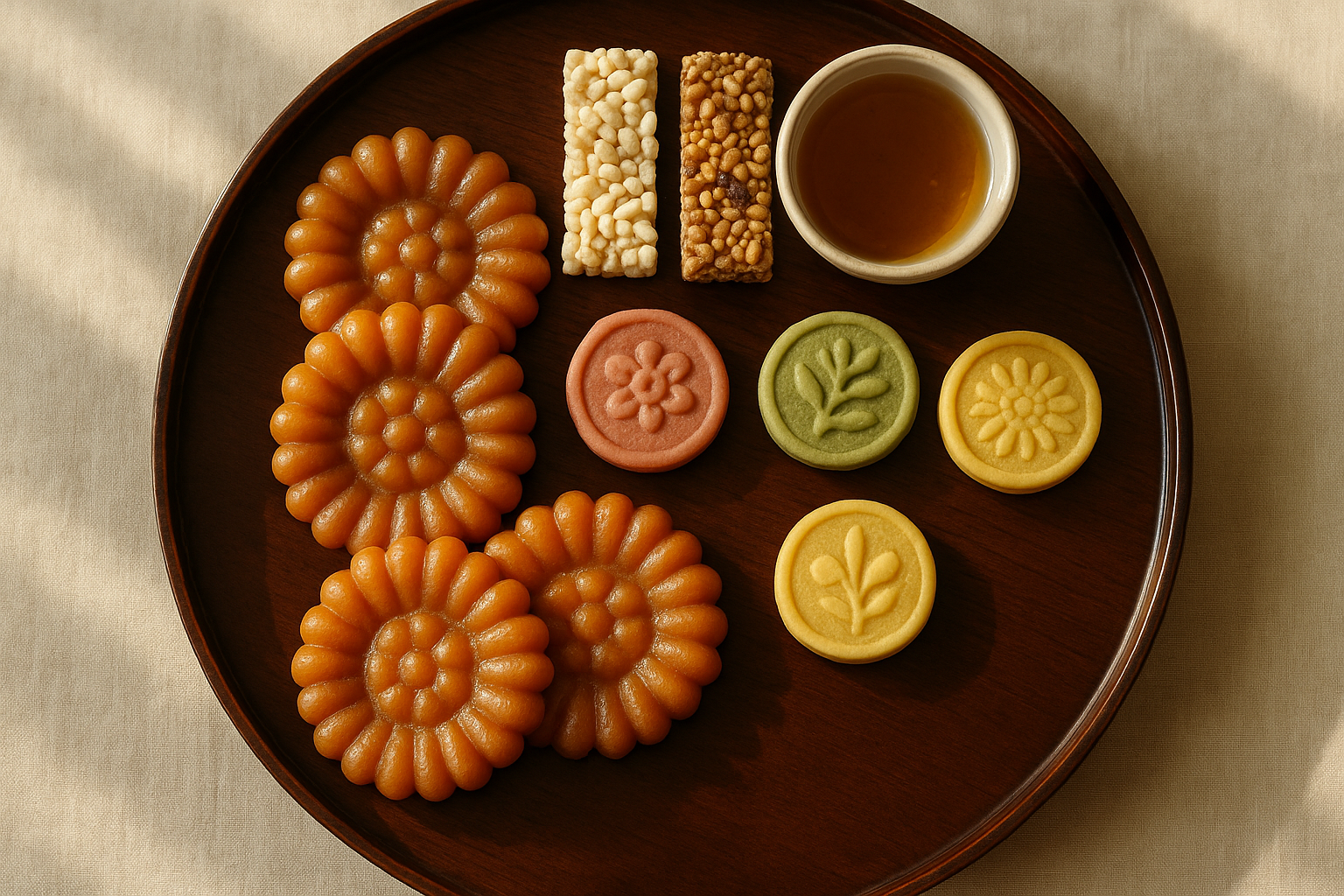
Korean traditional snacks are having an unlikely comeback. For decades, korean traditional snacks — the honey-glazed cookies and puffed-rice bars known collectively as hangwa (한과) — were holiday food, the stuff of grandparents’ tables at Chuseok and Lunar New Year. Then a deep-fried honey cookie called yakgwa went viral, the New York Times took notice, and suddenly Korea’s young foodies were lining up at dawn to buy a sweet their grandmothers grew up on.
If the K-snack aisle introduced the world to Honey Butter Chips and Buldak ramyeon, hangwa is the deeper cut — the centuries-old confectionery now turning up in convenience stores, dessert cafés, and online carts worldwide. This guide explains what korean traditional snacks actually are, the essential ones to know, why they’re suddenly cool, and exactly where to buy them, whether for yourself or as a gift.
What are korean traditional snacks (hangwa)?
Hangwa is the umbrella term for traditional Korean confectionery. Alongside tteok (rice cakes), it makes up the sweet-food category of Korean cuisine — and unlike the chip-and-chocolate world of modern Korean snacks — the aisle of pepero sticks and choco pie boxes — it’s built almost entirely around honey, grain, sesame, nuts, and malt syrup.
Traditionally, hangwa is grouped into several broad families: yumilgwa (also written yumil-gwa; oil-and-honey pastries made from wheat-flour-and-honey dough that is fried in oil and soaked in syrup, including yakgwa and maejakgwa), yugwa (puffed glutinous-rice confections), dasik (pressed tea cookies), jeonggwa (candied fruits and roots), gwapyeon (fruit jellies), yeot-gangjeong (nut and grain brittle), and yeot (malt taffy). Because they lean on whole grains, seeds, and nuts rather than dairy or cream, these sweets read as a more wholesome kind of indulgence — which is a big part of their new appeal.
A short history of hangwa
These sweets are old. Hangwa flourished during the Goryeo dynasty (918–1392), when Buddhism was the state religion and a cultural turn away from meat elevated tea drinking and the delicate confections served alongside it. Yakgwa and its honeyed cousins became prized enough to appear at royal banquets and Buddhist rites. Under the following Joseon dynasty (1392–1897), hangwa was refined into court and aristocratic yangban cuisine, and it took on a ceremonial role it still holds today: a proper jesa (ancestral memorial rite), wedding, or first-birthday table is incomplete without a tiered arrangement of yakgwa, gangjeong, and dasik. Regions developed their own specialties, and households guarded family recipes. That long pedigree is exactly why the current revival feels less like a fad and more like a homecoming — young Koreans aren’t discovering something new so much as reclaiming something their great-grandparents would recognize on sight.
Why hangwa is suddenly cool again
The driver is a trend Koreans call halmaenial (할매니얼) — a mash-up of halmae (“granny”) and “millennial.” It describes younger Koreans, millennials and Gen Z, embracing the flavors of their grandparents: red bean, rice cake, roasted-grain tea, and above all, hangwa.
Yakgwa became the poster child. Demand for the best artisan versions got so intense that fans coined the word “yaketing” — yakgwa plus ticketing — to describe racing to secure limited boxes, much like scrambling for K-pop concert seats. Famous yakgwa stalls at Seoul’s Gwangjang Market now draw long lines of young visitors. Convenience-store chains and dessert brands piled in too, releasing yakgwa cookies, yakgwa financiers, and even yakgwa-flavored frozen treats you can grab beside the convenience store ramyeon and the Korean ice cream chest. A New York Times feature pushed the craze international.
The essential hangwa to know
A useful way to read this section is umbrella first: hangwa is the broad traditional sweets category, while yumilgwa is one subcategory. If yakgwa feels like the anchor snack, that is because yakgwa sits inside the yumilgwa family: wheat flour and honey are worked into dough, fried in oil, then soaked in syrup. Maejakgwa belongs to the same branch.
Yakgwa — the breakout star
Yakgwa (약과) literally means “medicinal confection.” It’s a wheat-flour dough enriched with honey, sesame oil, and a splash of rice wine, pressed into a mold — often a flower shape — then deep-fried and steeped in a ginger-honey syrup until it turns chewy, sticky, and deeply fragrant. It dates to the Goryeo dynasty roughly a thousand years ago, and was so beloved that shortages of the wheat and honey it required reportedly led to periodic bans on making it. Today it’s the gateway hangwa and the single easiest one to find abroad.
Yugwa & gangjeong — the puffed-rice classic
Yugwa is a glutinous-rice dough that’s dried, then fried until it puffs into an airy block, and finally coated in syrup and a crust of puffed rice, sesame, or nuts. Light, shatteringly crisp, and only lightly sweet, it’s the signature sweet of Chuseok and Seollal gift tables.
Dasik — pressed tea cookies
Dasik (다식) is made by kneading finely milled grains, sesame, beans, or chestnut with honey, then pressing the paste into a carved wooden mold called a dasikpan. The result is small, dense, and jewel-like, stamped with auspicious patterns. The name means “tea food” — these are meant to be nibbled with tea, and they’re the most elegant hangwa of all.
Yeot-gangjeong — nut & seed brittle
Think of this as a Korean energy bar: puffed grains, nuts, and seeds bound together with malt syrup or honey and pressed into bars. Sesame, peanut, and pumpkin-seed versions are common — sweet but genuinely wholesome, which is why it’s popular with snackers of every age.
Jeonggwa & maejakgwa — candied roots and twisted cookies
Jeonggwa is fruit and roots — ginger, lotus root, ginseng, or citron — simmered slowly in honey or syrup until glossy and translucent, chewy and intense. Maejakgwa is a thin ribbon of dough, scored and folded through itself, fried crisp and glazed with ginger syrup. Both show off the quiet craftsmanship that defines hangwa.
Yeot — malt taffy with a backstory
Yeot (엿) is a chewy or hard malt-syrup candy, and one of Korea’s oldest sweets. It’s also famous as an exam-day gift: because yeot is sticky, giving a box to a student is a pun-wish that they’ll “stick to” — that is, pass — their test.
Hangwa makes the perfect edible gift
In Korea, a box of hangwa is a classic holiday present. Around Chuseok and Lunar New Year, department-store food halls fill with elaborate lacquered gift sets of yakgwa, gangjeong, and dasik, and giving one signals warmth and respect. That same quality makes korean traditional snacks an ideal thing to bring home or ship overseas: they’re shelf-stable, beautifully packaged, and unmistakably Korean — a more thoughtful souvenir than another keychain. Yakgwa in particular travels exceptionally well. The same gift halls stack lacquered boxes of Korean red ginseng alongside the hangwa sets, for anyone shopping for a Korean present that isn’t a snack.
Where to buy korean traditional snacks
You no longer need to be in Seoul to try them:
- In Korea — Gwangjang Market and other traditional markets for fresh yakgwa and the full “yaketing” experience; department-store food halls and Insadong shops for dasik and gift sets; convenience stores for the new wave of yakgwa snacks.
- Korean & Asian grocers abroad — H Mart, Hannam Chain, and local Korean markets stock yakgwa, gangjeong, and yeot in the snack and gift aisles.
- Online — Amazon, Weee!, and Korean-grocery delivery services ship shelf-stable yakgwa and gangjeong worldwide, often in proper gift packaging.
Start with yakgwa — it’s the most widely available and the most beginner-friendly — then branch out to gangjeong and dasik once you’re hooked.
How to enjoy hangwa
Hangwa was born as tea food, so the classic move is to pair it with a Korean brew — roasted barley tea (boricha), corn-silk tea, or a simple green tea all cut through the sweetness. Serve the pieces small; they’re rich and a little goes a long way. And if you can, warm a yakgwa slightly before eating — it releases the honey-and-sesame aroma and turns an already-good cookie into something special.
The revival has also pushed these old sweets in new directions. Seoul cafés now fold yakgwa into croissants and cookies, dust it over soft-serve, and reinvent gangjeong as crunchy dessert toppings — proof that a thousand-year-old confection can keep evolving. If you fall for the chewy-honey profile, it’s a short hop to the rest of Korea’s sweets. For the full picture of where these treats sit in the wider cuisine, see our complete guide to Korean food.
Frequently asked questions
What is the most famous Korean traditional snack?
Yakgwa, the deep-fried honey cookie, is the best known — especially now, after its viral “halmaenial” revival. Gangjeong (puffed-rice brittle) and dasik (pressed tea cookies) are close behind.
Are korean traditional snacks healthy?
They’re built around whole grains, nuts, seeds, honey, and sesame rather than dairy or cream, so they feel more wholesome than many Western sweets — but they’re still sweet, often honey- or syrup-heavy, so they’re best enjoyed in small portions.
Can I buy korean traditional snacks outside Korea?
Yes. H Mart and other Korean grocers carry yakgwa, gangjeong, and yeot, and Amazon and Weee! ship shelf-stable versions worldwide. Yakgwa is the easiest to find and the best place to start.
What’s the difference between hangwa and modern Korean snacks?
Hangwa refers to centuries-old confectionery made from honey, grain, and sesame, traditionally eaten on holidays and given as gifts. Modern Korean snacks are the packaged chips, biscuits, and candies — a different, newer category we cover separately.
Why is yakgwa so popular right now?
A wave of nostalgia among young Koreans (the “halmaenial” trend), viral social-media moments, and a flood of convenience-store and café spin-offs turned a humble ancestral sweet into one of Korea’s hottest treats.
Is yakgwa a type of hangwa?
Yes. Hangwa is the umbrella category for traditional Korean confectionery, and yakgwa is one of its best-known oil-and-honey pastries. Maejakgwa sits in the same branch, while yugwa, dasik, yeot-gangjeong, and yeot belong to different hangwa families.
What does hangwa taste like?
Expect honeyed, nutty, grain-forward sweetness rather than cream-heavy richness. Yakgwa is chewy and syrupy, yugwa is airy and crisp, dasik is dense and tea-cookie-like, and yeot-gangjeong leans crunchy because nuts or grains are bound with syrup.
🛒 Buy Korean Traditional Snacks Online
Can’t get to a Korean convenience store? Get Korean Traditional Snacks shipped to your door on Amazon — compare top-rated imports, check real reviews, and stock up on the real thing without leaving home.
Disclosure: SeoulScope is a participant in the Klook and Agoda affiliate programs and the Amazon Associates Program. As an Amazon Associate we earn from qualifying purchases. We may earn a small commission when you book or buy through links in this post, at no extra cost to you. We only recommend experiences and products we believe will genuinely help your trip.
6 thoughts on “Korean Traditional Snacks: A Guide to Hangwa & the Yakgwa Craze”