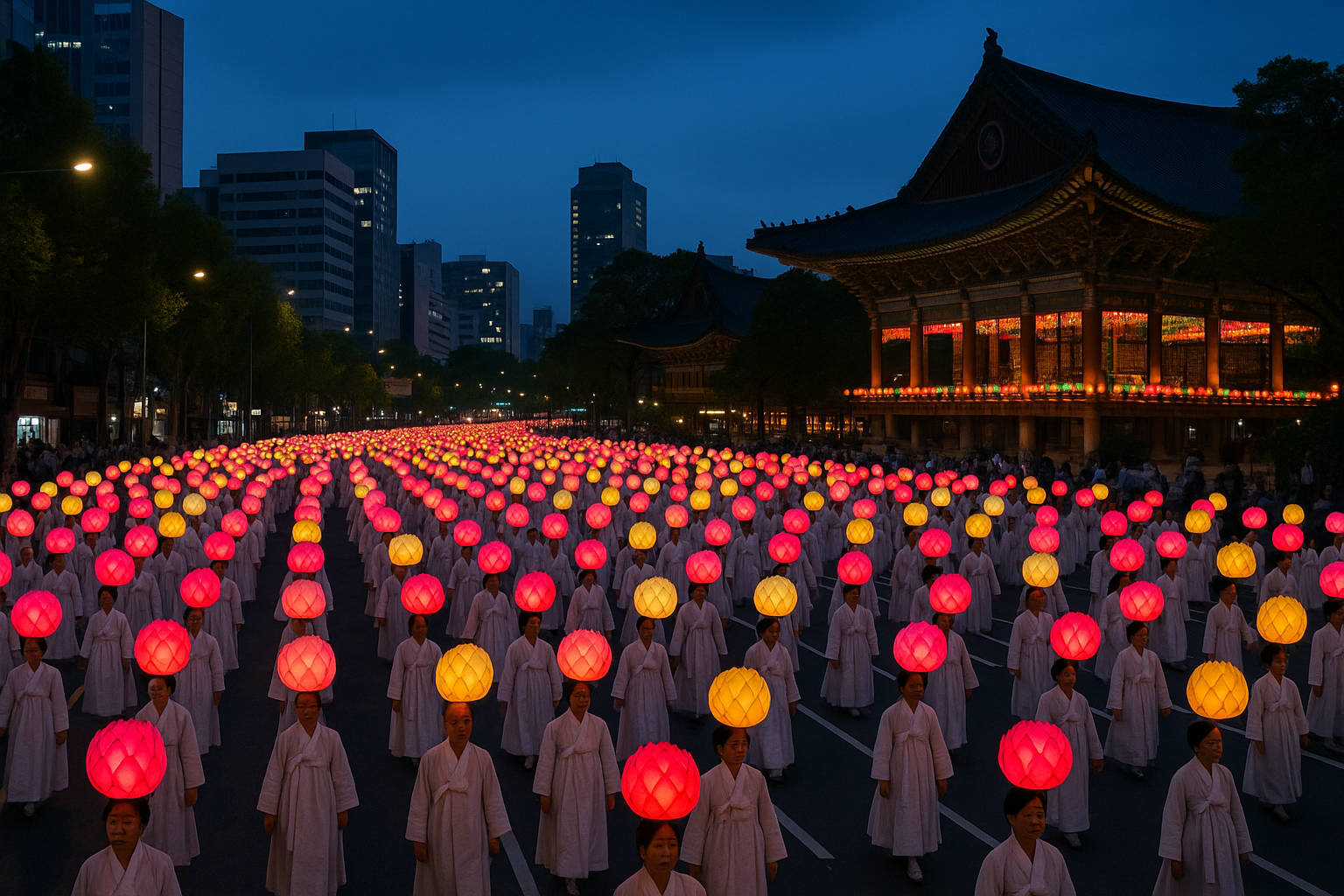
This lotus lantern festival seoul 2026 guide starts with the timing that decides whether you get a clean parade view or stand behind five rows of phones: on a Saturday evening in mid-May, central Seoul becomes a moving river of color. Tens of thousands of paper lanterns — handmade, lit from within, carried by monks and schoolchildren and grandmothers — flow down Jong-ro for nearly three hours. This is the Seoul Lotus Lantern Festival 2026 (연등회, Yeon Deung Hoe), and it’s one of the few free, large-scale cultural events in Korea that’s actually as beautiful as the photos suggest.
The festival has been held in Seoul for over a thousand years and is UNESCO-listed as an Intangible Cultural Heritage of Humanity. If you’re in Korea in May, this is the single best free thing on the calendar — and most travelers either don’t know about it or arrive at the wrong intersection at the wrong hour. This guide fixes that.
In this guide (12 sections)
- Lotus Lantern Festival Seoul 2026: Quick Answer
- When Is the Lotus Lantern Festival in 2026?
- What the Festival Actually Is
- The Best Viewing Spots for the Lantern Parade
- Where to Stay for the Festival
- What to Wear and Bring
- Photography Tips (From Someone Who’s Ruined Three Years of Photos)
- Combining the Festival With Other Seoul Sights
- What to Skip
- Practical Information
- FAQ
- Final Word
Lotus Lantern Festival Seoul 2026: Quick Answer
🎟️ Book Your Lotus Lantern Festival Seoul 2026 Experience
Skip the queues and language barriers. Compare verified tours, tickets, and rentals for Lotus Lantern Festival Seoul 2026 on Klook — instant mobile vouchers, English support, free cancellation on most activities.
The main parade is Saturday, May 16, 2026, from 7:00 PM to 9:30 PM along Jong-ro from Dongdaemun toward Jogyesa Temple near Jonggak. For the best first-time visitor view, arrive near Jongno 2-ga or Jonggak Station Exit 4 by 6:30 PM, stand on the north side of the street, and stay through the Hoehyang Hanmadang finale at Jonggak.
When Is the Lotus Lantern Festival in 2026?
The festival is anchored to Buddha’s Birthday, which in 2026 falls on Sunday, May 24. The main festival weekend runs Saturday, May 16 and Sunday, May 17 — about a week ahead of Buddha’s Birthday — with the parade — the part you actually want to see — held on Saturday evening, May 16.
Here’s the schedule that matters:
- Friday, May 15 (evening): Eve celebration at Dongguk University and Jogyesa Temple lantern lighting
- Saturday, May 16, 7:00–9:30 PM: Lantern parade (Dongdaemun → Jongno → Jogyesa), capped by the Hoehyang Hanmadang celebration at Jonggak intersection
- Sunday, May 17, all day: Traditional cultural festival on Ujeongguk-ro near Jogyesa Temple
- Sunday, May 24 (evening): Buddha’s Birthday observances at temples citywide
Dates shift each year because Buddha’s Birthday is set by the lunar calendar. The official source for confirmation is the Yeon Deung Hoe schedule on VisitSeoul.net — check it the week before in case of weather delays.
What the Festival Actually Is
Most guides describe Yeon Deung Hoe as “a lantern festival.” That undersells it. It’s three connected events:
The parade is the one event where arriving 10 minutes late means a worse spot for the next two hours. The other two are walk-up friendly.
The Best Viewing Spots for the Lantern Parade
The 2026 parade route runs along Jong-ro (the historic east–west avenue through central Seoul), starting near Heunginjimun Gate (Dongdaemun) at the eastern end and ending at Jogyesa Temple near Jonggak Station at the western end. The parade moves westward over roughly 2.5 hours.
Four spots are worth knowing about:
1. Jongno 2-ga Intersection (Best Overall)
The parade pauses here for the largest float reveals. Sidewalks are wide. Subway access is Jonggak Station (Line 1), Exit 4. Arrive by 6:30 PM for a front-row position on the north side of the street, which gets better light as the sun moves west.
2. Tapgol Park Side (Best for Families)
Across from Tapgol Park, between Jongno 2-ga and Jongno 3-ga. Slightly less crowded than the main intersection, with the option to duck into the park if kids need a break. Jongno 3-ga Station (Lines 1/3/5), Exit 1.
3. Jongno 4-ga (Best Photography)
The parade is well-warmed-up here, and by the time it reaches this stretch the sky is fully dark — maximum contrast for the glowing lanterns. Fewer tourists, more locals. Exit 4 of Jongno 3-ga is your closest stop; walk three blocks east.
4. Jonggak Finish Zone (Best for Energy, Worst for Photos)
The final celebration (Hoehyang Hanmadang) happens at the Jonggak intersection once the parade arrives, around 9 PM. Expect crowds, traditional folk music, and a big dance circle that anyone can join. If you only have an hour and want to feel the festival rather than document it, come here.
Avoid: The pedestrian overpasses. Sounds like a great idea — they’re usually closed for safety or packed with reporters by 3 PM.
Where to Stay for the Festival
If you’re flying in specifically for Yeon Deung Hoe, stay within walking distance of Jong-ro so you can avoid the post-parade subway crush. The three zones to consider:
- Insadong / Jongno: Walking distance to both the parade route and Jogyesa Temple. Mix of mid-range hotels and traditional guesthouses.
- Myeong-dong: Two subway stops south. More hotels in every price range, easy walk to City Hall in case you want to add Deoksugung evening lighting.
- Bukchon / Samcheong-dong: A 15-minute walk north of Jong-ro. Quieter, atmospheric, walkable to the daytime cultural events.
Jongno and Insadong hotels for Lotus Lantern weekend — book by mid-April; the Friday and Saturday nights of festival weekend sell out fast at the budget tier, and free-cancellation rates are still common up to 7 days out.
If you’re combining the festival with a longer Korea trip, the Bukchon Hanok Village local’s guide covers the neighborhood where many festival-weekend visitors base themselves.
What to Wear and Bring
Late May in Seoul averages 22°C (72°F) during the day and drops to about 15°C (59°F) by 8 PM. A light jacket and comfortable shoes are non-negotiable — you’ll stand for two-plus hours and walk between spots.
If you want to dress up for the festival, hanbok is welcomed and even encouraged at Jogyesa Temple’s daytime events. Rentals near the parade route cluster in Insadong and Bukchon, both a short subway hop from the parade. Compare hanbok rental options on Klook and pre-book — walk-in availability collapses on festival weekend.
Other things to bring:
- A portable phone battery. You’ll burn through one charge on photos alone.
- A small folding stool. Locals bring them. You’ll wish you had.
- Cash for street food. Most parade-route stalls take cards now, but the Sunday culture festival is mostly cash.
Photography Tips (From Someone Who’s Ruined Three Years of Photos)
Lanterns are tricky. They’re bright on the inside, dark on the outside, and they’re moving. Three things that will fix 90% of your shots:
For the post-parade celebration at Jonggak, switch to wide-angle and shoot from below — the lanterns hung overhead are the photo, not the crowd.
Combining the Festival With Other Seoul Sights
Festival weekend is a great excuse to plan a Seoul historic-core day:
- Morning: Gyeongbokgung Palace and the 10 AM changing-of-the-guard ceremony; if you are staying after sunset, compare the Seoul palace night tour guide before locking your route.
- Lunch: Tongin Market lunch-box experience, two stops west on Line 3.
- Afternoon: Bukchon Hanok Village quiet alleys (covered in the Bukchon guide).
- Early evening: Position for the parade by 6:30 PM.
- Late evening: Coffee or dessert on the way back. The Seoul spring cafes guide covers walkable options in nearby Samcheong-dong, and the best bingsu Seoul summer 2026 guide is useful if the evening is already warm.
If you want a guided version of the festival weekend with parade-route access and translation, check Seoul cultural festival tours on Klook — small-group options run during Yeon Deung Hoe weekend and typically include hanbok rental and a temple visit.
What to Skip
A few things that show up on every Yeon Deung Hoe roundup but aren’t worth the time:
- “VIP parade seating” packages from random ticketing sites. The parade is free and public. There’s no legitimate paid seating.
- Pre-parade temple tours that don’t include Jogyesa. Jogyesa is the headquarters and the photo. Skip anything that substitutes a different temple.
- Late-night drone shows at unrelated venues marketing themselves around the festival. They’re not part of Yeon Deung Hoe.
Practical Information
- Festival dates (2026): May 16 (Sat) – May 17 (Sun)
- Parade date and time: Saturday, May 16, 7:00–9:30 PM
- Parade route: Dongdaemun (Heunginjimun) → Jongno → Jogyesa Temple (Jonggak)
- Best subway access: Jonggak Station (Line 1), Jongno 3-ga Station (Lines 1/3/5)
- Admission: Free for all events
- Languages: Festival information available in English at the Yeon Deung Hoe section of VisitSeoul.net
- Rain plan: Heavy rain may shorten or delay the parade. Check VisitSeoul on the Friday before.
FAQ
When is the Lotus Lantern Festival in Seoul in 2026?
The festival runs May 16–17, 2026, about a week before Buddha’s Birthday on May 24. The main lantern parade takes place on Saturday, May 16, from 7:00 PM to 9:30 PM along Jong-ro between Dongdaemun and Jogyesa Temple near Jonggak.
Is the Seoul Lotus Lantern Festival free?
Yes. Every official event — the parade, the Sunday culture fair, and the temple observances at Jogyesa and Bongeunsa — is free to attend. Hanbok rental, temple food, and souvenir lanterns are optional add-ons.
What is the best place to watch the Yeon Deung Hoe parade?
Jongno 2-ga intersection, on the north side of the street near Jonggak Station Exit 4. Arrive by 6:30 PM for the largest float reveals and a clean line of sight. Jongno 4-ga is the best alternative for photographers seeking less crowd density.
What time does the lantern parade start?
The official start time is 7:00 PM at Heunginjimun Gate (Dongdaemun). Lanterns reach Jongno 2-ga around 8:00 PM and the Jogyesa/Jonggak finish around 9:00 PM, with the Hoehyang Hanmadang celebration and folk performances running to about 9:30 PM.
Do I need a ticket for the Lotus Lantern Festival?
No. The parade is held on public roads and is free. Anyone offering paid VIP seating or required entry tickets is not affiliated with Yeon Deung Hoe.
Final Word
If you’re in Korea on the weekend of May 16–17, 2026, build your trip around this. The Lotus Lantern Festival Seoul 2026 route rewards travelers who arrive early, pick one viewing corner, and let the parade come to them. There’s nothing else like a slow-moving river of handmade light passing through one of the oldest streets in Seoul — and unlike most things travelers chase, it’s still free, still public, and still mostly Koreans showing up for it. Get there early, stand on the north side of Jong-ro, and let the parade come to you.
Disclosure: SeoulScope is a participant in the Klook and Agoda affiliate programs. We may earn a small commission when you book through links in this post, at no extra cost to you. We only recommend experiences we believe will genuinely help your trip.
3 thoughts on “Lotus Lantern Festival Seoul 2026: Parade Route, Timing & Best Spots”