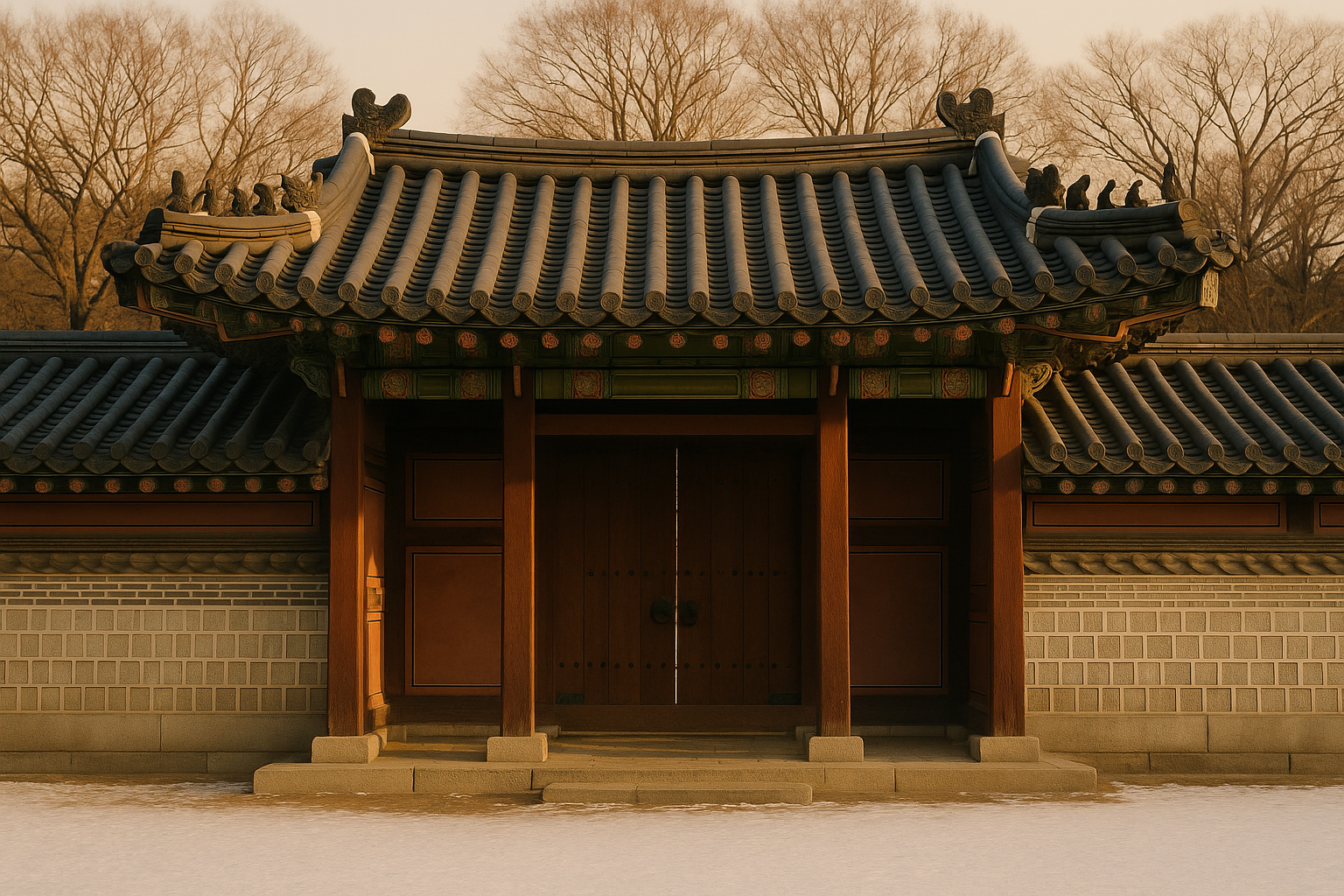
Seoul’s five royal palaces do not close on the same day of the week, and nothing on the ground tells you that until you are standing at a locked gate. Gyeongbokgung is shut on Tuesday. Changdeokgung, Deoksugung and Changgyeonggung are shut on Monday. Jongmyo Shrine follows Gyeongbokgung, the royal tombs follow Changdeokgung, and the one site most people assume is always open — Sungnyemun, the great south gate — has a closing day too.
The practical consequence is better than it sounds. Because the closures are split across two weekdays, there is no day of the week when every palace in central Seoul is closed. A Monday in Seoul is a Gyeongbokgung-and-Jongmyo day. A Tuesday is a Changdeokgung-and-Deoksugung day. The mistake is not that the palaces close; it is planning a Monday around the wrong half of the list.
This guide sets out the official weekly closures, the holiday rule that moves them, and the one calendar pattern that can close almost everything on the same day.
Seoul Palace Closed Days at a Glance
🎟️ Book Your Seoul Palace Closed Days Experience
Skip the queues and language barriers. Compare verified tours, tickets, and rentals for Seoul Palace Closed Days on Klook — instant mobile vouchers, English support, free cancellation on most activities.
The Korea Heritage Service Royal Palaces and Tombs Center publishes a single regular-closure table covering all of its sites. These are the seoul palace closed days as that table states them:
| Closed on Monday | Closed on Tuesday |
|---|---|
| Changdeokgung | Gyeongbokgung |
| Deoksugung | Jongmyo Shrine |
| Changgyeonggung | Chilgung (Yuksanggung) |
| Joseon Royal Tombs (all) | — |
| Sungnyemun | — |
Two sites sit outside the pattern. Sajikdan, the royal ancestral altar west of Gyeongbokgung, is listed as open at all times. Jangneung in Yeongwol, the tomb of the deposed King Danjong, closes on Mondays like the other tombs but also closes on the day of Seollal and the day of Chuseok.
Read the table by group rather than by palace and the week becomes easy to plan. The Monday group is the eastern cluster plus the tombs: Changdeokgung and its Huwon garden, Changgyeonggung next door, Deoksugung in the business district, and every Joseon royal tomb around the capital. The Tuesday group is Gyeongbokgung and the two Confucian ritual sites tied to it, Jongmyo and Chilgung.
Why the Split Exists, and Why It Trips People Up
Travel itineraries almost always lead with Gyeongbokgung. It is the largest palace, it has the guard-changing ceremony, and it is the one that appears in every photograph of Seoul in a hanbok. So the mental model most visitors arrive with is “Gyeongbokgung equals palaces,” and Gyeongbokgung’s closing day — Tuesday — gets generalised to the whole category.
That generalisation fails in both directions. Arrive on a Tuesday expecting a palace day and Gyeongbokgung is closed while three other palaces are open. Arrive on a Monday having rearranged your week to avoid Tuesday and you will find Changdeokgung, Changgyeonggung and Deoksugung locked while Gyeongbokgung sells tickets as normal.
The second trap is the guard-changing ceremony. It runs at Gyeongbokgung’s main gate, which means it follows Gyeongbokgung’s calendar rather than the palace-category calendar. If the ceremony is the fixed point of your day, the detail that matters is Gyeongbokgung’s Tuesday closure, not the generic advice to avoid Mondays. The Gyeongbokgung guard-changing ceremony guide covers the schedule and the standing viewing positions.
The Holiday Rule That Moves the Closure
The regular closures are not absolute. The official rule has two clauses, and both matter:
So a public holiday on a Monday does not give you a closed Changdeokgung. It gives you an open Changdeokgung on the Monday and a closed Changdeokgung on the Tuesday.
That is where the calendar can turn against you. On a Tuesday following a Monday public holiday, the Monday group has shifted its closure onto Tuesday — the day the Tuesday group is already closed. The result is a single day with Gyeongbokgung, Jongmyo, Chilgung, Changdeokgung, Deoksugung, Changgyeonggung and the royal tombs all shut at once.
The next clear instance is March. 1 March 2027 falls on a Monday. Independence Movement Day is a public holiday, so under clause 1 the Monday group opens on 1 March, and under clause 2 its closure moves to Tuesday 2 March, which is already Gyeongbokgung’s and Jongmyo’s closing day. If you are planning a palace day in that week, make it the Monday.
Within this winter itself the fixed-date holidays land harmlessly: Christmas Day 2026 and New Year’s Day 2027 both fall on a Friday, so neither moves a closure. Seollal and Chuseok shift with the lunar calendar, and the free-opening notices that usually accompany them are published separately each year — check the official notice board rather than assuming last year’s dates repeat.
Winter Closing Times Make the Closed Day Worse
Losing a day to a closure hurts more in winter than in summer, because the usable window on the remaining days is shorter. Gyeongbokgung runs 09:00 to 17:00 from November through February with the ticket office closing at 16:00. Changdeokgung runs 09:00 to 17:30 from November through January with last entry at 16:30. On a short winter afternoon, discovering a closure at 15:00 does not leave you time to cross the city and still get into a different palace.
Two palaces are the exception. Deoksugung and Changgyeonggung keep their grounds open to 21:00 all year with last entry at 20:00, which makes them the natural recovery plan when a closure or a late start has eaten your afternoon. The catch is that their indoor spaces do not stay open that late — the Seokjojeon and Jungmyeongjeon exhibition halls at Deoksugung close in the late afternoon, and Changgyeonggung’s Grand Greenhouse is not open from 18:00 during December and January. Full cutoffs for every site are in our Seoul palace winter hours and last entry guide.
How to Build a Week Around the Closures
If you have one day and it is a Monday. Gyeongbokgung in the morning for the ceremony, then Jongmyo Shrine or Chilgung in the afternoon. Both are in the Tuesday group, so both are open. Note that Jongmyo runs timed reserved viewing on ordinary weekdays and free general admission only on weekends, public holidays and the last Wednesday of the month, and that Chilgung requires an advance internet reservation with a guide.
If you have one day and it is a Tuesday. Changdeokgung in the morning, including the Huwon garden if you booked it, then walk through to Changgyeonggung, which connects directly. Deoksugung works as a late addition because of the 21:00 grounds closing. Booking rules for the garden are in the Changdeokgung Secret Garden booking guide.
If you have two days. Put them on either side of the split: one Monday-group day and one Tuesday-group day, in any order. Avoid the pairing that looks most efficient on a map — Gyeongbokgung and Changdeokgung are a fifteen-minute walk apart, which tempts people into doing both in one day, and that day has to be a Wednesday, Thursday, Friday, weekend or holiday to work at all.
If your dates are fixed and inconvenient. The evening programmes are a separate calendar from daytime admission. The Changdeokgung moonlight tour and the palace night opening at Gyeongbokgung run on their own announced dates, and the Deoksugung tickets and Seokjojeon guide explains how the late grounds hours work in practice.
Royal Tombs Follow the Monday Group
The Joseon royal tombs are easy to overlook in a palace itinerary and easy to get wrong, because they all close on Monday and several of them open much earlier than the palaces do. From November through January the general pattern is 09:00 to 17:30 with last entry at 16:30, but Donggureung in Guri and Jeongneung in Seoul open at 06:30, Seooreung in Goyang and Jangneung in Gimpo open at 07:00, and Seolleung and Jeongneung in Gangnam open at 06:30. The night opening at Seolleung and Jeongneung runs only from March to October, so a winter evening visit there is not possible.
If a tomb is the reason for your trip out of the centre, the Monday closure is the one to check first — the sites are far enough apart that a wasted journey costs most of a day.
What the Official Pages Actually Say
Two pages carry the authoritative text. The viewing hours and regular closures page carries the closure table and the seasonal hours for every site. The regulations page carries the text of Article 3-2 of the rules on palace and tomb viewing, which is where the holiday-override mechanism comes from rather than from any secondary summary.
One warning about the official site, because it will mislead you if you browse it the obvious way. Each palace has its own landing page with a sidebar box headed “viewing information,” and that box prints the same values — 09:00 to 18:30, last entry 17:30, closed Tuesdays — no matter which palace you are looking at. Those are Gyeongbokgung’s summer figures sitting in a shared template. Read the closure table on the hours page instead. If you see identical hours on five different palace pages, that is one template repeated, not five sites agreeing.
FAQ
Is there a day when all the palaces in Seoul are closed?
Not in an ordinary week, because the closures are split between Monday and Tuesday. It can happen when a public holiday falls on a Monday and pushes the Monday group’s closure onto Tuesday.
Which palaces are open on Monday?
Gyeongbokgung, Jongmyo Shrine and Chilgung. Changdeokgung, Changgyeonggung, Deoksugung, Sungnyemun and the royal tombs are closed.
Which palaces are open on Tuesday?
Changdeokgung, Changgyeonggung, Deoksugung, Sungnyemun and the royal tombs. Gyeongbokgung, Jongmyo and Chilgung are closed.
Does the integrated palace pass still work on a closing day?
The pass is a ticket, not an access right — it is valid only at sites that are open. Build the itinerary around the seoul palace closed days first and the pass second.
Do the seoul palace closed days change in winter?
The weekly pattern does not change by season. What changes is the daily window: Gyeongbokgung closes at 17:00 from November through February, and several sites stop admitting an hour before they close.
What happens on the last Wednesday of the month?
That is Culture Day in Korea. At Jongmyo it converts an ordinary weekday into a general-admission day without timed reservations. In this winter that falls on 25 November 2026, 30 December 2026, 27 January 2027 and 24 February 2027.
The Short Version
The seoul palace closed days are not one rule but two groups. Monday closes the eastern palaces, Deoksugung, Sungnyemun and the tombs; Tuesday closes Gyeongbokgung, Jongmyo and Chilgung. A public holiday on a closing day opens the site and pushes the closure to the next working day, which is the only way the whole list can end up shut together. Check which group you are visiting before you fix the date, and check the ticket-office cutoff before you fix the hour.
Disclosure: SeoulScope is a participant in the Klook and Agoda affiliate programs and the Amazon Associates Program. As an Amazon Associate we earn from qualifying purchases. We may earn a small commission when you book or buy through links in this post, at no extra cost to you. We only recommend experiences and products we believe will genuinely help your trip.
1 thought on “Seoul Palace Closed Days: Which Palace Shuts on Monday and Which on Tuesday”