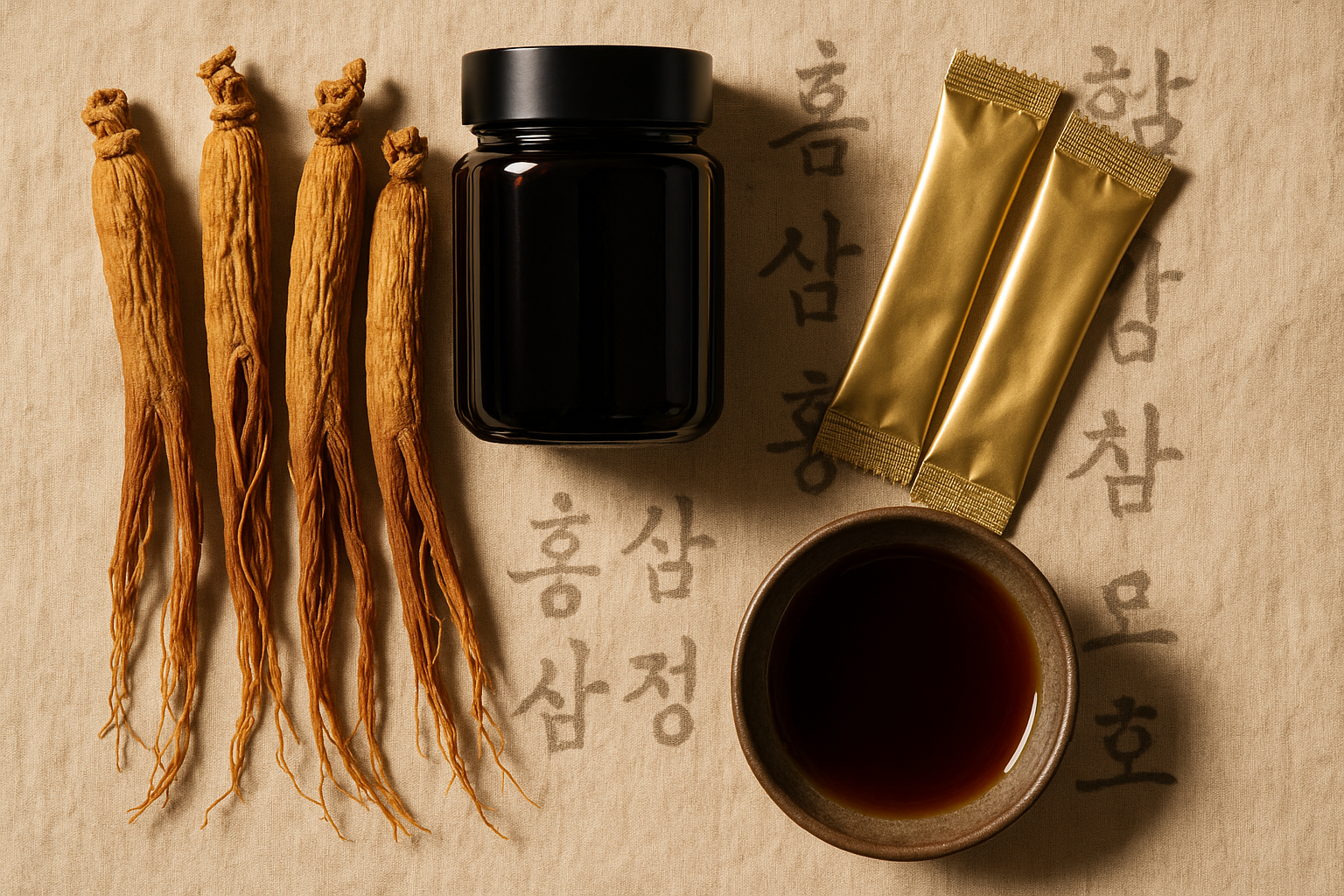
If you’ve ever browsed a Korean grocery store or scrolled through K-beauty and K-wellness hauls online, you’ve almost certainly seen those sleek gold boxes with the words korean red ginseng printed across the front. The product sits at the very top of Korea’s wellness culture — revered for centuries and now exported worldwide. This guide covers everything you need to know to understand, choose, and actually use it from your own kitchen or morning routine, wherever you live.
—
Quick Answer: What Is Korean Red Ginseng?
Red ginseng (홍삼, hong sam) is the root of the plant Panax ginseng that has been steamed and dried at least once, turning it from a pale, starchy root into a darker, reddish-brown ingredient with a concentrated, distinctly bitter-sweet flavor. The steaming process chemically transforms certain compounds in the root, producing a different ginsenoside profile than raw or white ginseng, which is why proponents consider it more potent. It is not a drug or medicine under most international regulatory frameworks — it is sold as a food or dietary supplement — but it has been a cornerstone of Korean traditional wellness for over a thousand years.
—
How Korean Red Ginseng Is Made
Fresh ginseng roots grown in Korea (particularly in Geumsan and the Gyeonggi region) are harvested after four to six years of cultivation — the longer the growth cycle, the higher the ginsenoside concentration. After harvest, the roots undergo a steam-drying process at controlled temperatures. This steaming step is the defining moment: it caramelizes natural sugars, deepens the color to a reddish mahogany, reduces moisture, and alters certain saponin compounds into forms not present in the raw root.
The steamed roots are then dried again until their moisture content drops to a shelf-stable level. The result is what Koreans call hong sam — literally “red” (홍) + “ginseng” (삼). Products labeled “white ginseng” (백삼, baek sam) skip the steaming stage, which is why the two look and taste noticeably different.
Korea’s Ministry of Food and Drug Safety (MFDS) oversees quality standards for ginseng products. You can read more about those regulations at the Korean MFDS official site.
—
The Main Forms of Korean Red Ginseng You Can Buy
Red ginseng is sold in multiple formats, each suited to a different lifestyle and budget. Here’s what you’ll actually find on shelves or on Amazon.
Extract Sticks (Liquid Sachets)
These are slim, individual-serving pouches — usually about the size of a ketchup packet — filled with a dark liquid extract. Each stick is one serving. You tear the top, squeeze it into your mouth directly or stir it into warm water. This is the most popular format for daily use outside Korea because it’s portable, pre-measured, and requires zero preparation. The flavor hits immediately: intensely bitter up front, then earthy and faintly sweet as it fades. Think of it as somewhere between strong black coffee bitterness and the aftertaste of dark cocoa, but with a herby, woody edge that’s entirely its own.
Concentrate (Paste)
A thick, dark amber paste sold in a glass jar with a small wooden or plastic spatula. You scoop out a small amount (roughly half a teaspoon is a typical serving) and dissolve it in warm water, honey water, or warm milk. The flavor is even more intense than extract sticks because nothing has been diluted. This format often gives you better value when you compare the amount of ginseng solids per serving, and it’s easy to adjust the dose to your taste tolerance. If you’re new to the flavor, start with less than the label suggests.
Capsules and Tablets
For people who simply don’t want to deal with the taste, capsules are the obvious answer. They contain dried extract powder, concentrated root powder, or a combination of both. You lose the full sensory experience, but you get a consistent, tasteless dose. Capsule products are widely available on Amazon and in Asian grocery stores.
Tea Bags
Red ginseng tea bags are a gentler introduction — they contain root pieces or powder in a standard tea bag, producing a pale amber brew with a mild bitterness. The taste is noticeably less intense than the extract, making this a good starting point if you’re unsure about the flavor but want something warm and comforting. Pair it with a small spoonful of honey for a beverage that works as a morning ritual.
Whole Roots and Slices
Dried whole roots or sliced pieces are sold in sealed packs or vacuum-sealed bags. They are the most “traditional” form and are used to brew teas, simmer into soups (삼계탕, samgyetang-style chicken broth), or chew directly. The texture of dried slices is hard and leathery before cooking, softening as it steeps. If you plan to explore Korean food pantry essentials at home, keeping a small pack of dried ginseng slices on hand opens up a range of traditional recipes.
—
What Does Korean Red Ginseng Taste Like?
Bitter, earthy, and faintly sweet — with a warming quality that lingers in the back of the throat. The bitterness is the dominant note, especially in the extract and concentrate forms, and it’s unlike most Western bitter flavors (like coffee or dark chocolate). It’s more resinous, almost medicinal in the classic sense. The earthiness is damp-wood-and-root rather than vegetal. The faint sweetness is natural, not added, and helps balance the bitterness without eliminating it.
First-time drinkers often wince at the extract stick taken straight. The culturally standard way to soften the experience is to chase it with warm water or mix a small amount of honey into the drink. After a few days of daily use, most people stop noticing the bitterness and start appreciating the warming, grounding quality.
—
How to Use Korean Red Ginseng Every Day
- Morning drink: Stir a spoonful of concentrate or one extract stick into a cup of warm (not boiling) water. Hot temperatures above roughly 70–75 °C can degrade some active compounds, so let boiling water cool briefly first.
- Honey water: Mix concentrate with a teaspoon of honey and warm water. This is the most widely consumed home preparation in Korea.
- Smoothies: A small amount of concentrate blends into fruit smoothies — banana or mango masks the bitterness almost entirely for those who are still adjusting.
- Cooking: Slice dried roots into chicken broth for a simple ginseng-forward soup. Add a small amount of concentrate to marinades for pork or beef — it pairs naturally with soy and sesame.
- Tea rituals: Steep dried ginseng slices in hot water for 10–15 minutes. Add jujube (dried red dates) and a strip of cinnamon bark for a flavor combination that’s very traditionally Korean.
For more ways to build a Korean home pantry, check out our guide to traditional Korean snacks and health foods.
—
How to Pick a Good Korean Red Ginseng Product
Reading the Grade Label
The Korean government grades ginseng roots from Heaven (천, Cheon) down through Earth (지, Ji) and Good (양, Yang) based on root size, shape, and condition. In practice, for extract-based products, what matters more is the total ginsenoside content declared on the label (usually expressed as milligrams per serving or percentage of total solids).
Checking Ginsenoside Content
Look for the ginsenoside (Rg1 + Rb1 + Rg3) content on the nutrition or supplement facts panel. Reputable brands list this clearly. A higher declared ginsenoside content per serving generally indicates a higher-quality extract. Be cautious of products that list only “ginseng root powder” without specifying standardized extract content — you can’t tell how much active compound is actually present.
If you want to compare options before committing, search Korean red ginseng concentrate on Amazon and read the supplement facts panels across several brands before deciding.
Spotting Trustworthy Brands
South Korea has several well-established ginseng brands — Korea Ginseng Corp (KGC, which makes the Cheong Kwan Jang / CheongKwanJang line) is the largest and most internationally recognized. Its products are widely distributed globally and are consistently available on Amazon and in Korean grocery stores. Another widely exported option is Hansamin, the red ginseng brand run by NongHyup (the Korean National Agricultural Cooperative Federation); beyond that, regional growers’ cooperatives — especially around Geumsan — sell their own labels. If a brand’s packaging does not list ginsenoside content or country of origin, treat it with skepticism.
—
Common Beginner Mistakes
—
How to Store Korean Red Ginseng Products
- Extract sticks (individual sachets): Keep in a cool, dry place away from direct sunlight. They are shelf-stable and don’t require refrigeration before opening.
- Concentrate (jar): Once opened, store in the refrigerator. Use the spatula that came with the jar to avoid contaminating the paste. Do not double-dip a wet utensil.
- Dried roots and slices: Store in an airtight container in a cool, dark place. A resealable bag with excess air pressed out works well.
- Capsules: Store in the original bottle, tightly closed, away from heat and humidity — a bathroom medicine cabinet is not ideal.
—
Close Substitutes (and Why They’re Not Quite the Same)
| Product | Key Difference |
|---|---|
| White ginseng (백삼) | Same root, not steamed — paler color, lighter flavor, different ginsenoside profile |
| American ginseng | Different species; considered “cooling” vs. red ginseng’s “warming” nature |
| Siberian ginseng (Eleutherococcus) | Not a true ginseng; no ginsenosides; completely unrelated plant |
| Chinese red ginseng | May use Panax ginseng grown in China; quality standards and oversight differ from Korean government grading |
None of these are bad products in themselves, but if you specifically want the Panax ginseng root processed to the Korean standard, look for the country-of-origin statement “Product of Korea” or “Korean Ginseng.”
—
Where to Buy Korean Red Ginseng Abroad
Korean Grocery Stores
In most major cities in the US, UK, Canada, and Australia, a Korean or Asian grocery store (H Mart in the US, T&T in Canada, various independent Korean grocers in the UK and Australia) will carry at least a basic range of ginseng extract sticks and tea products. Prices at physical Korean grocery stores tend to be lower than online retail, and you can inspect the packaging in person before buying.
Amazon
Amazon is the most convenient option if you don’t have a Korean grocery nearby. The selection is large — spanning extract sticks, concentrates, capsules, and tea bags from multiple brands — and Prime shipping makes restocking easy. To see what’s currently available and compare labels, browse Korean red ginseng extract sticks on Amazon and filter by ratings and the supplement facts information in the product listings.
If you’re building out a broader Korean home pantry alongside your ginseng purchase, our roundup of best Korean snacks to order online has more ideas for filling your cart.
—
Frequently Asked Questions About Korean Red Ginseng
What is the difference between red ginseng and regular ginseng?
“Regular” ginseng typically refers to white ginseng — the fresh or air-dried root without steaming. Red ginseng is steamed before drying, which changes its color, deepens the flavor, and alters its ginsenoside composition. Most research on Panax ginseng has been conducted on the red (steamed) form.
Is Korean red ginseng safe to take every day?
For most healthy adults, daily use at the serving sizes listed on the product label is considered safe under conventional dietary supplement guidance. However, it can interact with certain medications (notably blood thinners and some diabetes medications). If you take prescription medication, check with a healthcare professional before starting a daily ginseng routine.
How long does it take to notice anything from Korean red ginseng?
Traditional use emphasizes consistency over weeks or months rather than immediate effects. Most people who report noticing a difference describe it appearing after two to four weeks of daily use.
What does Korean red ginseng extract taste like?
Intensely bitter and earthy, with a warming sensation in the throat and a faint natural sweetness at the finish. Think of the bitterness as more resinous and herby than coffee or dark chocolate — it’s in a category of its own.
Can I cook with Korean red ginseng concentrate?
Yes. A small amount of concentrate stirred into marinades, braises, or broth adds depth and a subtle bitterness that pairs well with soy sauce, sesame oil, garlic, and ginger — the classic Korean flavor backbone.
Which is better: extract sticks or concentrate?
Extract sticks are more convenient and travel-friendly. Concentrate usually gives you more servings per purchase and lets you adjust the dose more precisely. Both can come from the same base extract; the format is the main practical difference.
Is Korean red ginseng the same as the ginseng in energy drinks?
Not necessarily. Many commercial energy drinks use very small amounts of generic ginseng extract (often American ginseng or unspecified root powder) as a label ingredient rather than a meaningful dose. Products sold by dedicated ginseng brands contain far higher concentrations of the standardized root extract.
—
Explore more of what Korea’s pantry has to offer in our guides to traditional Korean snacks and health foods, best Korean snacks to order online, and Korean food pantry essentials.
🛒 Buy Korean Red Ginseng Online
Can’t get to a Korean convenience store? Get Korean Red Ginseng shipped to your door on Amazon — compare top-rated imports, check real reviews, and stock up on the real thing without leaving home.
Disclosure: SeoulScope is a participant in the Klook and Agoda affiliate programs and the Amazon Associates Program. As an Amazon Associate we earn from qualifying purchases. We may earn a small commission when you book or buy through links in this post, at no extra cost to you. We only recommend experiences and products we believe will genuinely help your trip.