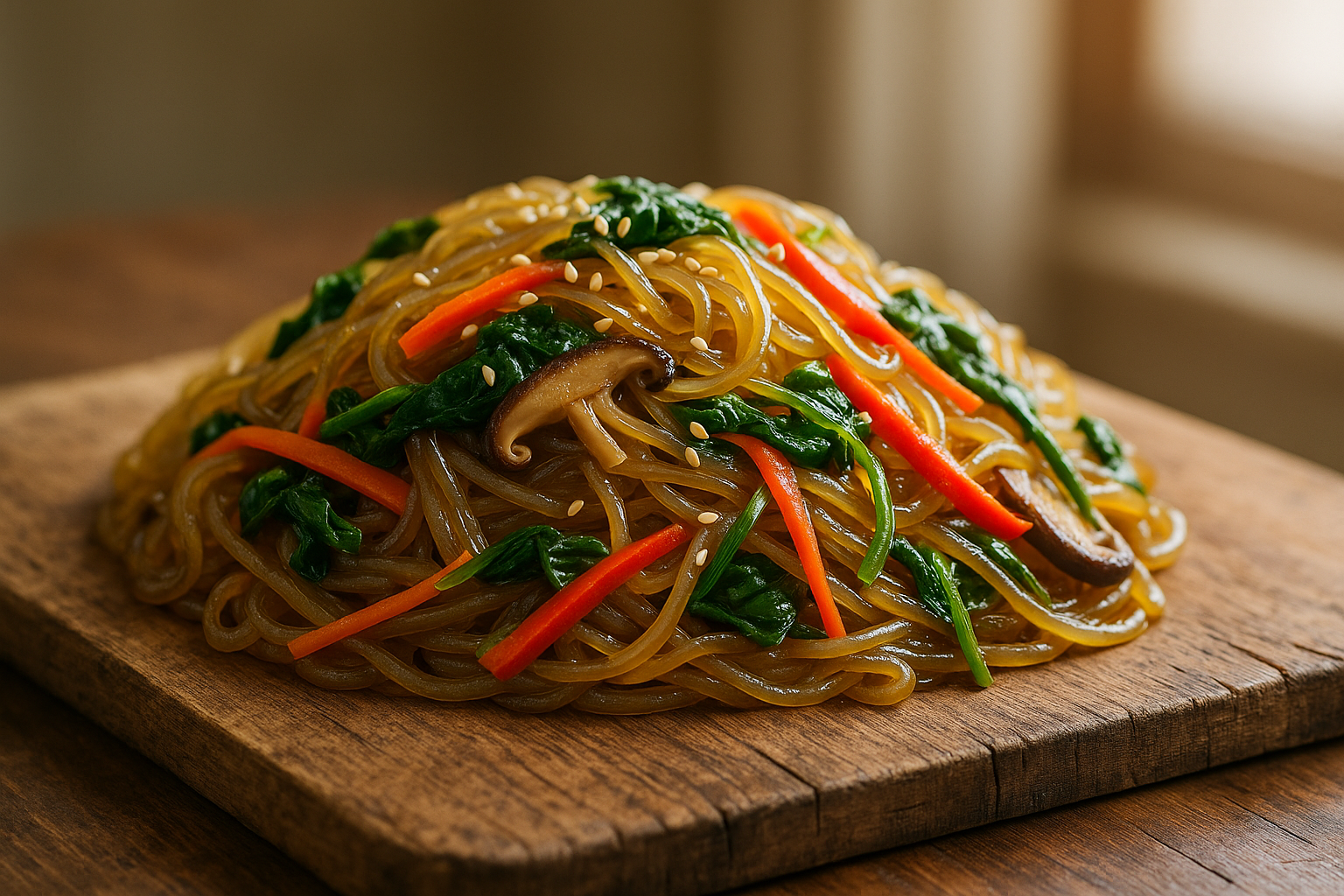
If you’ve ever ordered japchae at a Korean restaurant and wondered how to recreate those silky, slightly chewy, translucent noodles in your own kitchen, you’re in the right place. Japchae noodles — also called dangmyeon or Korean glass noodles — are widely available abroad, simple to cook, and genuinely unlike any other noodle you’ve probably worked with. This guide covers everything: what they are, how they’re made, how to choose the right product, how to store them, and exactly where to find them whether you’re in the US, UK, Canada, or Australia.
—
Quick Answer: What Are Japchae Noodles?
Japchae noodles are dried, semi-transparent noodles made from sweet potato starch. They’re the defining ingredient of japchae (잡채), one of Korea’s most beloved side dishes and celebration foods. When cooked, the noodles turn glossy and almost see-through, with a pleasantly springy, slightly chewy bite. They have virtually no flavor on their own, which is exactly the point — they absorb whatever sauce and aromatics you cook them with, making them endlessly versatile.
The product you’re looking for in a store or online is simply a bag of dried sweet potato starch noodles, sold under names like “dangmyeon,” “Korean glass noodles,” or “japchae noodles.” They require soaking or boiling before use. You do not need any special equipment, and the dish comes together in under 30 minutes.
—
What Makes Japchae Noodles Different From Other Noodles
Most Western home cooks are used to wheat-based or egg-based pasta, and many are familiar with rice vermicelli. Japchae noodles are neither. A few key differences:
- Ingredient: 100% sweet potato starch (고구마 전분), not wheat, rice, or mung bean.
- Texture after cooking: Springy and slightly bouncy — more “Q” texture than al dente pasta, less delicate than rice noodles.
- Appearance: Translucent grey-brown when dry; glossy, almost clear when cooked.
- Gluten-free: Because they contain no wheat, japchae noodles are naturally gluten-free (always check labels for cross-contamination warnings if this matters to you).
- Behavior in a pan: They don’t turn mushy quickly. They hold their texture well when stir-fried, making them forgiving for beginners.
They’re also different from Chinese glass noodles (often made from mung bean starch), which are thinner and less chewy. Korean dangmyeon is thicker, with a more pronounced bounce that stands up to stir-frying without falling apart.
For a broader look at what’s essential in a Korean kitchen, check out our Korean pantry essentials guide.
—
Types of Japchae Noodles You’ll Find Abroad
Plain Dried Dangmyeon (The Standard Pick)
This is what most Korean home cooks use. You’ll find it in 300g to 500g bags, sometimes larger. The noodles are bundled into portions (often 100g per bundle) and look like grey-brown, coarse yarn. Brand names to look for include Assi, Ottogi, Wang, Sempio, and Chung Jung One — all of which export reliably and are widely stocked internationally.
This version gives you full control over seasoning and vegetable choices. It’s also generally cheaper per serving than any pre-made alternative.
Ready-to-Cook Japchae Kits
Several Korean brands now sell japchae kits that include a pre-portioned pack of noodles alongside a seasoning sauce pouch. You add your own vegetables (or cook it plain), and the sauce does most of the flavor work. These are excellent for a first attempt — you can compare the kit’s result against restaurant japchae before experimenting with your own sauce ratios.
If you’d like to try one, search for a japchae ready-to-cook kit on Amazon to see current options.
Pre-Cooked or Frozen Japchae Noodle Portions
Some Korean and Asian grocery stores stock refrigerated or frozen japchae (fully assembled, with vegetables). These are convenient but tend to soften after reheating — the noodles lose some of their characteristic chew. They’re fine for a quick meal, but if texture matters to you, cooking from dried is worth the extra 20 minutes.
—
What Do Japchae Noodles Taste Like?
On their own, cooked dangmyeon noodles are almost flavorless — mildly starchy, subtly sweet in the way that sweet potato anything is, but not in a dessert sense. What you’re actually tasting in a finished japchae dish is the combination of:
- Sesame oil: Nutty, deeply aromatic, the most essential flavor.
- Soy sauce: Savory and slightly salty, the backbone.
- Sugar: A small amount balances the soy; traditional japchae is lightly sweet-savory, not spicy.
- Garlic and green onion: Warm, pungent base notes.
- Vegetables: Spinach, julienned carrots, shiitake mushrooms, bell pepper, and sometimes thinly sliced beef or tofu.
The overall profile is savory, nutty, and mildly sweet — with no heat unless you add chili. Think of it as a more substantial, more satisfying version of sesame noodles, but with a distinctly springy bite rather than a soft chew.
Spice level: Traditional japchae has zero heat. It sits comfortably below the mildness of pad thai on the spice scale. If you’re making it for people who don’t tolerate any spice at all, this is a safe choice.
—
How to Cook Japchae Noodles at Home
Soaking vs. Boiling: Which Method Is Better?
Both work. Here’s the practical difference:
- Cold soak (30–60 minutes): Submerge dry noodles in cold water. They become pliable and semi-soft. Finish cooking in a hot, sauced pan. Result: slightly firmer texture, good for stir-frying.
- Hot water soak (20–25 minutes): Pour boiling water over the noodles and let them sit covered. Faster, still produces a good result.
- Boiling directly (6–8 minutes): Cook in a pot of boiling water until just tender with a slight chew remaining. Rinse under cold water immediately to stop cooking. Result: slightly softer, works well if your pan time will be short.
Most Korean recipes use the cold soak or boil method, then finish in a sauced pan. Pick whichever fits your timing.
The Classic Stir-Fry Method Step by Step
Common Beginner Mistakes
- Overcooking the noodles before stir-frying: If they’re fully soft when they hit the pan, they’ll turn mushy. Aim for slightly underdone when you drain them.
- Skipping the scissors step: Long noodles tangle into an unmanageable rope. Cut them before or after soaking.
- Not seasoning enough: Dangmyeon absorbs flavor aggressively. Taste as you go and don’t be shy with the soy sauce and sesame oil.
- Cooking all the vegetables together: Different vegetables cook at different rates. Cooking spinach alongside carrots means one will be overdone. Sauté each briefly and separately.
- Using too little pan space: Glass noodles need room to move. A 12-inch pan or wok is better than a small skillet.
—
How to Pick a Good Bag of Japchae Noodles
When shopping in-store or browsing online, look for:
- Ingredient list: Should read “sweet potato starch” (고구마전분) as the primary or sole ingredient. Some budget brands cut with potato starch, which produces a softer, less chewy noodle.
- Uniform grey-brown color: Avoid bags where noodles look white or vary dramatically in thickness — that can indicate a lower-quality blend.
- No strong odor through the packaging: Fresh dried noodles should smell neutral or very faintly starchy.
- Brand recognition: Assi, Ottogi, Sempio, and Wang are the most consistently available export brands and all produce reliable products.
- Portion size: If you’re cooking for one or two, a 300g bag is plenty for several meals. Larger households or frequent cooks may prefer the economy of a bigger pack.
—
How to Store Japchae Noodles
Dry, unopened: Store in a cool, dry pantry away from direct sunlight. Dried dangmyeon has a long shelf life and keeps well.
After opening: Transfer to an airtight container or reseal the bag tightly. Moisture is the main enemy — noodles exposed to humidity can clump or develop an off smell.
Cooked japchae: Store in an airtight container in the refrigerator. The noodles will absorb the sauce further as they sit and may become slightly sticky. To refresh, warm in a pan with a small splash of water and a dash of sesame oil, tossing until loose again. Cooked japchae is not ideal for freezing — the noodles can turn grainy after thawing.
—
Close Substitutes If You Can’t Find Japchae Noodles
If you genuinely cannot find dangmyeon, here are the closest alternatives in descending order of similarity:
None of these is a true replacement — the spring and thickness of sweet potato dangmyeon is distinctive. But if you’re mid-recipe and desperate, mung bean glass noodles are a credible backup.
—
Where to Buy Japchae Noodles Abroad
Korean Grocery Stores
If you have a Korean grocery store within reach (H Mart in the US, T&T in Canada, various independents in the UK and Australia), this is the best first stop. You’ll find multiple brands of dangmyeon at reasonable prices, often in larger pack sizes. Staff can usually help if you’re unsure which product to pick up.
Asian Supermarkets
Pan-Asian supermarkets — including Chinese and Vietnamese grocers — frequently stock glass noodles, though they may be the mung bean variety rather than sweet potato. Check the ingredient list carefully. When in doubt, ask or look for the words “sweet potato starch” on the package.
Online via Amazon
Amazon carries a reliable selection of dried dangmyeon from the major Korean export brands. It’s a convenient option if you don’t have a Korean or Asian grocery nearby. Search for dried dangmyeon on Amazon to compare available brands and pack sizes. Korean grocery stores will generally be more economical per gram, but Amazon is hard to beat for accessibility.
For more Korean pantry staples you can order online, see our guide to best Korean instant noodles and our deep dive on gochujang — both of which pair naturally with a Korean noodle-forward kitchen.
—
Frequently Asked Questions About Japchae Noodles
Are japchae noodles gluten-free?
Yes — traditional dangmyeon is made solely from sweet potato starch and contains no wheat. However, check the packaging for cross-contamination warnings if you have celiac disease, as some facilities process wheat products on shared equipment.
Do japchae noodles need to be soaked before cooking?
Yes. Dry dangmyeon must be hydrated — either by soaking in cold or hot water, or by boiling — before stir-frying. They are not like instant noodles that soften directly in a hot sauce without prior hydration.
Can I eat japchae noodles cold?
Absolutely. Japchae is a very popular room-temperature or cold dish in Korea, particularly as a banchan (side dish) or picnic food. The noodles firm up slightly when cold, which many people prefer.
What is the difference between japchae noodles and regular glass noodles?
“Glass noodles” is a broad category. Japchae noodles (dangmyeon) are specifically made from sweet potato starch, which gives them a thicker width and a bouncier, chewier texture than the thinner mung bean glass noodles common in Chinese cooking. In a recipe, they’re not perfectly interchangeable.
How much dried dangmyeon do I need per serving?
A rough guide: 50g of dried noodles per person as a side dish, 80–100g per person as a main. They expand noticeably after soaking.
Can I make japchae without meat?
Yes, and it’s extremely common. Vegetarian japchae — with spinach, mushrooms, carrots, bell pepper, and onion — is a staple at Korean Buddhist temple meals. Simply omit the beef and ensure your soy sauce is vegan-certified (most standard soy sauce is, but some contain fish extract).
Is japchae spicy?
Traditional japchae is not spicy at all. The flavor is savory, nutty, and lightly sweet. If you want heat, stir in a small amount of gochugaru (Korean chili flakes) or a drizzle of chili oil when tossing the noodles.
—
For authoritative background on Korean food culture and ingredients, the Korea Tourism Organization’s food resource provides useful cultural context on dishes like japchae and their role in Korean celebrations and everyday cooking.
—
Japchae noodles are one of the most rewarding Korean ingredients to cook at home — the technique is simple, the ingredients are easy to source, and the results feel genuinely special. Once you’ve nailed the basic stir-fry, you’ll find yourself reaching for a bag of dangmyeon regularly.
🛒 Buy Japchae Noodles Online
Can’t get to a Korean convenience store? Get Japchae Noodles shipped to your door on Amazon — compare top-rated imports, check real reviews, and stock up on the real thing without leaving home.
Disclosure: SeoulScope is a participant in the Klook and Agoda affiliate programs and the Amazon Associates Program. As an Amazon Associate we earn from qualifying purchases. We may earn a small commission when you book or buy through links in this post, at no extra cost to you. We only recommend experiences and products we believe will genuinely help your trip.
1 thought on “Japchae Noodles: What They Are, How to Cook Them, and Where to Buy Them Abroad”