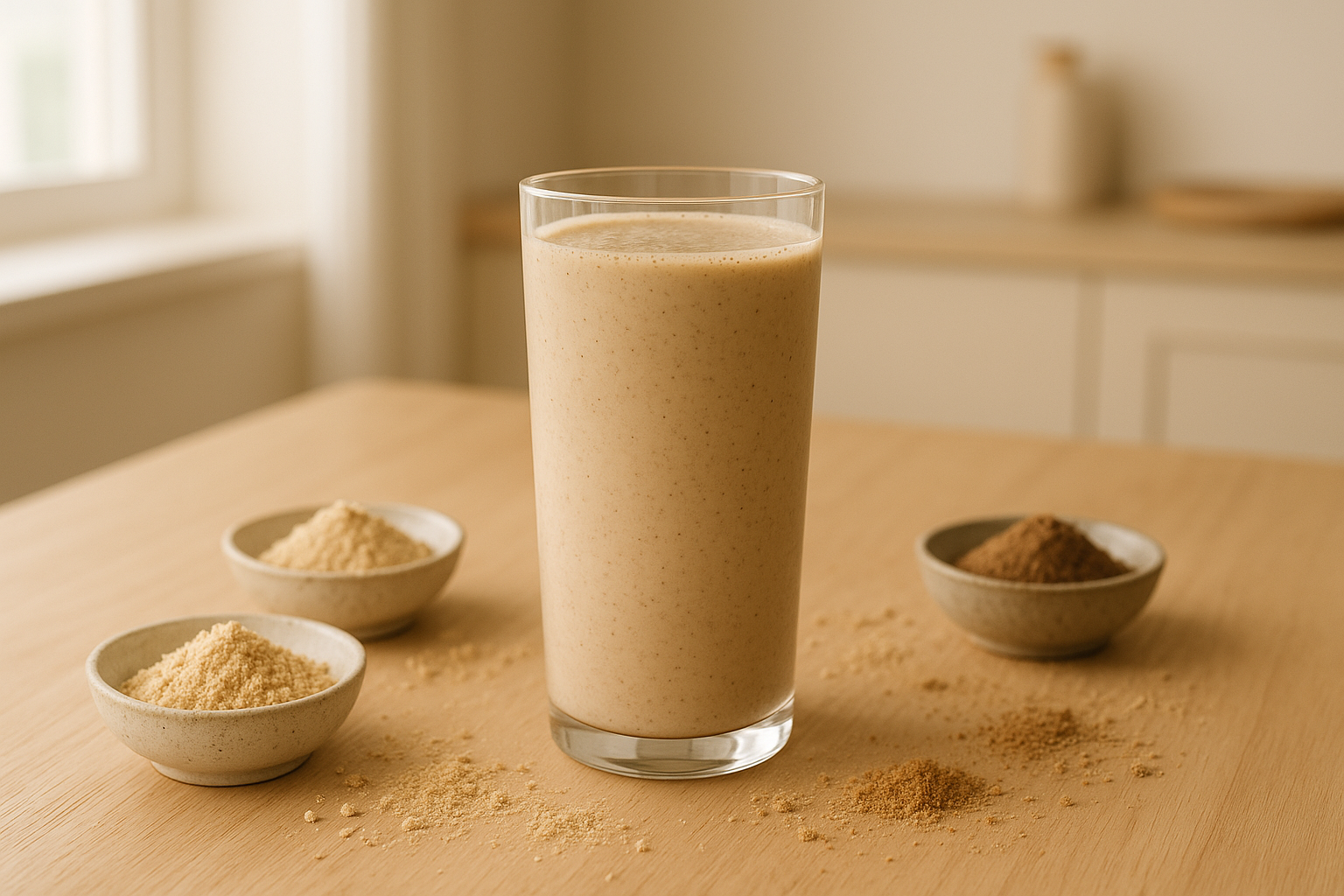
Misugaru (미숫가루) is one of Korea’s most practical and quietly beloved pantry staples — a finely milled powder made from a blend of roasted grains, legumes, and seeds. Stir a few spoonfuls into cold milk, and within 30 seconds you have a drink that is nutty, lightly sweet, and surprisingly filling. It has fueled Korean summers for centuries, and in recent years, it has quietly made its way into health food conversations worldwide.
If you discovered misugaru through a Korean grocery haul, a K-drama breakfast scene, or a YouTube recipe, this guide covers everything you need to know: what it actually is, what it tastes like, how to use it at home, which type to buy, and exactly where to find it if you live outside Korea.
—
Quick Answer
Misugaru is a roasted multigrain powder traditionally mixed with cold water or milk to make a quick, nutritious drink. It typically contains a blend of 10 to 20 ingredients — brown rice, barley, black sesame, black beans, adlay (Job’s tears), and more — all dry-roasted and stone-ground together. The result is a smooth, dusty-brown powder with a deep, toasty, slightly sweet flavor. It requires no cooking. You just stir it into liquid and drink it.
—
What Is Misugaru, Exactly?
The word breaks down simply: misu (미수) refers to a traditional Korean cold drink made with grain powder, and garu (가루) means powder or flour. Historically, misugaru was carried as a portable energy food — travelers mixed it with water on the road, and farmers drank it in the field during summer heat.
Modern misugaru keeps the same idea but typically includes a far longer ingredient list than its ancestors. Most commercial blends roast each grain or legume separately before milling everything together, which gives the final powder its characteristic deep, slightly caramelized aroma. Think of it like a Korean cousin to Horlicks, Ovaltine, or a smoothie powder — but made entirely from whole foods you could name and recognize.
Common ingredients in a standard misugaru blend include:
- Brown rice — the base, mellow and starchy
- Barley — earthy and slightly bitter
- Black sesame — nutty and aromatic, responsible for much of the depth
- Black beans and soybeans — add body and mild savory notes
- Adlay (Job’s tears / yulmu) — chewy grain, contributes a creamy texture when powdered
- Glutinous rice — smooths out the overall texture
- Sweet pumpkin, corn, or lotus seeds — added in some blends for natural sweetness
Different brands use different combinations, and the exact ratio is usually a proprietary recipe. That variation is actually part of the fun — each brand has its own personality.
—
What Does Misugaru Taste Like?
The flavor profile is roasty, nutty, and gently sweet — somewhere between a malted milk drink and a tahini smoothie, but lighter and less assertive than either. The toasted grain notes are dominant. Black sesame adds a pleasant bitterness in the background. If you’ve ever had barley tea (boricha), you’ll recognize that slightly smoky, wholesome quality — misugaru tastes like a richer, more complex version of that.
It is not spicy in any way. It carries no heat, no sourness, and very little natural sweetness unless the brand has added sugar or honey powder. At its purest, it tastes like a field of well-roasted grains in a glass.
When mixed with cold whole milk, the flavor rounds out beautifully — creamier, more latte-like, with the nuttiness amplified. Mixed with water alone, it is more austere and earthy, better suited to people who want to taste the grains clearly.
—
Types and Varieties of Misugaru
Not all misugaru powders are the same. Here are the main formats you’ll encounter when shopping abroad.
Traditional Unsweetened Misugaru Powder
This is the classic format: a plain, unsweetened multigrain powder with nothing added. You control the sweetness yourself (a drizzle of honey or a spoonful of sugar works well). This type gives you the most flexibility — it works as a drink, a smoothie booster, a baking addition, or a porridge thickener.
Sweetened Ready-to-Mix Misugaru
Some brands pre-blend sugar, sometimes brown sugar or honey powder, directly into the mix. These are convenient for a quick drink but give you less control. Read the ingredient list if you want to limit added sugar.
Misugaru Latte Mix
A newer category, designed to appeal to the Korean café trend. These mixes often include milk powder or a creamer, so you only need to add hot or cold water. They tend to be sweeter and creamier than traditional powder. If you want something that tastes like a Korean café drink at home, this is the format to look for — you can search for misugaru latte mix on Amazon to compare current options.
Organic and Premium Blends
Several Korean brands now produce certified organic misugaru using non-GMO grains. These are worth looking for if you plan to use the powder daily as a meal replacement or supplement.
—
How to Use Misugaru at Home
The Classic Cold Drink
The simplest and most traditional preparation:
The ratio is flexible. More powder makes a thicker, more filling drink; less makes it lighter and more refreshing. On hot days, many Koreans simply shake misugaru with very cold water and a pinch of salt — the salt rounds out the grain flavor.
Misugaru Smoothie
Misugaru works exceptionally well as a smoothie base. Blend 3 tablespoons of powder with a banana, a cup of milk or oat milk, and a handful of ice. The result is thick, nutty, and satisfying enough to replace a meal.
Misugaru Latte (Hot)
Dissolve 2 to 3 tablespoons of misugaru powder in a small amount of hot water to form a paste, then top with steamed or frothed milk. A touch of honey finishes it. This is the drink you’ll see in Korean cafés — warming, subtly sweet, deeply savory in the same way a good hojicha latte is.
In Baking and Cooking
Misugaru can be added to:
- Pancake or waffle batter — substitute roughly 20–25% of the flour for misugaru to add a nutty depth
- Overnight oats — stir a tablespoon into oats before refrigerating
- Energy balls or protein bars — use as a binding powder with nut butter and oats
- Porridge or congee topping — a light dusting over rice porridge adds flavor and nutrition
- Yogurt bowls — swirl in a tablespoon as you would with protein powder
For readers already exploring Korean pantry staples, misugaru pairs naturally with other Korean fermented and grain-based foods. Take a look at Korean traditional snacks worth trying for more ideas on building a Korean-inspired pantry at home.
—
How to Pick a Good Misugaru
When shopping, look for these markers of quality:
Ingredient count and variety. A good misugaru will list 10 or more distinct ingredients. Very short ingredient lists often indicate a simpler, lower-quality blend. On the other hand, an ingredient list that leads with sugar is a sign the blend is optimized for sweetness rather than nutrition.
Roasting quality. The powder should smell deeply toasty and nutty straight from the bag — not bland or faintly stale. If you can find brands that specify each grain is individually roasted before blending, that is a positive sign.
Texture. High-quality misugaru is very finely milled. It should dissolve smoothly in liquid with minimal stirring and leave no gritty residue at the bottom of the glass. A coarser grind is not necessarily bad, but it requires more vigorous mixing.
No artificial additives. Traditional misugaru does not need artificial flavors, preservatives, or thickeners. Keep the ingredient list clean.
—
Common Beginner Mistakes
Adding powder directly to a full glass of liquid. Misugaru clumps stubbornly if introduced to a large volume of liquid all at once. Always make a paste first with a small amount of liquid, then dilute.
Using too little powder. Three tablespoons is the minimum for a satisfying drink. Many first-timers use one tablespoon, find the flavor thin and watery, and conclude they don’t like it. Give it a proper dose.
Expecting it to taste like chocolate milk. Misugaru is not sweet or dessert-like by default. If you prefer a sweeter drink, add honey from the start rather than hoping the powder alone will deliver it.
Storing it near heat or moisture. Misugaru is a dry powder, but its oils (especially from sesame and black beans) can go rancid if exposed to warmth or humidity over time.
—
How to Store Misugaru
Keep misugaru in an airtight container away from direct sunlight, heat, and humidity. A pantry cupboard is fine short-term. Once opened, many people transfer the powder to a glass jar with a tight lid. In hot or humid climates (Southeast Asia, Florida summers, etc.), storing it in the refrigerator is a good idea to slow oxidation of the natural oils. The powder should smell clean and roasty — if it smells flat, stale, or faintly off, it is past its best.
—
Close Substitutes for Misugaru
If you cannot find misugaru, these are the closest alternatives:
- Roasted barley powder (boricha garu) — similar toasty flavor but simpler, missing the depth of a multigrain blend
- Talbukimil (roasted wheat flour) — a traditional Korean substitute, though milder
- Horlicks or Ovaltine — much sweeter and less complex, but fills a similar functional role as a grain-based drink powder
- DIY blend — toast barley, brown rice, and sesame in a dry pan, cool completely, and blend to a fine powder. Not identical, but captures the spirit
None of these are true substitutes for the full complexity of a proper misugaru blend, but they’ll work in a pinch for cooking applications.
—
Where to Buy Misugaru Abroad
Korean Grocery Stores
If you have access to a Korean supermarket (H Mart in the US and Canada, New Malden stores in the UK, Eastland or Sydney’s Strathfield strip in Australia), misugaru is almost always in stock, usually in the health food or grain powder aisle. Buying in-store is generally more economical than online and lets you read the full ingredient list before purchasing.
Asian Grocery Stores
Larger pan-Asian grocery stores often carry at least one or two Korean grain powder brands, sometimes shelved alongside other instant health drinks.
Online — Amazon
For readers without local access to a Korean grocery, Amazon is the most reliable option. Shipping is fast, options are plentiful, and you can read reviews from other buyers. Browse misugaru powders on Amazon to compare blends, formats, and sizes currently available. Keep in mind that Korean grocery stores (when accessible) tend to offer better value for everyday staples — Amazon’s convenience comes at a modest premium.
For more ideas on stocking your Korean pantry through online shopping, check out our guide to the best Korean snacks and how to cook with gochujang at home.
—
Misugaru and Korean Food Culture
Misugaru sits in an interesting cultural space — it is both an ancient staple and a modern health food. The Korea Tourism Organization recognizes it as part of Korea’s traditional grain food culture, and it appears regularly in discussions of Korean wellness eating alongside foods like doenjang (fermented soybean paste) and barley. For more context on Korean traditional food culture, the Korea Tourism Organization’s food page provides a useful introduction to how grain-based foods fit into the broader Korean diet.
In contemporary Korea, misugaru has enjoyed a revival through café culture — the misugaru latte is now as common in Korean independent coffee shops as a matcha latte is in Australian ones. That café popularity has driven the creation of the sweetened latte-mix formats mentioned above, which are now widely exported.
—
Frequently Asked Questions About Misugaru
Is misugaru the same as nurungji or boricha?
No. Nurungji is scorched rice and boricha is roasted barley tea — both are single-ingredient and prepared differently. Misugaru is a multi-grain powder blend designed to be mixed cold or hot. They share a roasted grain flavor profile but are distinct products.
Can I use misugaru as a meal replacement?
Many Koreans do use it this way, particularly for breakfast. A thick misugaru drink made with whole milk and honey is calorie-dense enough to replace a light meal. That said, it is not a nutritionally complete meal replacement in the clinical sense — it doesn’t contain meaningful amounts of vitamin C, for example. Think of it as a high-fiber, protein-moderate, whole-food option rather than a formulated supplement.
Is misugaru gluten-free?
Most traditional misugaru blends contain barley and/or wheat, which contain gluten. People with celiac disease or serious gluten sensitivity should check the ingredient list carefully and look for blends specifically labeled gluten-free. Pure rice and sesame-based blends do exist but are less common.
Does misugaru taste like sesame?
Black sesame is usually one of the most prominent flavors, especially when you smell the powder dry. In a finished drink, the sesame note is present but integrated — it’s nutty and slightly bitter rather than the sharp, concentrated sesame flavor you’d get from sesame oil or tahini.
Can children drink misugaru?
Yes — misugaru is a common childhood drink in Korea. Sweetened versions mixed with cold milk are especially popular with children. Choose unsweetened versions if you want to control sugar intake, and mix with milk rather than water for young children to increase nutritional value.
How is misugaru different from protein powder?
Protein powder is a refined supplement designed to maximize protein content, often from whey, soy isolate, or pea protein. Misugaru is a whole-food powder — it has moderate protein from legumes, substantial carbohydrate from grains, and significant fiber. It tastes like food, not a supplement. Think of the distinction as whole oats versus whey isolate.
—
Misugaru is one of those Korean pantry staples that rewards discovery. Once you’ve tried it, it has a way of becoming a fixture — the kind of drink you make on autopilot on a hot morning or a tired afternoon. Start with a plain multigrain powder, mix it with cold milk, add honey, and see whether it earns a permanent spot in your kitchen.
🛒 Buy Misugaru Online
Can’t get to a Korean convenience store? Get Misugaru shipped to your door on Amazon — compare top-rated imports, check real reviews, and stock up on the real thing without leaving home.
Disclosure: SeoulScope is a participant in the Klook and Agoda affiliate programs and the Amazon Associates Program. As an Amazon Associate we earn from qualifying purchases. We may earn a small commission when you book or buy through links in this post, at no extra cost to you. We only recommend experiences and products we believe will genuinely help your trip.
1 thought on “Misugaru: What It Is, How to Drink It, and Where to Buy It Abroad”