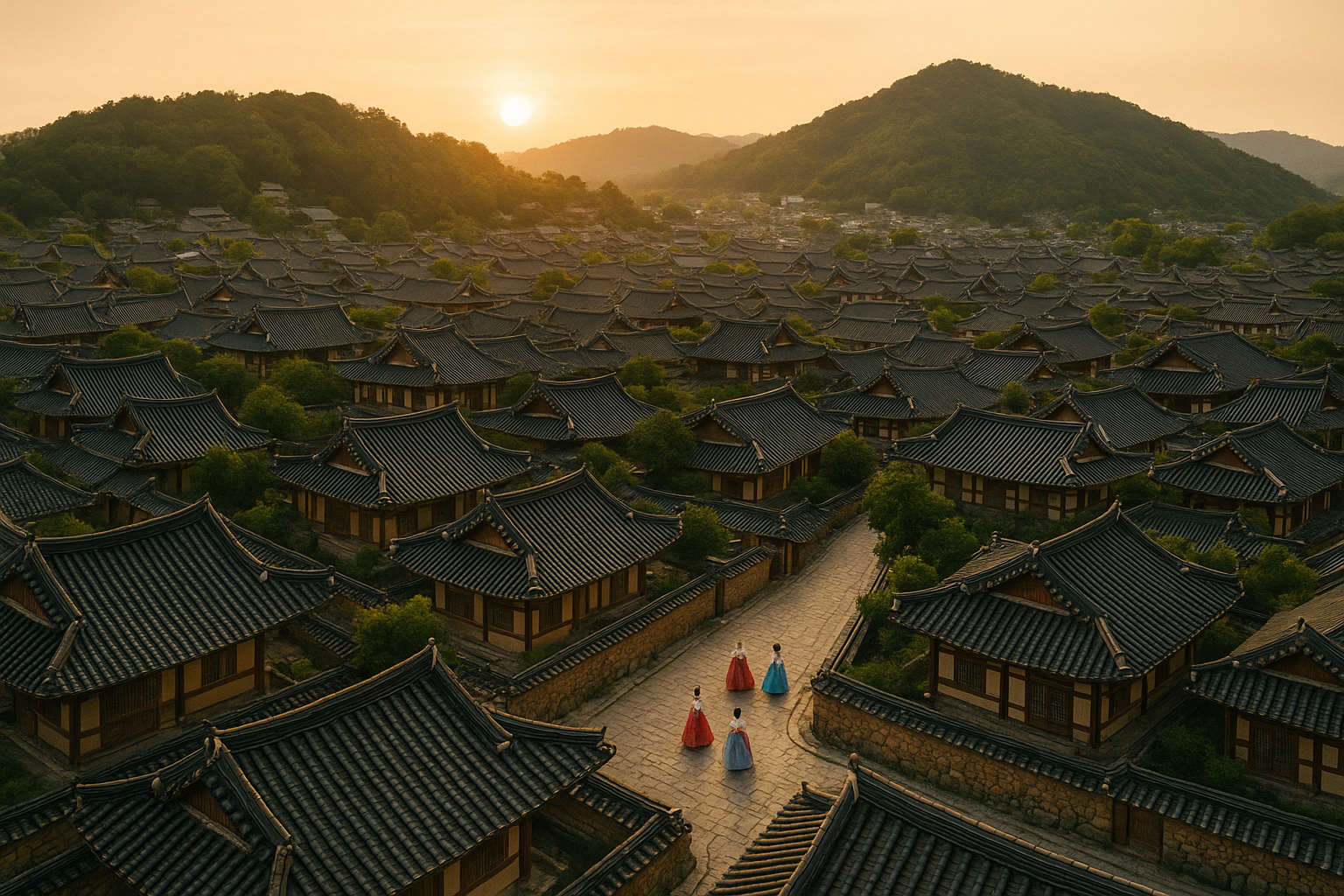
If you have room for one “traditional Korea” day outside the capital, make it Jeonju. The Jeonju Hanok Village is not a reconstructed film set — it is a lived-in neighbourhood of several hundred preserved hanok in the middle of a working mid-sized city, which is exactly why it feels different from the polished alternatives closer to Seoul.
This guide covers the one thing most guides get wrong (the train), what actually costs money, and how to time a visit so you are not shuffling through crowds.
—
Quick Answer: What Is Jeonju Hanok Village?
🎟️ Book Your Jeonju Hanok Village Experience
Skip the queues and language barriers. Compare verified tours, tickets, and rentals for Jeonju Hanok Village on Klook — instant mobile vouchers, English support, free cancellation on most activities.
| What is it? | Korea’s largest intact hanok neighbourhood — several hundred traditional houses, free to walk through |
| Where? | Jeonju, North Jeolla Province, about 200 km south of Seoul |
| Entry fee? | Free. Individual sites inside charge separately |
| Day trip from Seoul? | Yes — KTX from Yongsan, not Seoul Station |
| Famous for | Bibimbap, makgeolli bars, hanbok photography |
The village is walkable end to end — the core is roughly a kilometre across — and most visitors enter near Nammun (South Gate) Square.
—
How to Get to Jeonju Hanok Village from Seoul
KTX (recommended) — and the station mistake
Your train leaves from Yongsan Station, not Seoul Station. Jeonju sits on the Jeolla Line, whose KTX services run out of Yongsan. Booking a Seoul Station departure and turning up there is the single most common way to lose a morning on this trip.
- Journey time: roughly 1 hour 45 minutes
- Fare: around ₩34,600 in economy on recent schedules — fares change, so confirm at booking rather than trusting any figure in a guide
- From Jeonju Station to the village: taxi (about 10 minutes) or a city bus from the station forecourt (about 20 minutes)
Timetables and live fares are on Korail’s official booking site, which is also where you reserve seats; third-party resellers add a margin and sometimes list stale departure times. Book the return leg at the same time as the outbound — Sunday evening trains out of Jeonju are the first to sell out, and being stranded means an unplanned night or a three-hour bus.
If you are doing several long-distance legs on the same trip, it is worth checking whether a rail pass beats point-to-point tickets — our Korail Pass breakdown runs the arithmetic, and the Seoul–Busan route guide explains how KTX booking and seat classes work in practice.
Express bus
Buses run from Seoul’s Central City Terminal to Jeonju Express Bus Terminal in roughly 2 hours 40 minutes to 3 hours, and cost meaningfully less than the KTX. Standard and premium (udeung) classes are priced differently; check the live fare when you book. From the bus terminal it is a short taxi or bus ride to the village.
The bus is the better choice if you are price-sensitive or travelling at a time when KTX seats have sold out. The train is the better choice if you are day-tripping, because the ninety minutes you save at each end is most of your buffer.
—
What to Do Inside Jeonju Hanok Village
The neighbourhood itself is free. These are the things inside it that are not.
Gyeonggijeon Shrine is the anchor site — a royal shrine originally built in 1410 to house the portrait of Yi Seong-gye, founder of the Joseon dynasty. Adult admission is ₩3,000 for non-residents, with reduced rates for teenagers, soldiers and children. Opening hours shift by season: 09:00–19:00 in spring and early autumn, 09:00–20:00 from June to August, and 09:00–18:00 from November through February, with last entry an hour before closing.
Two timing tricks worth knowing, both from the city’s own tourism office: admission is free on the last Wednesday of each month (“Culture Day”), and half price on the fourth Saturday, Jeonju’s hanbok day. If your dates are flexible at all, they are worth bending for.
Jeondong Catholic Cathedral sits right at the edge of the hanok streets — a red-brick Romanesque building completed in the 1910s. The contrast of its arches against tiled hanok roofs is the shot everyone comes for and it is genuinely as good in person.
Omokdae Pavilion is a ten-minute climb to the best rooftop panorama in the village. Go at golden hour.
The Traditional Culture Centre runs performances including pansori singing; schedules vary by season, so check the posted times at the entrance rather than planning around them. The city’s own tourism office publishes current opening details and event dates at tour.jeonju.go.kr, which is the source worth trusting when a blog and a signboard disagree.
—
Where to Eat: Jeonju’s Food Scene
Jeonju is a UNESCO City of Gastronomy and the reason many Koreans come at all.
Jeonju bibimbap is the signature — rice under seasoned vegetables, gochujang, egg and beef, often served in a hot stone bowl (dolsot). Expect to pay noticeably more than a Seoul lunch for the well-known houses, and expect a queue at peak hours.
Kongnamul gukbap, a soybean-sprout rice soup, is the local breakfast and hangover staple, and one of the cheapest good meals in the village.
Makgeolli alleys are the part visitors underestimate. At a traditional makgeolli jip you order by the kettle and the free side dishes multiply with each round — it is a full evening, not a drink.
Street snacks along the main lanes run to hotteok, injeolmi rice cake, and cold omija (five-flavour berry) tea. Prices are low but cash-friendly stalls still exist, so carry some.
—
Hanbok Rental: What It Costs and When to Book
Renting hanbok is close to universal here, and shops cluster near Gyeonggijeon and along Eunhaengnamu-gil.
| Option | Typical price | Usually includes |
|---|---|---|
| Basic (2 hours) | ₩15,000–₩20,000 | Hanbok, accessories, hair styling |
| Premium / silk (2 hours) | ₩25,000–₩35,000 | Better fabric, fuller styling |
| Full day | ₩30,000–₩50,000 | Best value if you are staying all day |
Prices vary by shop and season — treat these as the range you will see quoted, not a fixed tariff. Weekday visits rarely need advance booking; October and April–May weekends do.
Browse Jeonju hanbok experiences on Klook →
Worth knowing: hanbok wearers get discounted or free entry at several sites in Korea, and Jeonju leans into this harder than most cities. If you have already done this in the capital, our Seoul hanbok rental guide covers how the palace discounts work there.
—
Jeonju Hanok Village vs Bukchon: Which Should You Do?
If you only have time for one, the honest answer depends on your schedule, not on which is “better”.
Bukchon, in central Seoul, is free, takes half a morning, and requires no planning — but it is a residential lane network with signage asking visitors to keep quiet, and it is small. Our Bukchon guide covers the etiquette rules that catch people out.
Jeonju costs you a day and a train fare, and gives you an actual neighbourhood with restaurants, bars, museums and places to sleep inside it. It is the difference between looking at hanok and spending a day among them.
If your trip is short, do Bukchon. If you have a spare day and want the food, come here.
—
Practical Tips and Mistakes to Avoid
Confirm you booked from Yongsan. It bears repeating because it is the mistake that ruins the day.
The village is free; the experiences are not. A comfortable day — shrine admission, lunch, hanbok rental, snacks and a round of makgeolli — realistically lands in the ₩50,000–₩80,000 range per person.
Autumn weekends are peak-of-peak. In October the lanes are dense by mid-morning. Arrive before 9:30, or stay overnight and have the place to yourself at dawn.
Consider staying in a hanok. Guesthouses inside the village let you sleep on a heated ondol floor, and they empty out the crowd problem entirely. If a night in traditional accommodation appeals more broadly, a templestay is the other version of that experience.
Book your return train before you go. Evening departures sell out, especially on Sundays.
Browse all Jeonju experiences on Klook →
—
FAQ
Is Jeonju Hanok Village free to enter?
The neighbourhood is free to walk through. Individual sites charge separately — Gyeonggijeon Shrine is ₩3,000 for adult non-residents, and hanbok rental typically runs ₩15,000–₩50,000 depending on duration.
Which station do I leave from in Seoul?
Yongsan Station. Jeonju is on the Jeolla Line and KTX services run from Yongsan, not Seoul Station.
How long does the train take?
About 1 hour 45 minutes by KTX. The express bus takes closer to three hours.
How long should I spend at Jeonju Hanok Village?
Four to five hours covers the main sites plus lunch. A full day lets you eat properly and do hanbok without rushing. Overnight is best.
Can I do it as a day trip from Seoul?
Yes. Take an early KTX from Yongsan, arrive mid-morning, and book a return departing early evening before you travel.
When is the cheapest time to visit the shrine?
The last Wednesday of each month is free admission, and the fourth Saturday is half price for Jeonju’s hanbok day.
Is Jeonju Hanok Village worth it if I have already seen Bukchon?
Yes, if you have the day. Bukchon is a photogenic lane network; Jeonju is a neighbourhood you can eat, drink and sleep in.
Disclosure: SeoulScope is a participant in the Klook and Agoda affiliate programs and the Amazon Associates Program. As an Amazon Associate we earn from qualifying purchases. We may earn a small commission when you book or buy through links in this post, at no extra cost to you. We only recommend experiences and products we believe will genuinely help your trip.
2 thoughts on “Jeonju Hanok Village: The Complete First-Timer’s Guide (2026)”