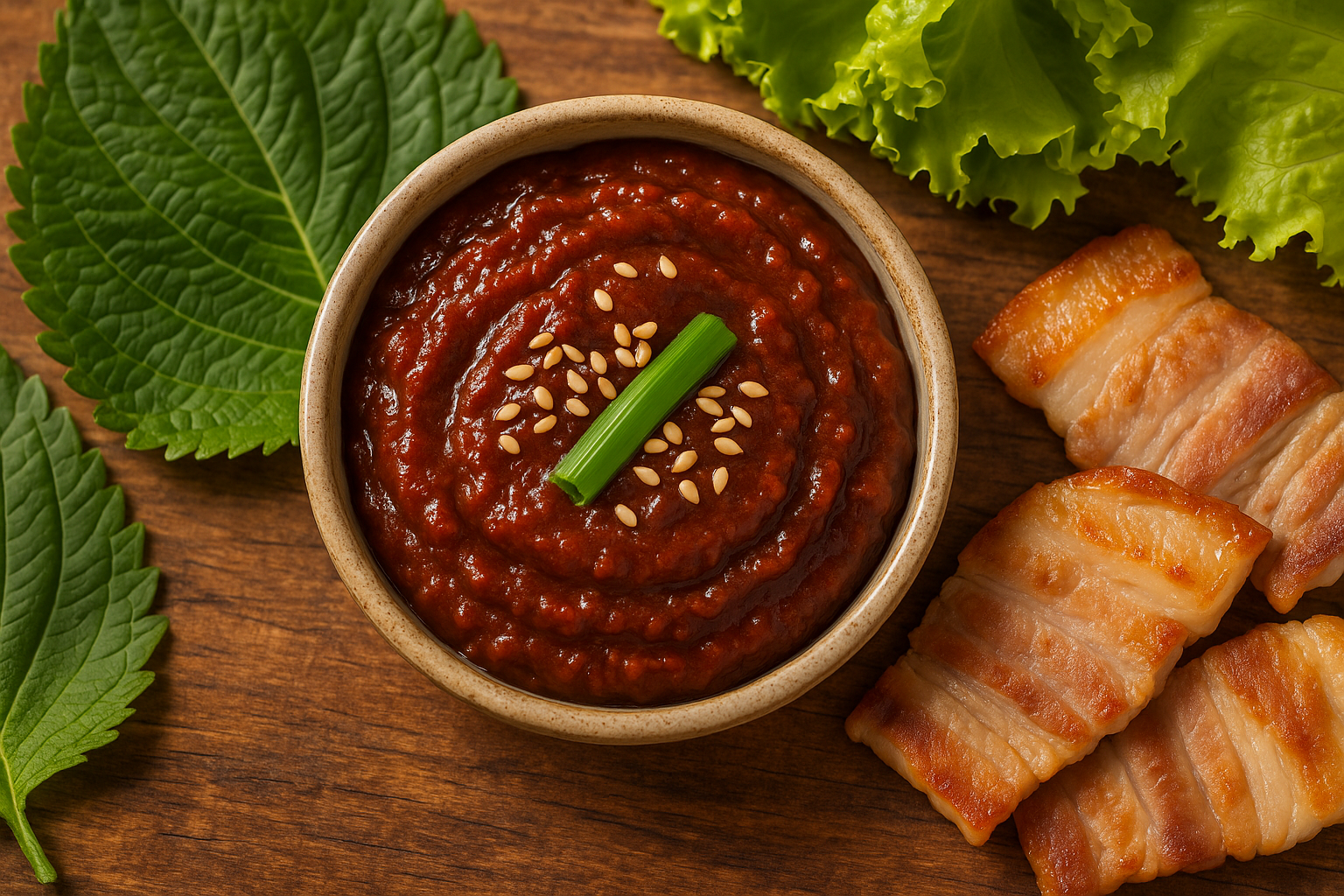
The moment you sit down at a Korean BBQ restaurant in Seoul, three things appear on the table almost automatically: a gas burner, a plate of raw meat, and a small dish of thick, dark, earthy paste. That paste is ssamjang — and once you’ve eaten Korean BBQ the right way, you’ll understand why no other condiment quite replaces it.
This guide explains exactly what ssamjang is, what’s in it, how to eat it like a local, where to buy it in Seoul, and how to make a quick version at home. Whether you’re planning your first trip to Korea or you spotted the word on a menu and weren’t sure what to order, you’re in the right place.
—
Quick Answer: What Is Ssamjang?
Ssamjang (쌈장) is a thick, savory Korean dipping paste made primarily from doenjang (fermented soybean paste) and gochujang (fermented red chili paste), blended with sesame oil, garlic, green onion, and sometimes a touch of sugar or toasted sesame seeds. The word literally means “wrap sauce” — ssam (쌈) means “wrapped” and jang (장) means “paste” or “sauce.”
You eat it by spreading a small amount onto a fresh leaf (usually lettuce or perilla), adding a piece of grilled meat, rice, and garlic, then wrapping the whole bundle and eating it in one or two bites. It’s salty, slightly spicy, deeply umami, and completely addictive.
At a glance:
| Feature | Detail |
|---|---|
| Primary flavor | Savory, umami, mildly spicy |
| Main ingredients | Doenjang + gochujang + sesame oil + garlic |
| Used with | Korean BBQ, raw vegetables, rice |
| Spice level | Mild–medium (adjustable) |
| Buy in Seoul | Any supermarket or convenience store |
| Make at home | 5 minutes, no cooking required |
—
What Goes Into Ssamjang? (Ingredients Breakdown)
Every Korean household and restaurant has its own ratio, but the core ingredients are consistent:
- Doenjang (된장) — the foundation. This fermented soybean paste is Korea’s answer to Japanese miso, though earthier and more pungent. It provides the deep umami backbone.
- Gochujang (고추장) — fermented red chili paste that adds heat, subtle sweetness, and a glossy color. The ratio of doenjang to gochujang typically runs 2:1 or 3:1, which is why ssamjang tastes savory-first rather than spicy-first.
- Sesame oil — a small drizzle that rounds out the paste and adds fragrance.
- Garlic — minced raw garlic gives it a sharp, punchy lift.
- Green onion (scallion) — finely chopped, adds freshness.
- Sugar or honey — just a pinch to balance the salt and bitterness of the doenjang.
- Toasted sesame seeds — optional but common; adds texture and nuttiness.
Some restaurants add minced onion, diced tofu, or even a splash of makgeolli (rice wine) to mellow the fermented intensity. Every version is slightly different — part of the joy of eating Korean BBQ across different spots in Seoul.
—
Ssamjang vs. Doenjang vs. Gochujang — What’s the Difference?
First-time visitors often confuse these three pastes because they’re all dark, thick, and sold in tubs at the supermarket. Here’s a simple breakdown:
| Paste | Base | Flavor Profile | Used For |
|---|---|---|---|
| Doenjang | Fermented soybeans | Deeply savory, pungent, earthy | Soups (doenjang jjigae), marinades |
| Gochujang | Fermented chili + glutinous rice | Sweet, spicy, slightly smoky | Bibimbap, tteokbokki, marinades |
| Ssamjang | Doenjang + gochujang blend | Savory, garlicky, mild heat | BBQ wraps, dipping raw vegetables |
The key distinction: doenjang and gochujang are base ingredients; ssamjang is a finished condiment ready to use as-is. You don’t need to cook ssamjang or dilute it — scoop it straight from the dish onto your wrap.
—
How to Eat Ssamjang the Korean Way
The Classic Ssam Wrap Method
This is the move you’ll see at every samgyeopsal (grilled pork belly) or galbi (short rib) restaurant across Seoul:
The contrast of textures is the whole point: yielding meat, crisp leaf, sticky rice, and that punchy paste all at once.
Ssamjang as a Vegetable Dip
Outside of BBQ, ssamjang appears as a dipping sauce for raw vegetables — cucumber batons, carrot sticks, sliced cabbage, and radish. This is common as a banchan (side dish) course in traditional Korean restaurants and at home. If you visit Gwangjang Market in Jongno-gu, you’ll spot vendors serving raw vegetables with a side of ssamjang before moving on to bindaetteok (mung bean pancakes). Read our best Gwangjang Market food stalls for first-timers guide for a full market eating plan.
—
Where to Buy Ssamjang in Seoul
Supermarkets & Convenience Stores
The easiest place to buy a tub to take home or use at your guesthouse is any large Korean supermarket — Emart and Homeplus both stock several brands, and the aisle is usually shared with doenjang and gochujang. Convenience stores (GS25, CU) carry small single-serve packets, which are the cheapest way to find out whether you like it before committing to a full tub.
The two brands you will see most often are CJ Haechandle and Chungjungwon. Both are widely exported, so if you like one, you can usually find the same tub at an H-Mart or Korean grocer back home.
Traditional Markets
If you want a batch made fresh that day — and to see how it is actually produced — head to Namdaemun Market or Gyeongdong Market. Namdaemun in particular has dedicated jang vendors who sell house-blended paste by weight. Taste before you buy; most vendors will offer a small sample on a chopstick.
House-blended market paste and supermarket tubs are genuinely different products. Market versions are usually coarser, more garlic-forward, and made to be eaten within weeks. A sealed supermarket tub is milder and built to sit on a shelf.
—
How to Make a Simple Ssamjang at Home
If you’ve brought doenjang and gochujang home from Seoul (or bought them at an Asian grocery store), you can make ssamjang in five minutes with no cooking:
Basic ratio for 2–3 servings:
- 2 tablespoons doenjang
- 1 tablespoon gochujang
- 1 teaspoon sesame oil
- 1 teaspoon minced garlic (1 small clove)
- 1 teaspoon finely chopped green onion
- ½ teaspoon sugar or honey
- ½ teaspoon toasted sesame seeds
Mix everything in a bowl until fully combined. Taste and adjust — if it’s too salty, add a touch more honey; if it’s too mild, add a little more gochujang. It keeps refrigerated for up to two weeks.
This is also a useful recipe to understand why restaurant ssamjang tastes better than store-bought: fresh garlic and green onion make a meaningful difference. Most high-end Korean BBQ restaurants in Mapo-gu (Hapjeong/Mangwon area) and Mapo’s “Meat Street” (Masitneun Street, near Mapo Station) mix their own version daily.
—
Buying Ssamjang Outside Korea
If you are not travelling to Seoul any time soon, ssamjang travels well — it is shelf-stable, sold in sealed tubs, and every major Korean brand exports it. Look for a tub that lists doenjang as the first ingredient rather than a “BBQ sauce” that merely borrows the name.
Two things worth checking before you buy online:
- Tub size. A small tub goes a long way — a wrap uses about half a teaspoon. Large tubs are cheaper per gram but you will be refrigerating an open tub for months.
- Ingredient order. Doenjang first, gochujang second is the traditional ratio. Products that lead with corn syrup or water are diluted versions.
For the wider context — which cuts to order, how to run the grill, what arrives on the table before you ask — see our complete guide to Korean BBQ in Seoul.
—
Practical Mistakes to Avoid
Using too much per wrap. The most common beginner error. A small dab — about half a teaspoon — is enough. A heaping spoonful will make the whole wrap taste like nothing but paste and salt. Korean BBQ is about balance.
Confusing it with plain doenjang at the supermarket. The tubs look nearly identical. Check the label: ssamjang tubs usually show a BBQ wrap illustration on the front. Doenjang tubs are typically plainer. The Seoul Tourism Organization’s official restaurant guide at visitseoul.net has a helpful glossary of common Korean condiment terms if you want to study before you shop.
Eating it only at BBQ restaurants. It works beautifully as a spread on Korean-style rice bowls (bibimbap without the spicy gochujang sauce), as a dip for boiled pork (bossam), and mixed into cold noodle salads. Once you have a tub at home, the uses expand quickly.
Skipping the perilla leaf. Most tourists default to lettuce wraps, which are great. But perilla (kkaennip) leaves — the broad, slightly minty-anise-flavored green — are arguably the better pairing for ssamjang’s earthiness. Ask for kkaennip specifically if it’s not on the table.
Also worth knowing before you visit: see our guide to types of kimchi every visitor should know — understanding the fermentation logic behind kimchi helps you appreciate why ssamjang tastes the way it does.
—
Frequently Asked Questions About Ssamjang
What does ssamjang taste like?
It tastes primarily savory and umami with a background warmth from the chili paste. It’s salty, slightly garlicky, and earthy — the heat is mild compared to straight gochujang. First-timers often describe it as “intense but not spicy.”
Is ssamjang the same as doenjang?
No. Doenjang is a single-ingredient fermented soybean paste used as a base in cooking. It is a blended condiment that uses doenjang as one of its components, along with gochujang, garlic, sesame oil, and green onion. Doenjang tastes far more pungent on its own.
Is ssamjang vegan?
Most store-bought and house-made versions are vegan — the ingredients are all plant-based. However, some restaurant versions add tiny dried shrimp or oysters to deepen the umami. If you’re vegan, ask your server (새우나 해산물 들어가나요? — “Does it contain shrimp or seafood?”) or stick to store-bought tubs, where the ingredients list is visible.
Can I bring ssamjang home from Korea?
Yes, in checked luggage. Sealed tubs of ssamjang are permitted in hold baggage in most countries, including the US, UK, Australia, and Canada. Don’t pack it in your carry-on — paste-based condiments fall under the liquids rule and will be confiscated. Wrap tubs in zip-lock bags regardless; the lids can loosen under cabin pressure changes.
How long does ssamjang keep?
An unopened tub keeps for 12–18 months at room temperature. Once opened, refrigerate and use within 2–3 months. A house-made batch (with fresh garlic) should be refrigerated and used within 2 weeks.
Where can I eat ssamjang in Seoul as a first-timer?
Virtually every Korean BBQ restaurant serves it automatically — you don’t need to order it. For a neighborhood-specific recommendation, the Mapo-gu “Meat Street” near Mapo Station is the most concentrated strip of mid-range BBQ restaurants in Seoul, with ssamjang made fresh in-house at most spots. The paste is made in-house at most of them, which is the point of going.
—
Have a question about eating in Seoul that we haven’t covered? Drop it in the comments below — we update our food guides regularly based on reader feedback.
🛒 Buy Ssamjang Online
Can’t get to a Korean convenience store? Get Ssamjang shipped to your door on Amazon — compare top-rated imports, check real reviews, and stock up on the real thing without leaving home.
Disclosure: SeoulScope is a participant in the Klook and Agoda affiliate programs and the Amazon Associates Program. As an Amazon Associate we earn from qualifying purchases. We may earn a small commission when you book or buy through links in this post, at no extra cost to you. We only recommend experiences and products we believe will genuinely help your trip.
3 thoughts on “Ssamjang: The Bold Korean Dipping Sauce You’ll Find at Every BBQ Table”