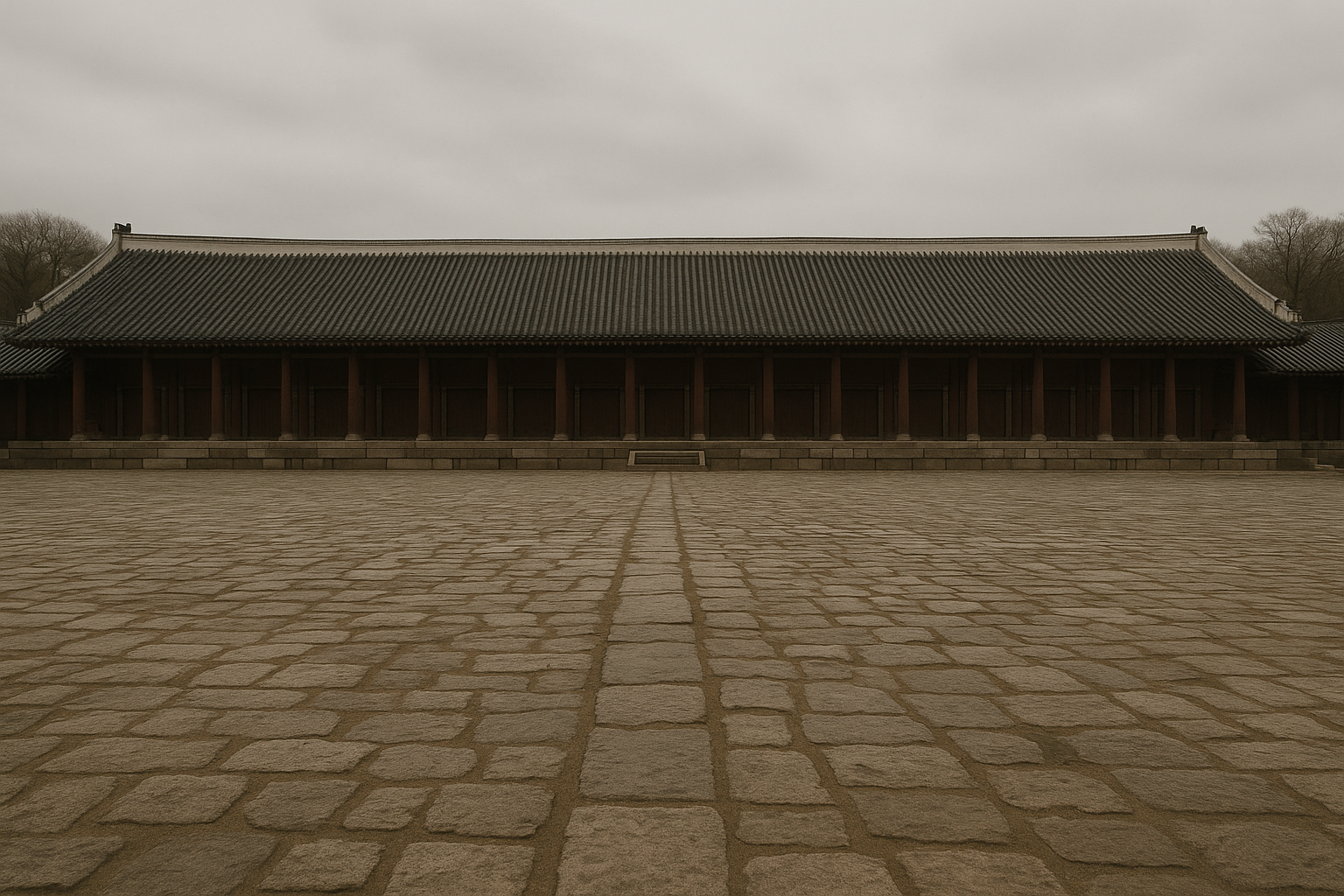
Most people plan a Jongmyo Shrine tour the way they plan the palaces: turn up, buy a ticket, wander for an hour, leave. That plan fails here, and it fails quietly — you arrive at 11:20 on a Wednesday, discover the next English entry is at 12:00, and burn forty minutes on a bench outside the gate.
Jongmyo is the only major royal site in central Seoul where, on most days of the week, you are not allowed to walk around on your own. Entry is timed. You go in with a guide at a fixed hour, you move as a group, and you come out as a group. Nobody tells you this at the ticket window until you are already standing at it.
This guide covers the part that actually decides your day: when the English-language sessions run, what a ticket costs in 2026, which days let you roam freely, and how to slot a jongmyo shrine tour into an itinerary that already includes Gyeongbokgung or Changdeokgung.
Jongmyo Shrine Tour Times and Tickets at a Glance
🎟️ Book Your Jongmyo Shrine Tour Experience
Skip the queues and language barriers. Compare verified tours, tickets, and rentals for Jongmyo Shrine Tour on Klook — instant mobile vouchers, English support, free cancellation on most activities.
Here is the whole thing in one block. Everything below is expanded further down.
| Admission | ₩1,000 (adult) |
| Integrated Palace Ticket | ₩6,000, valid 6 months, includes Jongmyo |
| Closed | Tuesdays |
| Weekdays (Thu–Mon) | Timed guided viewing only |
| Sat, Sun, public holidays, last Wed of month | Free self-guided viewing |
| English sessions | 10:00, 12:00, 14:00, 16:00 |
| Nearest station | Jongno 3-ga (Lines 1, 3, 5), Exit 8 — about 220 m |
| Advance booking | Not required for parties under 10 |
The single most useful line in that table is the last one. A lot of blog posts imply you need to reserve a jongmyo shrine tour weeks ahead. For an individual traveller or a couple, that is simply not true — the official operator states that parties of fewer than ten do not need a reservation and can buy on site. What you do need to get right is the clock.
Why You Cannot Just Walk In on a Weekday
Jongmyo is not a palace. It is a shrine — the Confucian royal ancestral shrine of the Joseon dynasty, holding the spirit tablets of its kings and queens, and inscribed on the UNESCO World Heritage list in 1995. The site is still treated as a place of ritual rather than a park, and the visiting rules reflect that.
On regular weekdays the site runs 시간제관람 — timed viewing. In practice that means:
- You enter only at a designated start time, not whenever you arrive.
- A guide leads the group along a set route through the shrine precinct.
- The group leaves together at the end. You cannot peel off and linger.
The upside is real, and it is why the rule is worth planning around rather than resenting: you get the long cypress-lined spirit path, Jeongjeon and Yeongnyeongjeon explained in sequence, and a site that is far quieter than Gyeongbokgung at the same hour. The downside is equally real: if you show up eleven minutes after a session starts, you wait for the next one.
This is the single fact that separates a smooth visit from a wasted hour, and it is the reason a jongmyo shrine tour needs a slot on your itinerary rather than a vague “afternoon, maybe”.
English Session Times: 10:00, 12:00, 14:00, 16:00
Guided sessions run in several languages, and the non-Korean ones are much thinner on the ground. Current published times:
- English — 10:00, 12:00, 14:00, 16:00
- Japanese — 09:30, 11:40, 13:40, 15:40
- Chinese — 11:00, 15:00
- Korean — roughly hourly from 09:20 through 16:20
Four English sessions a day. That is the constraint your whole plan hangs on. Two practical readings of it:
If you want the morning slot, 10:00 is the first English entry, which pairs badly with a 10:00 guard changing ceremony at Gyeongbokgung and very well with a slow start — arrive around 09:40, buy your ticket, and you are inside before the day heats up.
If you are combining sites, 14:00 is the most forgiving. It leaves a full morning for a palace, a lunch in Ikseon-dong or Jongno, and a ten-minute walk to the Jongmyo gate without sprinting.
The 16:00 session is the one to double-check against the season, because in the November–January period the site closes at 17:30 with last entry at 16:30 — the late slot exists but the light is gone.
Do You Need to Book a Jongmyo Shrine Tour in Advance?
Short answer for most readers: no.
The operator’s booking page states that parties of fewer than ten people do not need a reservation and can purchase on site. The online reservation system exists mainly for groups, and its window runs from 30 days before your intended visit up to 4 days before — which also tells you that last-minute online booking is not an option even if you wanted one.
So the honest advice is the opposite of the usual “book early or miss out” line:
- Solo, couple, family, small group of friends → just turn up, aim to arrive 15–20 minutes before an English session.
- Ten or more people → use the official reservation system, and note the window closes four days out.
Per-session capacity is not published, so nobody can promise you a spot on a peak-season Saturday. Arriving early is the whole insurance policy. Note also that the site posts seasonal notices — during July and August, for example, reservations have been waived entirely — so if you are travelling in high summer, check the official page rather than assuming last year’s rule.
Tickets and the ₩6,000 Integrated Palace Pass
Standalone admission is ₩1,000 for an adult. That is not a typo, and it makes Jongmyo one of the best-value hours in Seoul.
Free admission applies to visitors under 18 and over 65 for foreign nationals (for Korean nationals the thresholds are under 25 and over 65, with ID). Bring something that proves age if you are close to a line.
The more interesting ticket is the Integrated Palace Ticket at ₩6,000, which covers Gyeongbokgung, Changdeokgung, Changgyeonggung, Deoksugung and Jongmyo, and stays valid for six months from the date of purchase. Two things about it that catch people out:
If your itinerary is palace-heavy, buy the integrated ticket at whichever site you hit first and stop thinking about admission for the rest of the week.
Opening Hours by Season, and the Tuesday Closure
Hours shift three times a year, and the last-entry time is the one that matters — it is up to an hour before closing.
- February–May and September–October: 09:00–18:00, last entry 17:00
- June–August: 09:00–18:30, last entry 17:30
- November–January: 09:30–17:30, last entry 16:30
Jongmyo is closed on Tuesdays. If a Tuesday falls on a public holiday the site opens that day and closes on the next non-holiday day instead — so a holiday week can shift the closure to a Wednesday without warning. This is worth one search before you commit a morning to it.
Cross-check the Tuesday rule against the rest of your week, because Changdeokgung and Changgyeonggung take Mondays off. A Monday–Tuesday pair in Seoul can quietly eliminate half the royal sites if you do not sequence it.
The Days You Can Roam Freely
Not every day is guided. Saturdays, Sundays, public holidays, and the last Wednesday of each month run 일반관람 — free self-guided viewing. On those days you buy a ticket, walk in, and set your own pace.
Which should you choose?
Take a guided weekday session if you want the history to make sense. Jongmyo is architecturally austere on purpose — long, low, repetitive halls — and without context it can read as an empty courtyard. The guide is what converts it into the most atmospheric site in the old city.
Take a free-viewing day if you are a photographer, you have been before, or you simply refuse to be marched. The trade-off is crowds: weekends are busier, and the site’s quietness is half its appeal.
There is one more reason to check the official calendar before locking a date. Jongmyo Jerye — the royal ancestral rite, with its accompanying ritual music Jongmyo Jeryeak — is still performed at the shrine and is itself recognised by UNESCO as intangible cultural heritage. Performance dates are announced by the operator rather than fixed to a formula, so look them up for your travel window instead of trusting a date you read somewhere. Catching it turns an hour-long visit into the thing you tell people about.
Getting There
Jongmyo sits at 157 Jong-ro, Jongno-gu, in the middle of the old city — closer to the centre than most visitors expect.
- Subway: Jongno 3-ga Station, served by Lines 1, 3 and 5. Take Exit 8 and walk about 220 m. It is the rare Seoul attraction where the exit number genuinely saves you ten minutes.
- On foot from Gyeongbokgung: roughly 25–30 minutes east along Yulgok-ro, or two stops on the subway.
- On foot from Changdeokgung: about 10 minutes. These two sites were historically connected, and pairing them is the most natural half-day in the city.
Details and any temporary notices are published by Visit Seoul and by the operator, the Korea Heritage Service Royal Palaces and Tombs Center. Check the second one for closure notices before you travel.
What to Pair It With
An hour at Jongmyo leaves most of the day open. The strongest combinations, in rough order of how well they flow:
- Changdeokgung, ten minutes’ walk away. The obvious pairing, and the one the integrated ticket is built for. If you want the site at night instead, the Changdeokgung Moonlight Tour runs on a separate ticket and a separate booking system.
- Gyeongbokgung in the morning, Jongmyo at 14:00. Big and ceremonial first, quiet and solemn second. If you want the palace after dark as well, the Gyeongbokgung night tour is a different lottery entirely and needs planning weeks out.
- Hanbok first. Wearing hanbok gets you free entry at the palaces, and the rental shops cluster near Gyeongbokgung — see the hanbok rental guide for prices and which shops are worth the walk.
- Bukchon afterwards. Bukchon Hanok Village sits between the two palaces and absorbs a loose late afternoon well.
Quick Answers
Is Jongmyo worth it if I have already seen two palaces? Yes, and specifically because it is not a palace. Different function, different mood, and at ₩1,000 the downside is an hour.
How long does the guided session take? Budget about an hour on site including the walk in from the gate.
Can I take photos? Yes on the grounds. Treat the shrine halls as an active ritual space and follow the guide’s instructions.
What if I miss my session? Wait for the next one. On a weekday with English at 10:00, 12:00, 14:00 and 16:00, the worst case is a two-hour gap — which is exactly why the arrival time matters more than the booking.
Is it accessible? The main path is broad and mostly level, though there are gravel sections and some steps at the halls.
The whole visit reduces to one decision: pick a session time before you leave your accommodation, and work the rest of the day backwards from it. Do that and Jongmyo is the quietest, cheapest, most atmospheric hour in central Seoul. Skip it and you are the person on the bench outside the gate.
Disclosure: SeoulScope is a participant in the Klook and Agoda affiliate programs and the Amazon Associates Program. As an Amazon Associate we earn from qualifying purchases. We may earn a small commission when you book or buy through links in this post, at no extra cost to you. We only recommend experiences and products we believe will genuinely help your trip.
2 thoughts on “Jongmyo Shrine Tour 2026: English Times, Tickets, and the Timed-Entry Rule”