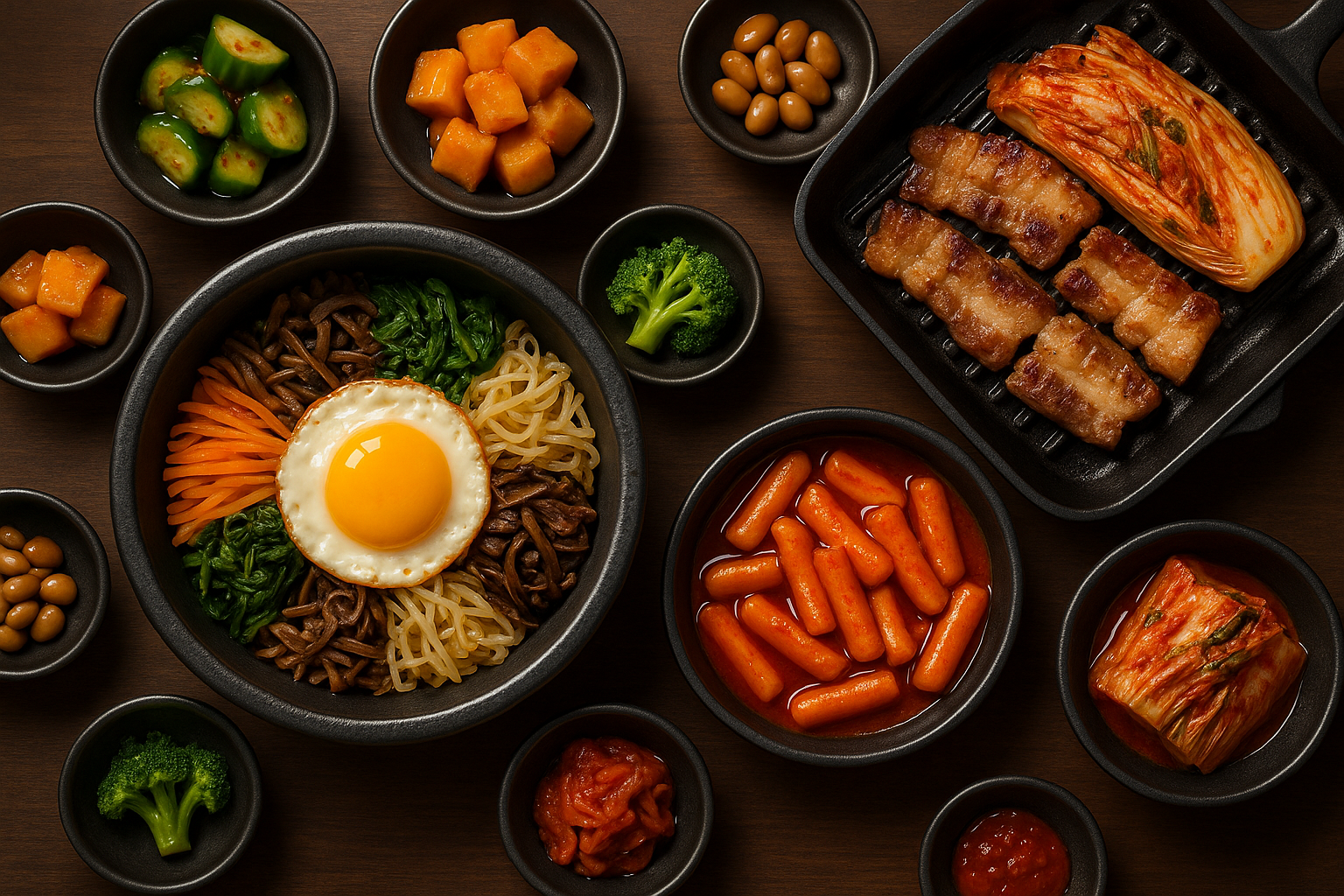
Korean food has gone from a regional secret to a global obsession. Thanks to K-dramas, K-pop, and an Oscar-winning film, the world now knows there is far more to korean food than just kimchi and barbecue — and a lot of it is sitting in freezer aisles and online carts within reach of your own kitchen.
This guide is the map. If you’re new to the cuisine, it breaks down the iconic dishes worth knowing, what makes them taste the way they do, and — crucially — how to actually try them, whether that means eating in Seoul or buying the ingredients shipped to your door. Think of it as the front door to the rest of our Korean cuisine coverage, with deeper guides linked throughout.
How Korean food went global
For decades, korean food lived mostly in Koreatowns and the homes of the diaspora. That changed fast. The 2020 Academy Awards, where Parasite became the first non-English film to win Best Picture, put a global spotlight on Korean storytelling — and the ram-don (jjapaguri) scene sent people straight to the grocery store. K-pop acts like BTS, hit Netflix series, and a wave of viral convenience-store hauls did the rest.
The supply chain caught up. Korean grocery chains like H Mart expanded across North America and Europe, Costco began stocking Korean staples, and online services started shipping frozen and shelf-stable products worldwide. What was once a “you had to be there” cuisine is now a few taps away — which is exactly why a guide to korean food doubles as a shopping list.
What makes Korean cuisine distinct
A few principles run through almost every Korean meal. First is banchan — the spread of small side dishes (kimchi, seasoned vegetables, fish cakes) that turn a single bowl of rice into a full table. A Korean meal is rarely one plate; it’s a constellation of flavors eaten together.
Second is fermentation. Kimchi is only the most famous example. The backbone of Korean cooking is a trio of fermented pastes and powders: gochujang (sweet-spicy red chili paste), doenjang (earthy soybean paste), and gochugaru (chili flakes). These give Korean dishes their signature depth — funky, savory, and warming rather than just “hot.” The tradition runs so deep that kimjang, the communal practice of making and sharing kimchi for winter, was inscribed on UNESCO’s list of Intangible Cultural Heritage in 2013.
Third is balance: rice as the anchor, a protein, vegetables, a soup or stew, and that wall of banchan, with garlic, sesame, soy, and chili threaded through nearly everything. Once you recognize the building blocks, the whole cuisine starts to make sense.
The essential Korean dishes to know
If you only learn a handful of dishes, make it these. They’re the ones you’ll see on every menu and in every K-drama dinner scene.
- Kimchi — Fermented, seasoned vegetables (most often napa cabbage) that accompany nearly every meal. Tangy, spicy, and probiotic-rich, it’s the national dish and the gateway flavor.
- Korean BBQ (gogi-gui) — Grilling meat at your table: samgyeopsal (pork belly), galbi (marinated short ribs), and bulgogi (sweet-savory marinated beef), wrapped in lettuce with garlic, ssamjang, and rice.
- Bibimbap — A bowl of rice topped with sautéed vegetables, a protein, a fried egg, and gochujang, all mixed together at the table. Colorful, balanced, and beginner-friendly.
- Tteokbokki — Chewy rice cakes simmered in a sweet-and-spicy gochujang sauce. The undisputed king of Korean street food.
- Japchae — Springy sweet-potato glass noodles stir-fried with vegetables and beef in a sesame-soy glaze. A party and holiday staple.
- Kimbap — Rice and fillings rolled in seaweed, sliced into bites. Korea’s portable lunch — similar to sushi rolls but seasoned with sesame oil instead of vinegar.
- Korean fried chicken — Double-fried for an impossibly thin, glassy crust, then tossed in soy-garlic or sweet-spicy yangnyeom sauce. Paired with beer, it becomes chimaek, a national pastime.
- Jjigae (stews) — Bubbling, communal stews like kimchi jjigae, sundubu jjigae (soft tofu), and doenjang jjigae (soybean paste). Comfort food in a stone pot.
- Naengmyeon — Cold buckwheat noodles in an icy broth, the go-to summer dish.
- Samgyetang — Whole young chicken stuffed with rice and ginseng in a milky broth, eaten — counterintuitively — to beat the summer heat. The same root, steamed and then dried, becomes Korean red ginseng.
Korean street food, snacks, and convenience-store culture
Some of the most fun Korean cooking never makes it to a sit-down restaurant. Street stalls sling hotteok (sweet syrup-filled pancakes), eomuk (fish cake skewers in warm broth), and gyeranppang (egg bread) to commuters and night-market crowds. It’s cheap, hot, and best eaten standing up.
The modern equivalent is the Korean convenience store. CU, GS25, and 7-Eleven have turned the humble pyeonuijeom into a food destination, with hot instant noodles, triangle kimbap, and microwaved meals you assemble at the counter. We break the whole ritual down in our guide to Korean convenience store food.
And then there are the packaged snacks — the honey-butter chips, choco pies, and shrimp crackers that have become souvenir staples and TikTok fodder. Our roundup of the best Korean snacks to try and buy covers the icons worth seeking out, most of them findable on Amazon or at H Mart.
Korean instant noodles: the gateway product
If one product launched a thousand Korean grocery runs, it’s instant ramyeon. Korea takes instant noodles more seriously than anywhere on earth, from the fiery viral Buldak (“fire chicken”) line to the savory, everyday comfort of Shin Ramyun. They’re inexpensive, shelf-stable, and the single easiest way to taste korean food at home tonight — which is why they’re the perfect entry point for newcomers. Our pick of the best Korean instant noodles ranks the ones worth the hype.
Korean desserts and frozen treats
Korean sweets lean less sugary and more textural than Western desserts, built around red bean, rice cake, and fruit. The summer icon is patbingsu — a mountain of shaved milk-ice piled with sweet red bean, fruit, and condensed milk. A nuttier variation swaps those toppings for misugaru, Korea’s roasted multigrain powder. Year-round, the freezer aisle delivers chewy, milky bars like Melona that have become global hits in their own right; we cover the lineup in our guide to the best Korean ice cream. Traditional confections (hangwa), made with honey, grain, and sesame, round out the sweeter side of the table.
Where to buy Korean food outside Korea
You no longer need a plane ticket. Here’s where to look:
- Korean & Asian grocers — H Mart, Hannam Chain, and local Korean markets carry everything from fresh banchan to frozen dumplings and pantry staples.
- Costco (US/Canada) — increasingly stocks Korean ramyeon, dumplings, and frozen snacks in bulk, often at the best per-unit price.
- Online delivery — Weee!, Amazon, and Asian-grocery delivery services ship shelf-stable and frozen korean food nationwide, often in insulated packaging.
- Big-box and mainstream supermarkets — Many now carry a small Korean section with kimchi, gochujang, and instant noodles.
Start with the shelf-stable basics — instant noodles, snacks, gochujang — before graduating to frozen and fresh.
How to start cooking Korean dishes at home
You can build a capable Korean pantry with about six items, most of them one Amazon order away:
With those staples and a bag of rice cakes or a few packs of ramyeon, you can recreate a surprising amount of korean food at home before you ever attempt the more ambitious dishes.
Where to eat Korean food in Seoul
If you do make the trip, Seoul is the deep end. Beyond the barbecue joints and pojangmacha (street tents), the city’s markets — Gwangjang, Mangwon, Tongin — are living museums of regional cooking. The official Visit Seoul restaurant guide is a reliable starting point for finding everything from century-old kalguksu shops to Michelin-listed hansik. Eat your way through a market first; it’s the fastest crash course in korean food there is.
Frequently asked questions
What is the most famous Korean food?
Kimchi and Korean barbecue are the two most internationally recognized, with bibimbap and tteokbokki close behind. Kimchi is the national dish and appears at nearly every meal.
Is Korean food healthy?
Much of it is built around vegetables, fermented foods, lean proteins, and rice, with relatively little dairy or heavy cream. Fermented staples like kimchi and doenjang are rich in probiotics, though some dishes are high in sodium — balance is the key.
Is all Korean cooking spicy?
No. Chili shows up often, but plenty of staples — bulgogi, japchae, kalguksu, samgyetang, kimbap — are mild or savory rather than hot. There’s an easy entry point at any spice level.
Which Korean dishes should I try first?
Start with Korean BBQ or bibimbap at a restaurant, and a pack of instant ramyeon or a few snacks at home. They’re the most approachable on-ramps before you move to fermented and spicier dishes.
Can I buy Korean food outside Korea?
Yes. H Mart, Costco, and online services like Weee! and Amazon stock most shelf-stable and frozen staples worldwide. Instant noodles, snacks, and gochujang are the easiest to find and the best place to begin.
🛒 Buy Korean Food Online
Can’t get to a Korean convenience store? Get Korean Food shipped to your door on Amazon — compare top-rated imports, check real reviews, and stock up on the real thing without leaving home.
Disclosure: SeoulScope is a participant in the Klook and Agoda affiliate programs and the Amazon Associates Program. As an Amazon Associate we earn from qualifying purchases. We may earn a small commission when you book or buy through links in this post, at no extra cost to you. We only recommend experiences and products we believe will genuinely help your trip.
16 thoughts on “Korean Food: The Ultimate Guide to What to Eat & Buy”