Last updated: August 2026. Program types, temple coverage and booking channels checked against the official Templestay portal run by the Cultural Corps of Korean Buddhism, and Korea Tourism Organization.
—
Quick Answer: Can Foreigners Book a Templestay in Korea?
🎟️ Book Your Templestay Experience
Skip the queues and language barriers. Compare verified tours, tickets, and rentals for Templestay on Klook — instant mobile vouchers, English support, free cancellation on most activities.
Yes, and you book it yourself online — no agency, no Korean required.
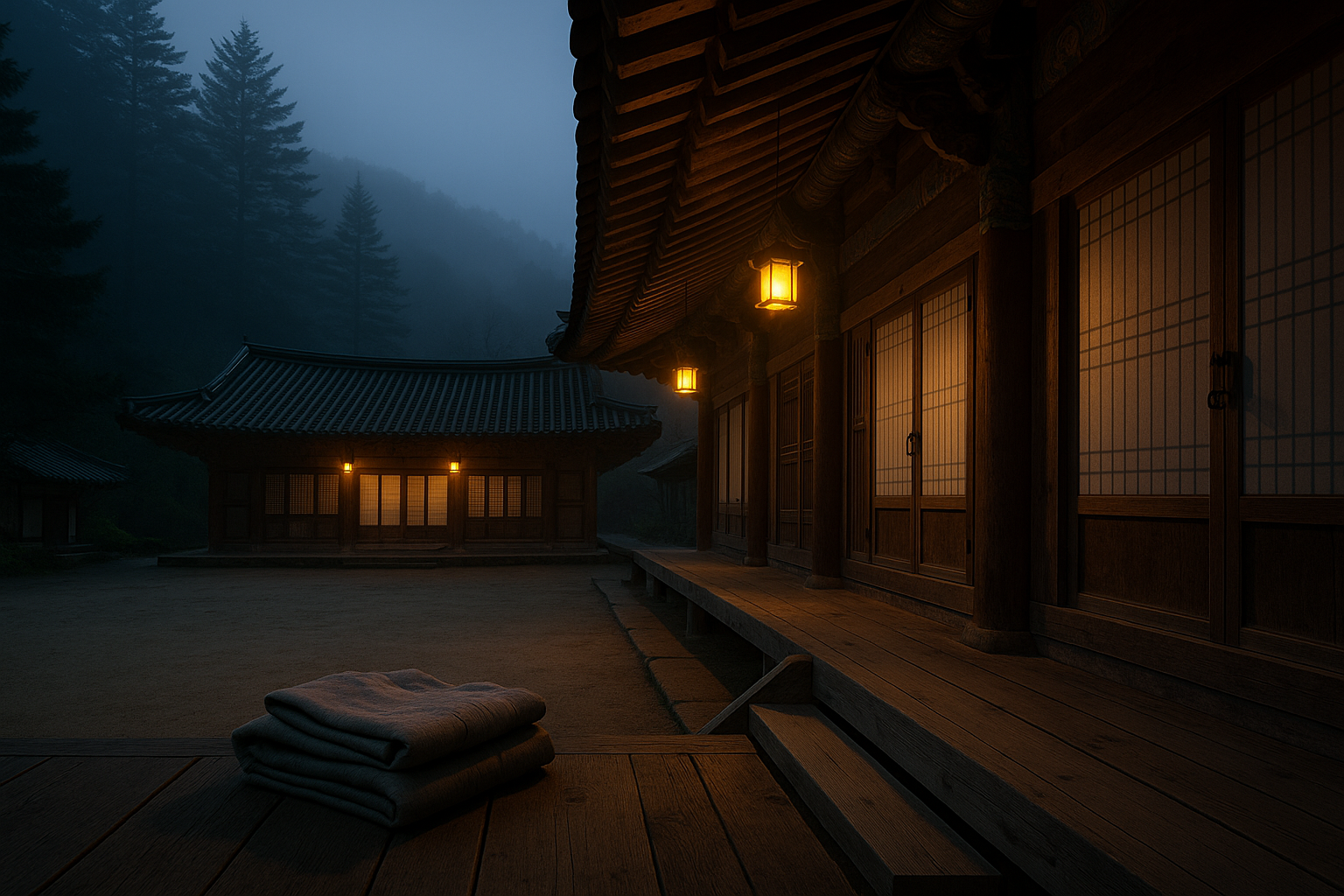
A templestay is an overnight (or single-day) stay inside a working Buddhist temple, where you sleep in temple lodging, eat the monks’ vegetarian meals, and join the daily practice schedule. More than 100 temples across Korea run the program, and it is coordinated centrally by the Cultural Corps of Korean Buddhism through one official booking site: eng.templestay.com.
Expect roughly ₩50,000–₩100,000 per person per night for a standard program including lodging, temple robes and all meals. The Korea Times reported the usual floor as a minimum of 50,000 won per night when covering the 2025 foreigner discount — more on that discount below, because it is worth checking before you pay full price.
You do not need to be Buddhist. You do not need to meditate well. You need to be willing to get up early.
—
The Four Program Types (and Which One You Actually Want)
The official portal sorts every temple’s offering into four categories. Picking the wrong one is the single most common way people end up miserable.
| Program type | Length | What it is | Best for |
|---|---|---|---|
| One-day | A few hours, no overnight | Tea ceremony, a short meditation sit, temple tour | Testing the water; tight itineraries |
| Experience-oriented | 1–2 nights | Full practice schedule: chanting, 108 prostrations, communal work | First-timers who want the real thing |
| Rest-oriented | 1–2 nights | Minimal fixed schedule; you’re given a room and left alone | Burnout, jet lag, introverts |
| Group | Varies | Booked for an organised party, arranged by consultation | Schools, companies, clubs |
Experience-oriented is the default recommendation for a first visit. It’s the version people describe when they talk about templestay: you’re handed a set of loose grey robes, given a schedule, and you follow it.
Rest-oriented is the sleeper pick. If your trip has been dense and loud, a rest program gives you a mountain, a room, three meals and no obligations. Many people who assume they want the full practice schedule would have been happier here.
One-day is not a lesser version — it’s a different product. No dawn wake-up, no dormitory, no overnight commitment. If you have a single free afternoon in Seoul, this is the realistic option.
—
What Actually Happens: The Practice Schedule
The Korea Tourism Organization lists the core components as “Buddhist service, seon meditation, the 108 prostrations, and communal work,” plus monastic meal training and tea ceremony.
Translated into what your day looks like:
Evening (arrival day) — Check in, change into the robes, get the orientation and the etiquette rules. Evening chanting service in the main hall. Lights out early, typically around 21:00.
Pre-dawn — This is the part people underestimate. The morning bell and chanting service start before sunrise, often around 03:30–04:30 depending on the temple and season. It is not optional at most experience-oriented programs.
Seon (Zen) meditation — Sitting practice, usually in short blocks rather than punishing hour-long sessions. Nobody expects you to be good at it.
108 prostrations — A full-body bow, repeated 108 times, often while threading a bead onto a string so you can count. It is genuinely physical. Most first-timers’ legs ache the next day. It is also, reliably, the part people remember.
Balwoogongyang (formal monastic meal) — Four nested bowls, a strict order of serving and eating, and a rule that nothing is wasted: you clean the bowls with water and drink it. Take less than you think you want.
Communal work (울력) — Sweeping the courtyard, weeding, kitchen help. Half an hour of it, treated as practice rather than chores.
The food is entirely vegetarian temple cuisine, prepared without the five pungent vegetables (garlic, onion, and relatives). It is not bland, but it is not a restaurant, and there are no substitutions. If you have allergies, say so at booking, not on arrival.
—
How to Book a Templestay, Step by Step
If something goes wrong or the site fights you, the Templestay Information Center near Jogyesa handles reservations by phone at +82-2-2031-2000 (Korean and English) and by email at support@templestay.com. This is an official channel, not a call centre — it’s a physical information centre in central Seoul.
Check for the Foreigner Discount Before You Pay
In August 2025, the Cultural Corps of Korean Buddhism ran a promotion offering templestay to 1,500 foreigners at ₩30,000 per night — down from the usual minimum of ₩50,000 — across 21 temples nationwide, on a first-come, first-served basis, running until 31 October 2025. The list included Jogyesa, Myogaksa and Hwagyesa in Seoul, Golgulsa in Gyeongju, Beomeosa in Busan, Jeondeungsa in Incheon, Naksansa and Woljeongsa in Gangwon, Magoksa, Daeheungsa, Jikjisa and Sudeoksa.
That specific promotion has ended. Discounted foreigner rounds have recurred, but whether one is running when you read this is something only the official portal can answer — check the notices there before booking at full price. Do not trust a blog quoting a discount price, including this one, as a live rate.
—
Which Temple? Four Realistic Picks
There is no single “best” temple — the right one depends on how much of your trip you’re willing to spend getting there. Sorted by that.
If You’re Not Leaving Seoul: Jogyesa or Myogaksa
Both are in Jongno-gu, central Seoul, and both run English programs. Jogyesa is the head temple of the Jogye Order and sits a short walk from Insadong — meaning you can combine it with the rest of a Seoul day rather than building a trip around it. Myogaksa (Naksan Myogaksa) is on Naksan, on the old city wall, and is a quieter, smaller alternative.
The trade-off is honest: a temple in central Seoul is a temple with a city outside the gate. You get the practice, not the mountain silence.
Browse Seoul temple & culture experiences on Klook →
If you’re already building a palace-and-hanok day in this part of the city, our Changdeokgung Secret Garden booking guide and Bukchon Hanok Village guide cover the same few square kilometres.
If You Want the Mountain: Woljeongsa (Gangwon)
Woljeongsa sits in Odaesan National Park, with the fir-tree forest path that shows up in every photo of the place. This is the version of templestay people picture: deep forest, cold clean air, real distance from a city. Autumn is spectacular and books out accordingly.
If Gangwon in autumn is the actual draw and you only have one day to give it, a Seoraksan day trip from Seoul reaches the same mountains and back without an overnight — worth reading before you commit to a two-day booking.
If You’re Doing Gyeongju: Golgulsa
Golgulsa is the one that teaches Seonmudo, a Buddhist martial art, which makes it the most physically active program on the standard list and a favourite among foreign visitors. Gyeongju is Korea’s open-air museum of Silla-era history, so the templestay slots into a trip that already has a reason to exist.
Browse Gyeongju tours on Klook →
If You’re Heading to Busan: Beomeosa
Beomeosa is on the slopes of Geumjeongsan, inside Busan’s city limits but genuinely up a mountain, reachable on the city’s own subway-and-bus network. It’s the easiest way to add a templestay to a Seoul–Busan trip without a separate detour — and if you’re taking the KTX down, our Seoul to Busan by train guide covers the ride.
—
What It Costs
| Item | Typical cost |
|---|---|
| Standard overnight program | ₩50,000–₩100,000 per person per night |
| Stated usual minimum (Korea Times, 2025) | ₩50,000 per night |
| 2025 foreigner promotion rate (ended) | ₩30,000 per night |
| One-day program | Less than an overnight; varies widely by temple |
| Robes, bedding, all meals | Included |
| Transport to the temple | Not included |
Prices are set per temple and per program, and they change. The number on the official listing page at the moment you book is the only price that counts — everything above is a planning range, not a quote.
Value-wise, an overnight templestay lands in the same bracket as a mid-range guesthouse but includes three meals, which makes it one of the better-value nights in Korea if the schedule suits you. Where it isn’t good value: if you book an experience-oriented program and then skip the pre-dawn service, you have paid for a spartan room.
—
What to Bring, and What Not to Do
Bring:
- Comfortable clothes to wear under the robes — long sleeves and long trousers, not shorts or vests
- Socks. You’ll be removing shoes constantly, and bare feet in halls are frowned on
- A light layer even in summer; mountain temples get cold at 04:00
- Toiletries and a towel — most temples don’t supply them
- Any medication, since you may be far from a pharmacy
Leave behind: heavy luggage, and the assumption that you’ll be on your phone.
The etiquette that matters:
—
Mistakes to Avoid
The mistake that ruins the experience most often: treating the wake-up time as an exaggeration. A 03:30–04:30 start after a 21:00 lights-out is a full night’s sleep only if you actually go to bed. People who stay up, then skip the morning service, end up having paid for a mattress on a floor.
Others:
—
Frequently Asked Questions
Do I have to be Buddhist to do a templestay?
No. The program is explicitly open to anyone, and temples running English programs are used to hosting people with no Buddhist background. You participate in the practice as a guest, not as a convert.
How much does a templestay in Korea cost?
Roughly ₩50,000–₩100,000 per person per night for a standard overnight program, including lodging, robes and all meals. The Korea Times cited ₩50,000 as the usual minimum. Confirm the exact figure on the official listing.
How do I book a templestay as a foreigner?
Through the official English portal at eng.templestay.com. Filter by region and by English-language support, choose a program type and date, declare dietary or mobility needs, and pay online. The Templestay Information Center (+82-2-2031-2000) helps in English if the site gives you trouble.
Can I do a templestay in Seoul itself?
Yes — Seoul lists 8 participating temples, including Jogyesa and Myogaksa in Jongno-gu, both with English programs. You trade mountain scenery for not needing a travel day.
What time do you wake up at a templestay?
Before dawn. Morning chanting typically starts around 03:30–04:30, varying by temple and season, after a lights-out around 21:00.
Is there a templestay on Jeju Island?
No. The official portal’s regional counts show zero templestay temples on Jeju, so plan it into a mainland leg of your trip.
If Jeju is already on your itinerary, the island’s own slow-travel draw is walking — see our Jeju Olle Trail hiking guide.
What is the 108 prostrations?
A full-body bow repeated 108 times, usually while stringing beads to keep count. It’s the most physically demanding standard element and the one most participants single out afterwards.
Can I leave early or skip sessions?
You can leave, but skipping the scheduled practice defeats the point of an experience-oriented program — and if you know you want flexibility, book a rest-oriented one instead, where that’s the design rather than a breach of it.
—
Worth Doing?
A templestay is one of the few things in Korea that isn’t optimised for visitors. The schedule wasn’t designed to be enjoyable, the food wasn’t designed to be photographed, and nobody is going to congratulate you for finishing the prostrations. That’s exactly why it lands — it’s the one night of a Korea trip that doesn’t feel like consuming a destination.
Book the right category, tell them what you can’t eat, and go to bed when they turn the lights off.
—
Program availability, prices and English-language support change by temple and season. Confirm on the official Templestay portal before booking, and check current notices for any running foreigner discount.
🏨 Find Your Stay in Seoul
Compare verified hotels and guesthouses in Seoul on Agoda — pay-at-property options, English support, and free cancellation on most rooms.
Disclosure: SeoulScope is a participant in the Klook and Agoda affiliate programs and the Amazon Associates Program. As an Amazon Associate we earn from qualifying purchases. We may earn a small commission when you book or buy through links in this post, at no extra cost to you. We only recommend experiences and products we believe will genuinely help your trip.
2 thoughts on “Templestay in Korea: How to Book, What It Costs, and What a Night Actually Involves”