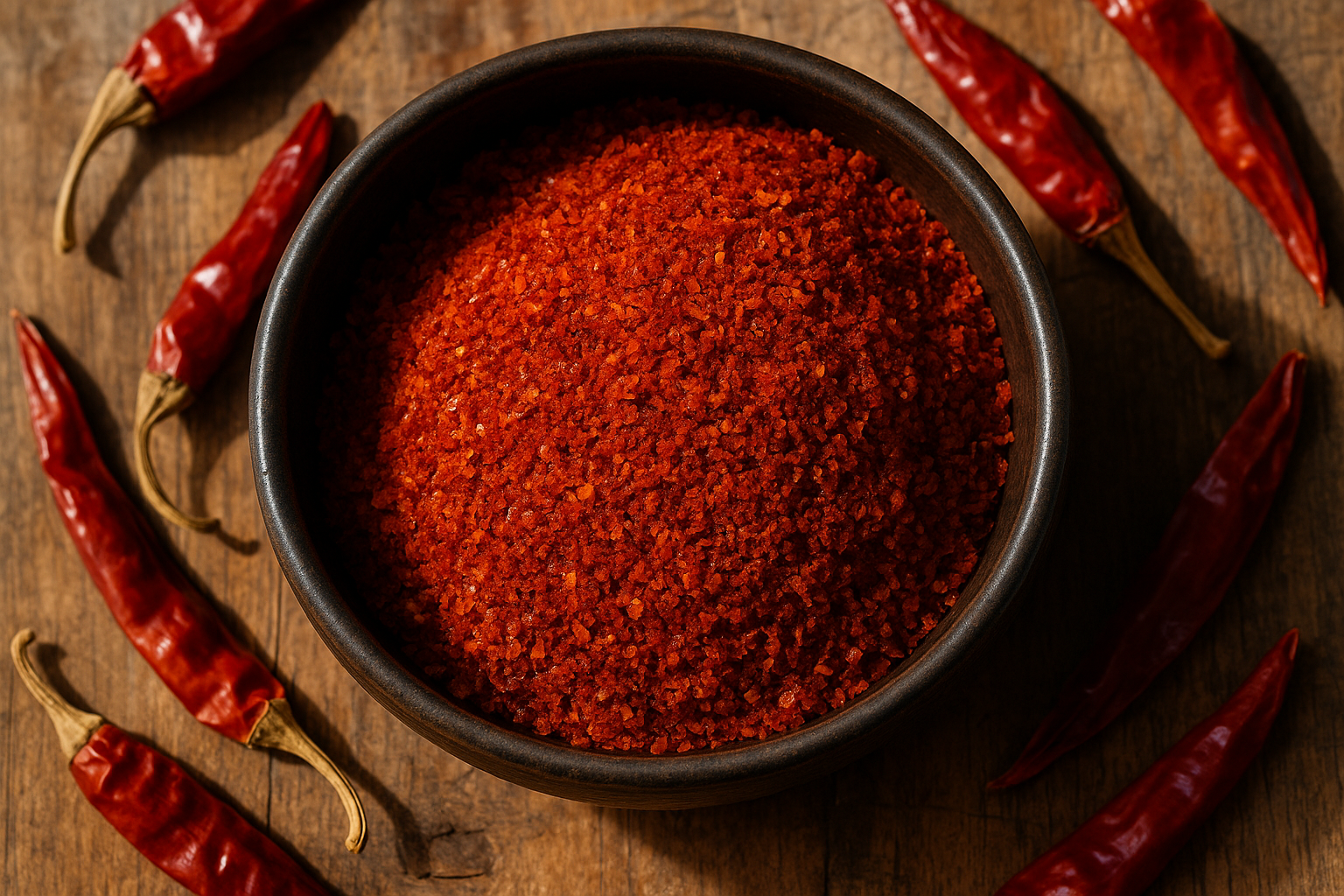
If you have ever wondered what gives kimchi its deep red color, or why your homemade tteokbokki tastes flat compared to the version you had in Seoul, the answer is usually gochugaru — Korean sun-dried red pepper flakes. It is the single most important spice in Korean cooking, and it is not interchangeable with the chili flakes already in your cabinet.
This guide covers what gochugaru actually is, how it differs from gochujang and from Italian red pepper flakes, which grind to buy for which dish, what to do when you cannot find it, and how to store it so it does not fade into flavorless orange dust.
—
Quick Answer: What Is Gochugaru?
Gochugaru (고춧가루) is Korean red chili pepper that has been dried — traditionally in the sun — deseeded, and ground into either coarse flakes or a fine powder.
Three things define it:
- Color. A bright, vivid red rather than the brick or brown-red of cayenne and generic chili powder.
- Flavor. Fruity and faintly sweet up front, with a mild smokiness. It tastes like dried pepper, not just heat.
- Heat. Moderate. Commonly cited figures put it in the low thousands of Scoville units — roughly jalapeño territory — well below cayenne.
In English it is usually written “Korean red pepper flakes” or “Korean chili powder,” but most recipes now simply use the Korean word, because no English term captures the specific flavor.
—
Gochugaru vs. Gochujang vs. Regular Chili Flakes
This is where most people go wrong, so it is worth being precise.
| What it is | Texture | Use it for | |
|---|---|---|---|
| Gochugaru | Dried, ground Korean red pepper | Dry flakes or powder | Kimchi, stews, marinades, banchan |
| Gochujang | Fermented paste made from gochugaru + glutinous rice + fermented soybean | Thick, sticky | Sauces, glazes, bibimbap, dips |
| Crushed red pepper | Mixed dried chilies, seeds included | Coarse, seedy | Italian dishes, pizza |
Gochugaru and gochujang are not substitutes for each other. Gochujang is a finished, fermented, salty-sweet condiment; gochugaru is a raw spice. If a kimchi recipe calls for gochugaru and you use gochujang, you get a sweet, gloopy paste that will not ferment the same way. If you want the full picture on the paste, see our separate guide to gochujang.
Do not swap in Italian crushed red pepper either. Those flakes include the seeds and come from different chili varieties — the result is a sharper, more aggressive heat with none of the fruitiness, and a muddier color.
—
Coarse or Fine? Choosing the Right Grind
Korean cooks keep two grinds, and picking the wrong one is the most common beginner mistake.
- Coarse flakes (굵은 고춧가루) — the default, and what you want if you buy only one bag. The chunky texture clings to cabbage and radish, which is exactly what kimchi paste needs. Also good in stews where you want visible flecks.
- Fine powder (고운 고춧가루) — dissolves smoothly. Use it in soups, sauces, and marinades where you want even heat and no texture, including the sauce base for tteokbokki.
If a recipe does not specify, assume coarse.
Heat levels on the label
Korean packaging usually marks heat with one of three words:
| Korean label | Meaning |
|---|---|
| 순한맛 (sunhan-mat) | Mild |
| 보통맛 (botong-mat) | Medium |
| 매운맛 (maeun-mat) | Hot |
Bags exported for the US market often print this in English as mild / medium / hot, but not always — if the front of the bag is Korean only, those three words are the ones to look for.
—
How Gochugaru Is Actually Used
Gochugaru is a structural ingredient, not a finishing sprinkle. It goes in early and gets cooked.
Kimchi
Kimchi paste is gochugaru bound with garlic, ginger, salted seafood or fish sauce, and a starchy porridge. The coarse grind is essential — it coats the vegetable and ferments with it. Kimchi is where most home cooks burn through a bag fastest; see our full guide to kimchi for what to look for in a store-bought jar versus making your own.
Blooming in oil
For stews like sundubu-jjigae, gochugaru is stirred into hot oil at the start. The pigments and aroma compounds are fat-soluble, so this step pulls out the red color and the depth that simply stirring the powder into water will not give you. If your stew looks orange and tastes thin, this is usually the missing step.
Banchan and marinades
Seasoned spinach, cucumber salad, bean sprouts, spicy chicken marinades — gochugaru shows up across the side-dish spread. Because the heat is moderate, you can use it generously without the dish becoming punishing. For the broader map of dishes it appears in, start with our overview of Korean food.
—
Buying Gochugaru: What to Check on the Bag
Whether you are buying online or at a Korean grocery, four things separate a good bag from a disappointing one.
If you are shopping in Seoul rather than at home, traditional markets carry it loose by the scoop, often from named growing regions; our Gwangjang Market guide covers navigating that kind of market, and Seoul’s official tourism site lists the city’s traditional markets. Large supermarket chains and their spice aisles carry reliable packaged brands.
—
How to Store Gochugaru
Heat, light, and moisture are what kill it — not time by itself.
- Refrigerator — airtight container, best for a bag you are actively using.
- Freezer — the right answer for bulk. Gochugaru does not freeze into a solid block and can be used straight from the freezer. This is how many Korean households store it.
- Not the counter — an open bag or clear jar in daylight will go from bright red to dull orange within weeks, and the flavor flattens along with the color.
Flying home with it: it is a dry, commercially packaged spice, which most countries treat far more leniently than fresh produce. Rules on dried plant products still differ by destination — Australia and New Zealand are notably strict — so check your own country’s customs guidance and declare it rather than guessing.
—
Gochugaru Substitutes (When You Cannot Find the Real Thing)
None of these are a true match. Ranked by how close they get:
Do not use: cayenne alone (too sharp, too hot, wrong flavor), Italian crushed red pepper (seeds and wrong varietal), or gochujang (a fermented paste, not a spice).
A note on kimchi specifically: substitutes are fine in a stew or a marinade, but for kimchi that will ferment for weeks, it is worth waiting until you can get real gochugaru. The color and flavor are the whole point of the dish.
—
FAQ
What is gochugaru in English?
“Korean red pepper flakes” or “Korean chili powder.” Made from dried, deseeded Korean red chilies. Most English recipes now just use the Korean word, since no English term is precise.
Is gochugaru the same as red pepper flakes?
No. Italian-style crushed red pepper uses different chili varieties and includes the seeds, giving a sharper, hotter, less fruity result. They are not interchangeable.
How spicy is gochugaru?
Moderate — commonly placed in the low thousands of Scoville units, similar to a jalapeño and far below cayenne. Bags labeled 매운맛 (hot) sit at the top of that range.
What is the difference between gochugaru and gochujang?
Gochugaru is a dry ground spice. Gochujang is a fermented paste made with gochugaru plus glutinous rice and fermented soybean. Different textures, different jobs, not substitutes.
Can I use gochujang instead of gochugaru in kimchi?
No. Gochujang is already fermented, sweetened, and salted; it will not behave the same way during kimchi fermentation and will make the paste sticky and sweet.
Coarse or fine gochugaru — which should I buy?
Coarse, if you are buying one bag. It is what kimchi requires and it works in stews. Buy fine powder only when a recipe asks for a smooth sauce.
How long does gochugaru last?
It does not spoil in a dangerous way, but it fades. Kept airtight in the fridge it stays good for months; frozen, considerably longer. Judge by color and smell — dull color and no aroma means it has lost the point.
—
Building a Korean pantry? Start with the two red staples — this guide and our companion guide to gochujang — then move on to kimchi and the dishes in our Korean food overview.
🛒 Buy Gochugaru Online
Can’t get to a Korean convenience store? Get Gochugaru shipped to your door on Amazon — compare top-rated imports, check real reviews, and stock up on the real thing without leaving home.
Disclosure: SeoulScope is a participant in the Klook and Agoda affiliate programs and the Amazon Associates Program. As an Amazon Associate we earn from qualifying purchases. We may earn a small commission when you book or buy through links in this post, at no extra cost to you. We only recommend experiences and products we believe will genuinely help your trip.
1 thought on “Gochugaru: What Korean Red Pepper Flakes Are and How to Use Them”